Ford Puma VIN Decoder: Generations, Engines and VIN Lookup Guide
Every Ford Puma carries a 17 character Vehicle Identification Number, and reading it is the quickest way to confirm what a particular car really is before you trust a listing. The Puma name has covered two very different cars: a small front wheel drive coupe sold from 1997 to 2002, and the compact crossover that has been one of Europe’s best sellers since 2019. The VIN settles which one you are looking at, along with the model year, the engine the car left the line with and the plant that built it. You can run any Puma VIN through the decoder at the top of this page and read the result in a few seconds. The rest of this guide explains how the number is built, walks through both eras of the car, and points out what to check when you look one over.
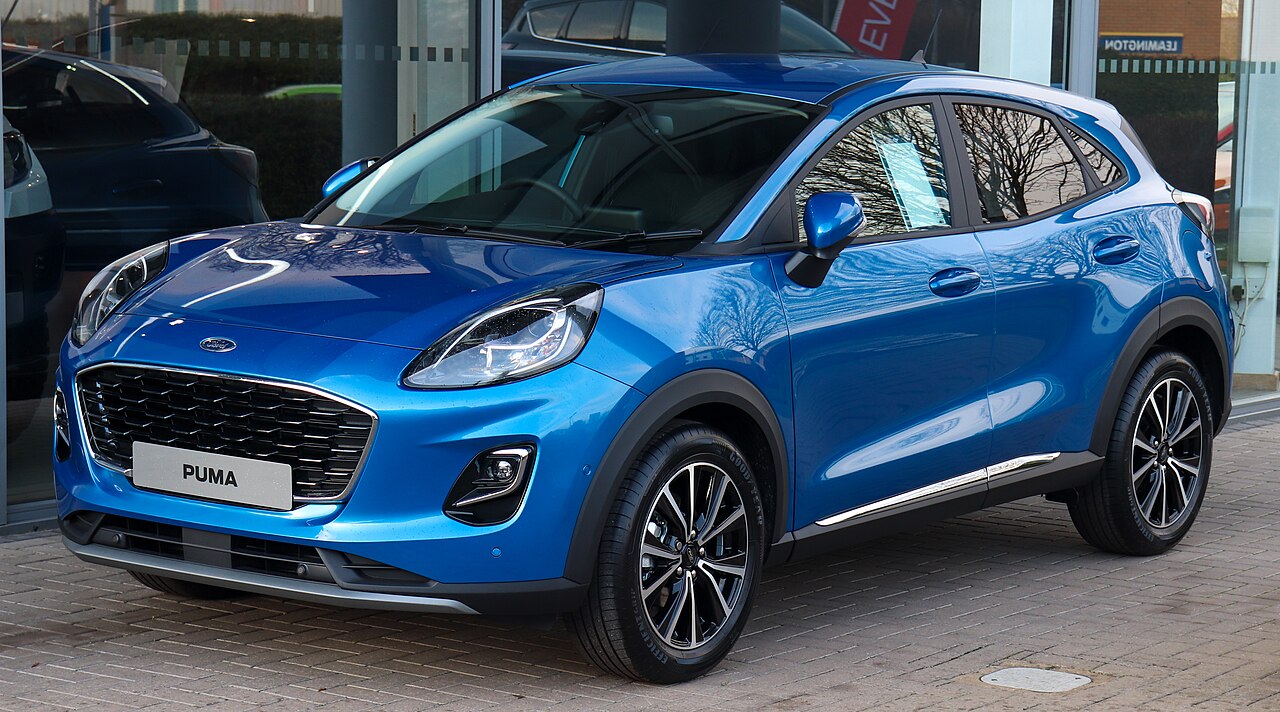
How a Ford Puma VIN is put together
The 17 characters split into three blocks, and because the layout follows a global standard, the same position always carries the same kind of information. The first three characters are the World Manufacturer Identifier, and European Puma models typically begin with WF0, the code for Ford built passenger cars in Europe. Characters four through eight describe the car, including the body and, most usefully, the engine, which is where a small Zetec coupe engine is set apart from a modern EcoBoost mild hybrid. The ninth character is a check digit that validates the whole number. The last eight characters describe the individual car, with position ten the model year, position eleven the plant and the final six the sequential build number. The quick reference below covers the clues you will use most often when you read a Ford Puma VIN.
| VIN clue | What it means |
|---|---|
| WMI WF0 | Ford Puma built by Ford in Europe |
| Position 8 | Engine code, for example a Zetec-SE or an EcoBoost mild hybrid unit |
| Position 9 | Check digit that validates the whole VIN |
| Position 10 | Model year code, for example X is 1999 and N is 2022 |
| Position 11 | Assembly plant code, such as Cologne or Craiova |
You will find the number behind the windscreen, on the plate in the door jamb and on the registration documents, and matching them is the first check worth doing.
Ford Puma VIN position by position
The Puma name covers two very different cars, and both use the seventeen character VIN. From 1997 to 2002 the Puma was a small coupe based on the Fiesta. Since 2019 the name has returned on a compact crossover. Reading the VIN in order settles the year and the origin on either one.
| Position | Name | What it tells you on a Puma |
|---|---|---|
| 1 to 3 | World Manufacturer Identifier | WF0 marks a Ford built in Europe, the origin of both the coupe and the crossover |
| 4 to 8 | Vehicle descriptor | Body style, trim and engine, where a base car is separated from an ST |
| 9 | Check digit | A calculated character that validates the rest of the VIN |
| 10 | Model year | A single character, see the charts below |
| 11 | Assembly plant | The European Ford factory that built the car |
| 12 to 17 | Serial number | The build sequence unique to that Puma |
Ford Puma coupe model year codes, 1997 to 2002 (position 10)
| Model year | Code in position 10 |
|---|---|
| Ford Puma 1997 | V |
| Ford Puma 1998 | W |
| Ford Puma 1999 | X |
| Ford Puma 2000 | Y |
| Ford Puma 2001 | 1 |
| Ford Puma 2002 | 2 |
Ford Puma crossover model year codes, 2019 on (position 10)
| Model year | Code in position 10 |
|---|---|
| Ford Puma 2019 | K |
| Ford Puma 2020 | L |
| Ford Puma 2021 | M |
| Ford Puma 2022 | N |
| Ford Puma 2023 | P |
| Ford Puma 2024 | R |
| Ford Puma 2025 | S |
Where to find the VIN on a Ford Puma
On the crossover the VIN reads through the base of the windscreen on the driver side and repeats on a label in the door area. On the classic coupe look for the stamped number on the body and the plate in the engine bay. A genuine Ford Racing Puma is a rare and valuable car, so on those confirm the number against the paperwork rather than the badges.
Reading a Puma VIN in practice
Take a car whose VIN opens with WF0 and shows N in position ten. On the modern crossover that places it as a 2022 model. On an older car a W in that slot would point to the 1998 coupe instead, which is why it helps to know which Puma you are looking at before you read the year. The closing six digits are always the car’s own serial number.
A short history, generation by generation
The original Puma arrived in 1997 as a small coupe built on Fiesta underpinnings, light and fun to drive, with revvy Zetec-SE engines and a rare Racing Puma at the top. It was discontinued in 2002, and the name lay dormant until 2019, when Ford revived it for a compact crossover with distinctive looks, a clever boxed boot under the floor and mild hybrid EcoBoost engines. That crossover quickly became one of Ford’s most popular cars in Europe and later gained a fully electric Gen-E version. The table below sums up the Puma family.
| Generation | Years | Body styles | Key engines |
|---|---|---|---|
| Ford Puma coupe | 1997 to 2002 | 3-door coupe | 1.4 to 1.7 Zetec-SE |
| Ford Puma crossover | 2019 to present | 5-door crossover | 1.0 EcoBoost mild hybrid, 1.5 EcoBoost |
| Ford Puma Gen-E | 2025 to present | 5-door crossover | Battery electric |
Ford Puma engines and specifications
Because the engine code sits in the middle of the VIN, a proper check confirms the engine the car was born with. The figures below cover the main configurations, with power as a range because output changed across model years.
| Configuration | Years | Power | Layout |
|---|---|---|---|
| Ford Puma 1.7 Zetec-SE | 1997 to 2002 | about 125 hp | Inline-4 petrol |
| Ford Puma 1.4 and 1.6 Zetec-SE | 1997 to 2002 | about 90 to 103 hp | Inline-4 petrol |
| Ford Puma 1.0 EcoBoost mild hybrid | 2019 to present | about 125 to 155 hp | Turbocharged 3-cylinder mild hybrid |
| Ford Puma 1.5 EcoBoost ST | 2020 to present | about 170 to 200 hp | Turbocharged petrol |
Ford Puma by model year
Buyers searching for a specific year want to know what they are getting, so the table below maps several model years to their VIN year code, body and engine options. The same model year letter logic runs across the whole production run.
| Model year | VIN year code | Body | Engine options |
|---|---|---|---|
| Ford Puma 1999 | X | Coupe | 1.4 to 1.7 Zetec-SE |
| Ford Puma 2020 | L | Crossover | 1.0 EcoBoost mild hybrid, 1.5 ST |
| Ford Puma 2021 | M | Crossover | 1.0 EcoBoost mild hybrid, 1.5 ST |
| Ford Puma 2022 | N | Crossover | 1.0 EcoBoost mild hybrid, ST |
| Ford Puma 2023 | P | Crossover | 1.0 EcoBoost mild hybrid, ST |
| Ford Puma 2024 | R | Crossover | 1.0 EcoBoost mild hybrid, ST |
Reliability and the things worth checking
Reliability depends on the engine and on maintenance, and you should always run the VIN through the relevant recall check. The most common points to check are summarized below.
| Engine or area | What to check |
|---|---|
| Ford Puma 1.0 EcoBoost | Generally good, keep on top of cooling and oil and confirm the cambelt service plan |
| Ford Puma mild hybrid system | Check the small battery and that the stop start works smoothly |
| Ford Puma coupe Zetec-SE | On survivors watch for corrosion and worn suspension as well as service history |
| Ford Puma body | Check the boot floor compartment and interior wear on the crossover |
Buying a used Ford Puma
When you find one worth pursuing, decode the VIN first and make sure the model year, engine and body line up with the advertisement, then run the same number through the relevant recall check. On the modern crossover confirm the service history and any outstanding recall work, and on the original coupe check carefully for rust, since good examples are now sought after. When you are ready, enter your Ford Puma VIN in the decoder above to confirm the year, engine, body and plant, then use the advice here to make sure the car is genuinely what it claims to be.