Ford Taurus VIN Decoder: Generations, Engines and VIN Lookup Guide
Every Ford Taurus carries a 17 character Vehicle Identification Number, and reading it is the quickest way to confirm what a particular car really is before you trust a listing. The Taurus was one of America’s defining family cars from 1986 to 2019, sold as a sedan and a wagon, with everything from a frugal V6 to the high revving SHO. The VIN settles the model year, the engine the car left the line with, the body style and the plant that built it, which is exactly what you want when checking whether a car really is the SHO it claims to be. You can run any Taurus VIN through the decoder at the top of this page and read the result in a few seconds. The rest of this guide explains how the number is built, walks through every generation, and points out the details that matter when you check one.
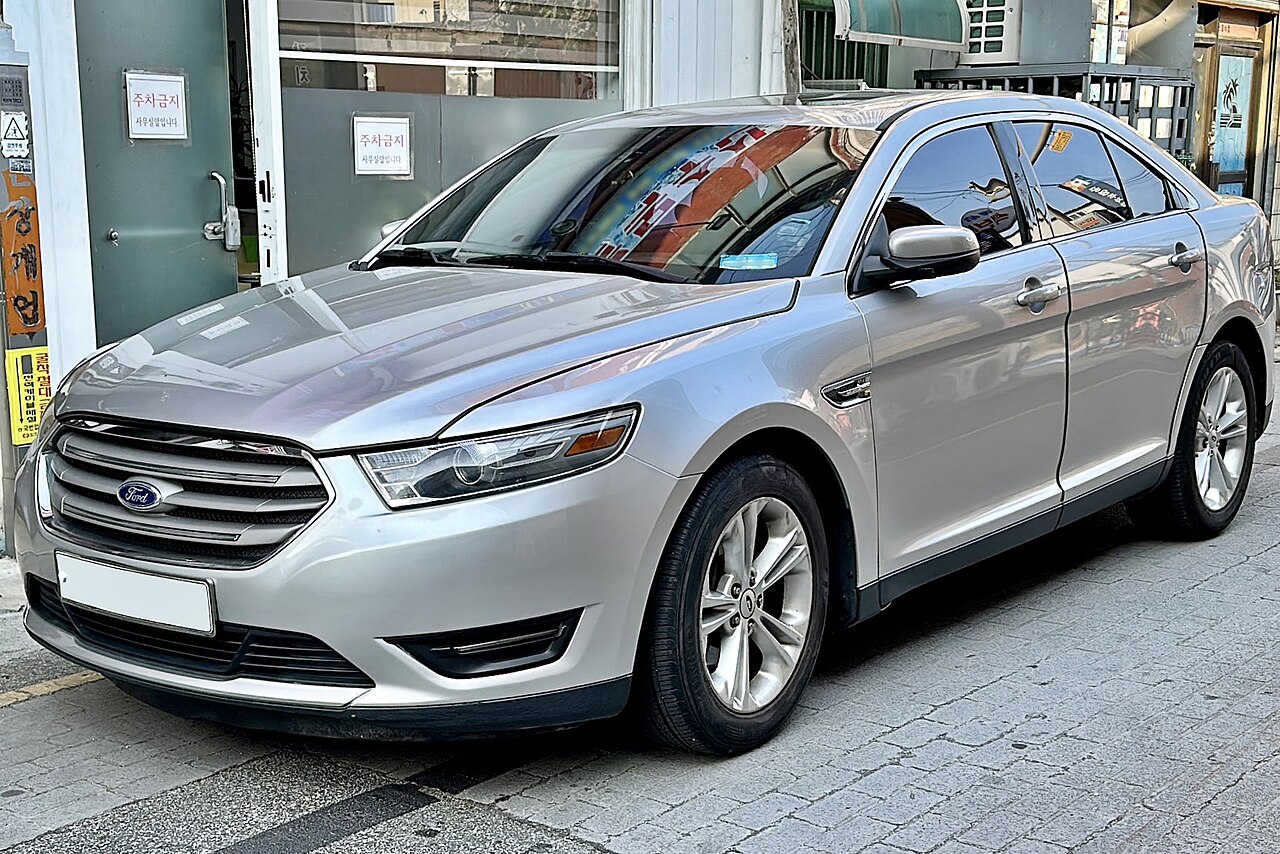
How a Ford Taurus VIN is put together
The 17 characters split into three blocks, and because the layout follows a global standard, the same position always carries the same kind of information. The first three characters are the World Manufacturer Identifier, and most Tauruses begin with 1FA, the code for Ford built passenger cars in the United States. Characters four through eight describe the car itself, including the body style, the restraint system and, most usefully, the engine, which is where an ordinary Vulcan V6 is set apart from a Yamaha SHO unit or an EcoBoost. The ninth character is a check digit calculated from all the others to catch typos and altered numbers. The last eight characters describe the individual car. Position ten is the model year, position eleven is the assembly plant, and the final six characters are the sequential build number. The quick reference below covers the clues you will use most often when you read a Ford Taurus VIN.
| VIN clue | What it means |
|---|---|
| WMI 1FA | Ford Taurus built by Ford in the United States |
| Position 8 | Engine code, for example a Vulcan, Duratec or EcoBoost unit |
| Position 9 | Check digit that validates the whole VIN |
| Position 10 | Model year code, for example M is 1991 and R is 1994 |
| Position 11 | Assembly plant code, such as Chicago or Atlanta |
You will find the number at the base of the windshield on the driver’s side, on the certification label in the door jamb, and on the title and insurance paperwork. If those do not agree, treat it as a reason to look harder.
Ford Taurus VIN position by position
The Taurus uses the seventeen character VIN, and each character has a fixed job. Read it in order and you can settle the year, the plant and the engine before you rely on the seller’s description.
| Position | Name | What it tells you on a Taurus |
|---|---|---|
| 1 to 3 | World Manufacturer Identifier | 1FA marks a Ford passenger car built in the United States |
| 4 to 8 | Vehicle descriptor | Body style, trim and engine, where a base car is separated from an SHO |
| 9 | Check digit | A calculated character that validates the rest of the VIN |
| 10 | Model year | A single character, listed in the chart below |
| 11 | Assembly plant | The Ford factory that built the car |
| 12 to 17 | Serial number | The build sequence unique to that Taurus |
Ford Taurus model year codes (position 10)
The tenth character gives the model year. Match your letter or number below.
| Model year | Code in position 10 |
|---|---|
| Ford Taurus 2000 | Y |
| Ford Taurus 2001 | 1 |
| Ford Taurus 2002 | 2 |
| Ford Taurus 2003 | 3 |
| Ford Taurus 2004 | 4 |
| Ford Taurus 2005 | 5 |
| Ford Taurus 2006 | 6 |
| Ford Taurus 2007 | 7 |
| Ford Taurus 2008 | 8 |
| Ford Taurus 2009 | 9 |
| Ford Taurus 2010 | A |
| Ford Taurus 2011 | B |
| Ford Taurus 2012 | C |
| Ford Taurus 2013 | D |
| Ford Taurus 2014 | E |
| Ford Taurus 2015 | F |
| Ford Taurus 2016 | G |
| Ford Taurus 2017 | H |
| Ford Taurus 2018 | J |
| Ford Taurus 2019 | K |
Where to find the VIN on a Ford Taurus
Read the VIN through the windshield at the base of the glass on the driver side, and check it against the label in the driver door jamb. The two should match. A quick read is the easiest way to confirm whether a car is a plain Taurus or a genuine SHO before you go by the badges alone.
Reading a Taurus VIN in practice
Take a VIN that starts with 1FA and shows E in position ten. That marks it as a United States built Ford passenger car from the 2014 model year. Position eight then tells you whether it left the line with the standard V6, the EcoBoost or the SHO engine, and the final six digits are the car’s own serial number.
A short history, generation by generation
The Taurus arrived in 1986 with aerodynamic styling that looked like nothing else on American roads and quickly became a best seller. The second generation of 1992 refined the formula, and both early generations offered the Yamaha engined SHO that turned the family sedan into a genuine performance car. The rounded third generation of 1996 was divisive but introduced a V8 SHO, the fourth generation of 2000 played it safe, and after a brief pause the nameplate returned on a much larger car from 2010, topped by the twin turbo SHO. Production for North America ended in 2019. The table below sums up the generations.
| Generation | Years | Body styles | Key engines |
|---|---|---|---|
| Ford Taurus first generation | 1986 to 1991 | Sedan, wagon | 2.5 I4, 3.0 and 3.8 V6, SHO 3.0 |
| Ford Taurus second generation | 1992 to 1995 | Sedan, wagon | 3.0 and 3.8 V6, SHO 3.0 and 3.2 |
| Ford Taurus third generation | 1996 to 1999 | Sedan, wagon | 3.0 V6, SHO 3.4 V8 |
| Ford Taurus fourth generation | 2000 to 2007 | Sedan, wagon | 3.0 Vulcan and Duratec V6 |
| Ford Taurus fifth generation | 2008 to 2009 | Sedan | 3.5 Duratec V6 |
| Ford Taurus sixth generation | 2010 to 2019 | Sedan | 3.5 V6, 2.0 EcoBoost, SHO 3.5 EcoBoost |
Ford Taurus engines and specifications
Because the engine code sits in the middle of the VIN, a proper check confirms the engine the car was born with, which is exactly what you want on the SHO models where value depends on it. The figures below cover the main configurations, with power as a range because output changed across model years.
| Configuration | Years | Power | Layout |
|---|---|---|---|
| Ford Taurus 3.0 Vulcan V6 | 1986 to 2007 | about 140 to 155 hp | Naturally aspirated V6 |
| Ford Taurus 3.8 Essex V6 | 1988 to 1995 | about 140 hp | Naturally aspirated V6 |
| Ford Taurus 3.5 Duratec V6 | 2008 to 2019 | about 260 to 290 hp | Naturally aspirated V6 |
| Ford Taurus SHO 3.0 Yamaha V6 | 1989 to 1995 | about 220 hp | High output V6 |
| Ford Taurus SHO 3.4 V8 | 1996 to 1999 | about 235 hp | Yamaha V8 |
| Ford Taurus SHO 3.5 EcoBoost V6 | 2010 to 2019 | about 365 hp | Twin-turbocharged V6 |
Ford Taurus by model year
Buyers searching for a specific year want to know what they are getting, so the table below maps several model years to their VIN year code, generation and engine options. The same model year letter logic runs across the whole production run.
| Model year | VIN year code | Generation | Engine options |
|---|---|---|---|
| Ford Taurus 1992 | N | Second generation | 3.0 and 3.8 V6, SHO |
| Ford Taurus 1997 | V | Third generation | 3.0 V6, SHO 3.4 V8 |
| Ford Taurus 2002 | 2 | Fourth generation | 3.0 Vulcan and Duratec V6 |
| Ford Taurus 2010 | A | Sixth generation | 3.5 V6, SHO EcoBoost |
| Ford Taurus 2015 | F | Sixth generation | 3.5 V6, 2.0 EcoBoost, SHO |
| Ford Taurus 2019 | K | Sixth generation | 3.5 V6, 2.0 EcoBoost, SHO |
Reliability and the things worth checking
Reliability depends on the engine and on maintenance, and you should always run the VIN through the NHTSA recall database. The most common points to check are summarized below.
| Engine or area | What to check |
|---|---|
| Ford Taurus 3.0 Vulcan | Durable and cheap to run, watch for age related cooling and gasket wear |
| Ford Taurus 3.8 Essex | Some years drew head gasket reports, so confirm history |
| Ford Taurus SHO EcoBoost | Strong, but keep on top of cooling, plugs and oil and check for hard use |
| Ford Taurus transmission | The automatics need regular fluid service, so confirm clean shifts |
Ford Taurus recalls
Below are notable safety recalls recorded for the Ford Taurus by the American road safety regulator, the NHTSA, with a focus on the sixth generation from 2010 to 2019. This is a reference list, not a check of your individual car. A recall applies only to certain build dates and VIN ranges, so a model year here does not mean every car of that year is affected.
| Model years | NHTSA number | Area | Problem and risk |
|---|---|---|---|
| 2013 to 2018, SHO and Police | 20V072 | Rear suspension | On SHO and Police Interceptor cars the rear suspension toe links can fracture under stress, causing a sudden change in handling. Toe links replaced. This is the well known Taurus performance model issue. |
| 2016 | 16V925 | Turbo oil line, 3.5L | Improperly brazed turbocharger oil supply tubes can leak oil onto hot engine parts, a fire risk. Tubes inspected and replaced. |
| 2016 to 2019 | 25V611 | Door trim | The driver and front passenger B-pillar door trim can detach while driving and become a road hazard. Trim repaired or replaced. |
| 2015 to 2019 | 25V695 | Rear camera | The rearview camera can show a distorted, intermittent or blank image in reverse. Camera inspected and replaced as needed. |
Recall data is published by the NHTSA and changes over time, so treat this as background rather than a substitute for the official record for your VIN.
Check a specific VIN for open recalls: use the official NHTSA recalls lookup or the Ford recall page. Both are free and show whether the work has already been done.
Buying a used Ford Taurus
When you find one worth pursuing, decode the VIN first and make sure the model year, engine and body style line up with the advertisement, then run the same number through the NHTSA recall search. On an SHO, confirm through the VIN and documentation that the car is the real thing rather than a base car wearing the badges, since the difference in value is large. Check the transmission carefully on any Taurus, as that is the costly item. When you are ready, enter your Ford Taurus VIN in the decoder above to confirm the year, engine, body style and plant, then use the advice here to make sure the car is genuinely what it claims to be.