VIN Decoder - Check Your VIN Number

Ford Fiesta VIN Decoder: History, Generations and VIN Lookup Guide

Every modern Ford Fiesta carries a 17-character Vehicle Identification Number, and decoding it is the quickest way to confirm what a given supermini really is before you trust a listing. The VIN reveals the model year, the plant it came from, the engine fitted at the factory, the body style and the safety equipment. On a used Fiesta this matters most for confirming the exact engine, separating a standard car from a genuine ST, and verifying the model year and market a seller claims.

This page covers the Fiesta from 2002 to 2023. Run any Fiesta VIN through the decoder above to read it in seconds, and use the guide below to understand the number and what to check.

How a Ford Fiesta VIN is put together

The 17 characters follow a global standard, so each position carries fixed meaning. The first three are the World Manufacturer Identifier, and because the Fiesta was built in several countries it can begin in different ways. European cars built in Germany usually start with WF0, the Ford-Werke identifier, while cars built for North America in Mexico start with 3FA. Characters four through eight describe the body, restraint system and engine, which is where a 1.0 EcoBoost is separated from a diesel or an ST. The ninth character is a check digit, the tenth is the model year, the eleventh is the plant, and the final six are the unique build sequence.

VIN clue What it means
WMI WF0 Ford Fiesta built by Ford-Werke in Germany (European cars)
WMI 3FA Ford Fiesta built in Mexico for North America
Position 9 Check digit that validates the whole VIN
Position 10 Model year code (for example F is 2015, J is 2018)
Positions 4 to 8 Body style, restraint system and engine family

You will find the VIN at the base of the windshield on the driver’s side, on the door jamb label, and in the registration paperwork.

Generations from 2002 to 2023

The Fiesta has been one of Europe’s best-selling small cars for decades. The 2002 to 2008 car modernised the range, the 2008 model became a global success and was also sold in North America, and the final generation from 2017 refined the formula with efficient turbocharged engines before production ended in 2023.

Generation Years Body Key engines VIN type
Ford Fiesta Mk5 2002 to 2008 3 and 5-door hatchback 1.25 to 1.6 petrol, 1.4 TDCi diesel WF0, Europe
Ford Fiesta Mk6 2008 to 2017 3 and 5-door hatchback 1.0 EcoBoost, 1.25 to 1.6, diesel WF0 or 3FA
Ford Fiesta Mk7 2017 to 2023 3 and 5-door hatchback 1.0 and 1.1 petrol, 1.5 diesel, ST WF0, Europe

Ford Fiesta engines and specifications

Because the engine code sits in the middle of the VIN, a check confirms the engine the car was built with, which is exactly what you want when a listing is vague about the unit or fuel type.

Configuration Years Power Fuel
Ford Fiesta 1.0 EcoBoost 2013 to 2023 about 100 to 155 hp Petrol turbo
Ford Fiesta 1.25 and 1.4 petrol 2002 to 2017 about 60 to 96 hp Petrol
Ford Fiesta 1.5 TDCi 2017 to 2023 about 85 to 120 hp Diesel
Ford Fiesta ST 1.6 and 1.5 EcoBoost 2013 to 2023 about 182 to 200 hp Petrol turbo

Ford Fiesta by model year

The Fiesta follows the standard VIN year letters, so position ten quickly confirms the year a seller claims for the common recent cars.

Model year VIN year code Notable engines
Ford Fiesta 2015 F 1.0 EcoBoost, 1.25, 1.5 TDCi, ST
Ford Fiesta 2017 H 1.0 EcoBoost, 1.5 TDCi, ST
Ford Fiesta 2018 J 1.0 and 1.1 petrol, 1.5 diesel, ST
Ford Fiesta 2020 L 1.0 EcoBoost, 1.5 diesel, ST
Ford Fiesta 2022 N 1.0 EcoBoost mild hybrid, ST

Reliability and the things worth checking

The Fiesta is generally dependable, but a few items are worth attention. Confirm a specific car against the relevant recall database by its VIN.

Area What to check
Ford Fiesta 1.0 EcoBoost Some early units had coolant and wet-belt concerns if neglected; check cooling and service history
Ford Fiesta automatic (PowerShift) Some Mk6 dual-clutch automatics could shudder; test shift quality carefully
Ford Fiesta ST Confirm it has not been tracked or abused, and check clutch and tyres
Ford Fiesta general Inspect for kerb and parking damage common on small city cars

A VIN check together with a careful inspection is the best way to avoid a Fiesta with a costly hidden fault, especially on the automatic and ST versions.

Buying a used Ford Fiesta

Decode the VIN first and confirm the model year, engine and plant match the advertisement, then run that number through the relevant recall database. Decide between petrol, diesel and the hot ST, confirm the engine through the VIN rather than the badge, and prioritise a complete service history. On the small turbo engines in particular, evidence of proper cooling and oil maintenance is reassuring.

Common questions

Buyers often ask how to tell a genuine Fiesta ST from a styled standard car, and the answer is in the engine and series codes of the VIN backed up by documentation. People also ask why some Fiesta VINs start with 3 rather than W, and the reason is that the car was built in Mexico for North America rather than in Europe. The standard 17-character decoding applies across the Fiesta range from 2002 onward.

When you are ready, enter your Ford Fiesta VIN in the decoder above to confirm the year, engine and configuration before you buy.
Ford F-150 VIN Decoder: Generations, Engines and VIN Lookup Guide (1997 to 2024)

Every Ford F-150 carries a 17-character Vehicle Identification Number, and decoding it is the quickest way to confirm what a given truck really is before you trust a listing. The VIN reveals the model year, the plant it came from, the engine fitted at the factory, the cab and bed configuration and the safety equipment. On America’s best-selling truck this matters most for confirming the engine, separating a base V6 from an EcoBoost or a 5.0 V8, checking whether a truck is a genuine Raptor, and verifying the year a seller claims. This page covers the modern F-150 from 1997 to 2024. Run any F-150 VIN through the decoder above to read it in seconds, and use the guide below to understand the number and what to check.

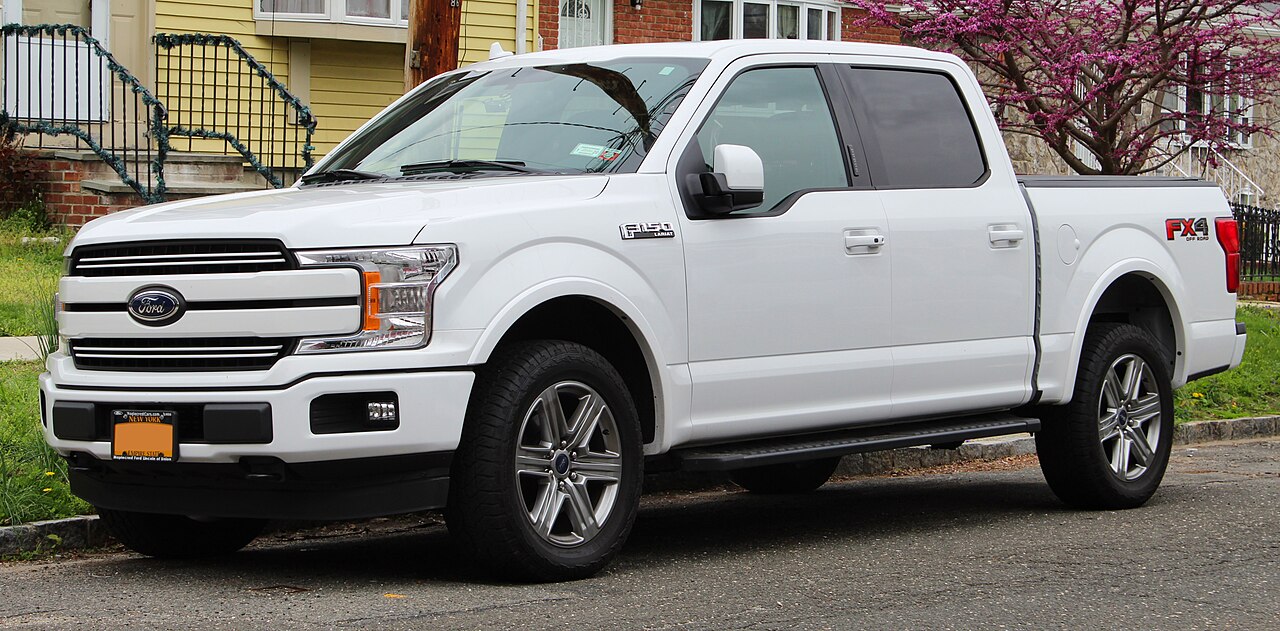
2018 Ford F-150 Lariat crew cab pickup, front view
2018 Ford F-150 Lariat. Photo by Kevauto, CC BY-SA 4.0, via Wikimedia Commons.

How a Ford F-150 VIN is put together

The 17 characters follow a global standard, so each position carries fixed meaning. The first three are the World Manufacturer Identifier. F-150 trucks begin with 1FT, marking a Ford truck built in the United States, mainly at Dearborn, Michigan and Kansas City, Missouri. Characters four through eight describe the cab style, the bed, the restraint system and the engine, which is where a 2.7 EcoBoost is separated from a 3.5 EcoBoost or a 5.0 V8. The ninth character is a check digit, the tenth is the model year, the eleventh is the plant, and the final six are the unique build sequence.

VIN clue What it means
WMI 1FT Ford F-150 built as a Ford truck in the United States
Position 9 Check digit that validates the whole VIN
Position 10 Model year code (for example M is 2021, R is 2024)
Positions 4 to 8 Cab, bed, restraint system and engine family
Positions 12 to 17 Unique sequential build number

You will find the VIN at the base of the windshield on the driver’s side, on the certification label in the driver’s door jamb, and in the registration paperwork.

Ford F-150 VIN position by position

Every F-150 from this era uses the seventeen character VIN, so they all read the same way. Work through it in order and you can settle the year, the cab, the drive type and the engine before you trust a single line of the advert.

Position Name What it tells you on an F-150
1 to 3 World Manufacturer Identifier 1FT for an F-150 built by Ford in the United States
4 to 7 Vehicle descriptor The cab, the bed, the series and the drive type, where a two wheel drive is separated from a four wheel drive
8 Engine The engine code, read with the year, since this era ran from the V8 Triton engines to the EcoBoost turbo units and a hybrid
9 Check digit A calculated character that validates the rest of the VIN
10 Model year A single character, listed in the chart below
11 Assembly plant The Ford factory that built the truck, such as Dearborn or Kansas City
12 to 17 Serial number The build sequence unique to that truck

Ford F-150 model year codes (position 10)

The tenth character is the quickest way to date an F-150. These are the codes for the trucks that make up most of the used market.

Model year Code in position 10
Ford F-150 2009 9
Ford F-150 2010 A
Ford F-150 2011 B
Ford F-150 2012 C
Ford F-150 2013 D
Ford F-150 2014 E
Ford F-150 2015 F
Ford F-150 2016 G
Ford F-150 2017 H
Ford F-150 2018 J
Ford F-150 2019 K
Ford F-150 2020 L
Ford F-150 2021 M
Ford F-150 2022 N
Ford F-150 2023 P
Ford F-150 2024 R

Where to find the VIN on a Ford F-150

Read the VIN through the base of the windshield on the driver side and check it against the label in the driver door jamb, which also lists the weight ratings and the axle code. On a truck that has worked hard or been modified, make sure the number is intact and matches the paperwork before you buy.

Reading an F-150 VIN in practice

Take a truck whose VIN starts with 1FT and shows J in position ten. That marks it as a United States built Ford truck from the 2018 model year. The descriptor characters then tell you the cab and drive type, position eight identifies whether it left the line with a V8, an EcoBoost or the hybrid, and the final digits are the truck’s own serial number.

Generations from 1997 to 2024

The F-150 has led the full-size truck market for decades. The 1997 redesign brought a more aerodynamic shape, the 2015 truck switched to a lightweight aluminum body, and the 2021 generation added a hybrid powertrain and modern technology while keeping the V8 and turbocharged options.

Generation Years Key engines VIN type
Ford F-150 tenth generation 1997 to 2003 4.2 V6, 4.6 and 5.4 V8 1FT, 17-character
Ford F-150 eleventh generation 2004 to 2008 4.2 V6, 4.6 and 5.4 V8 1FT, 17-character
Ford F-150 twelfth generation 2009 to 2014 3.7 V6, 5.0 V8, 3.5 EcoBoost, 6.2 V8 1FT, 17-character
Ford F-150 thirteenth generation 2015 to 2020 3.3 V6, 2.7 and 3.5 EcoBoost, 5.0 V8 1FT, aluminum body
Ford F-150 fourteenth generation 2021 to 2024 3.3 V6, 2.7 and 3.5 EcoBoost, 5.0 V8, 3.5 PowerBoost hybrid 1FT, Dearborn and Kansas City

Ford F-150 engines and specifications

Because the engine code sits in the middle of the VIN, a check confirms the engine the truck was built with, which is exactly what you want on a model offered with so many powertrains.

Configuration Years Power Layout
Ford F-150 3.3 V6 2018 to 2024 about 290 hp Naturally aspirated V6
Ford F-150 2.7 EcoBoost V6 2015 to 2024 about 325 to 400 hp Twin-turbo V6
Ford F-150 3.5 EcoBoost V6 2011 to 2024 about 365 to 400 hp Twin-turbo V6
Ford F-150 5.0 V8 2011 to 2024 about 360 to 400 hp Naturally aspirated V8
Ford F-150 3.5 PowerBoost hybrid 2021 to 2024 about 430 hp Twin-turbo V6 hybrid
Ford F-150 Raptor 3.5 EcoBoost 2017 to 2024 about 450 hp High-output twin-turbo V6

Ford F-150 by model year

The F-150 follows the standard VIN year letters, so position ten quickly confirms the year a seller claims.

Model year VIN year code Notable engines
Ford F-150 2019 K 3.3 V6, 2.7 and 3.5 EcoBoost, 5.0 V8, Raptor
Ford F-150 2020 L 3.3 V6, 2.7 and 3.5 EcoBoost, 5.0 V8, Raptor
Ford F-150 2021 M 3.3 V6, EcoBoost, 5.0 V8, PowerBoost hybrid
Ford F-150 2022 N EcoBoost, 5.0 V8, PowerBoost hybrid, Raptor
Ford F-150 2023 P EcoBoost, 5.0 V8, PowerBoost hybrid, Raptor
Ford F-150 2024 R EcoBoost, 5.0 V8, PowerBoost hybrid, Raptor

Reliability and the things worth checking

Reliability varies by engine and by how hard the truck has worked. Always confirm a specific vehicle against the NHTSA recall database by its VIN.

Area What to check
Ford F-150 5.4 V8 (older 1997 to 2010) Known for spark plug and cam phaser issues on certain years; confirm repairs
Ford F-150 3.5 and 2.7 EcoBoost Confirm cooling, turbo and cam timing condition, plus service history on tow-heavy trucks
Ford F-150 10-speed automatic Test for smooth shifts on a road test, especially on early 2017 to 2019 trucks
Ford F-150 general Inspect frame and bed for heavy towing or work use and verify open recalls by VIN

Because the F-150 is so often used for towing and work, a VIN history check combined with a careful physical inspection counts for a lot here.

Ford F-150 recalls

Below are notable safety recalls recorded for the Ford F-150 by the American road safety regulator, the NHTSA. The F-150 is built in huge numbers, so it has many recalls over the years. This is a reference list, not a check of your individual truck. A recall applies only to certain build dates and VIN ranges, so a model year here does not mean every truck of that year is affected.

Model years NHTSA number Area Problem and risk
2021 21V407 Steering The steering gear may have internal damage and the wheel can become hard or impossible to turn. Owners are told not to drive until the gear is replaced.
2021 to 2024 24V635 Engine, 2.7L and 3.0L EcoBoost Engine intake valves can crack and break while driving, causing engine failure and loss of drive power. Engine tested and replaced as needed.
2016 to 2018 22V150 / 25V236 Brakes, 3.5L EcoBoost The brake master cylinder can leak fluid into the booster, reducing front braking and needing more pedal effort and distance to stop. Master cylinder replaced.
2021 21V533 Brakes The electronic brake booster can leak fluid into its control unit, reducing braking performance. Booster assembly replaced.
2021 21V090 Windshield The windshield may not have been bonded properly and can detach in a crash. Windshield removed and reinstalled.
2015 to 2019 18V894 Engine block heater Water can corrode the block heater cable connector and, when plugged in, cause a short and fire risk. Cable disabled and later replaced.
2015 to 2018 18V568 Seat belt pretensioner If a front pretensioner fires in a crash, sparks can ignite material inside the B-pillar. Heat resistant tape installed.
2018 18V392 Fuel pump, 3.5L High pressure fuel pump welds can crack and leak oil or fuel, a fire risk. Pump and related parts replaced.
2017 to 2018 18V213 10-speed transmission A missing roll pin can cause loss of the Park function, so the truck can roll away after being parked. Roll pin installed if missing.
2021 21V381 / 21V986 Driveshaft The driveshaft can be assembled wrong or be damaged by loose insulators and fracture, causing loss of drive power. Driveshaft inspected and repaired.
2018 to 2020 19V633 Front seats The seatback recliner may be missing a third pawl, leaving a weak seatback that may not hold in a crash. Seat structure inspected and replaced.
2021 to 2023 23V509 Parking brake A wiring harness rubbing the rear axle can trigger the electric parking brake unexpectedly while driving. Harness protected and replaced as needed.
2021 to 2023 25V455 Fuel pump The low pressure fuel pump can fail and cause the engine to stall while driving. Remedy in development.
2018 21V983 Tailgate The tailgate latches can unlatch on their own while driving, letting cargo fall out. Left and right latches replaced.

Recall data is published by the NHTSA and changes over time, so treat this as background rather than a substitute for the official record for your VIN.

Check a specific VIN for open recalls: use the official NHTSA recalls lookup or the Ford recall page. Both are free and show whether the work has already been done.

Buying a used Ford F-150

Decode the VIN first and confirm the model year, engine, cab and bed match the advertisement, then run that number through the NHTSA recall search. Decide which engine fits your needs, since the V6, the EcoBoost units, the 5.0 V8 and the PowerBoost hybrid behave very differently, and confirm a Raptor is genuine through the VIN rather than the badges. On work trucks, prioritise a complete service history and a sound frame. When you are ready, enter your Ford F-150 VIN in the decoder above to confirm the year, engine and configuration before you buy.
Ford EcoSport VIN Decoder: Generations, Engines and VIN Lookup Guide (2013 to 2024)

Every Ford EcoSport carries a 17-character Vehicle Identification Number, and decoding it is the quickest way to confirm what a given small SUV really is before you trust a listing. The VIN reveals the model year, the country and plant it came from, the engine fitted at the factory, the body and the safety equipment. On the EcoSport this matters most for confirming the engine, telling a turbocharged EcoBoost from a normal petrol or diesel, and verifying the model year a seller claims. This page covers the second-generation Ford EcoSport, sold worldwide from 2013 to 2024. Run any EcoSport VIN through the decoder above to read it in seconds, and use the guide below to understand the number and what to check.

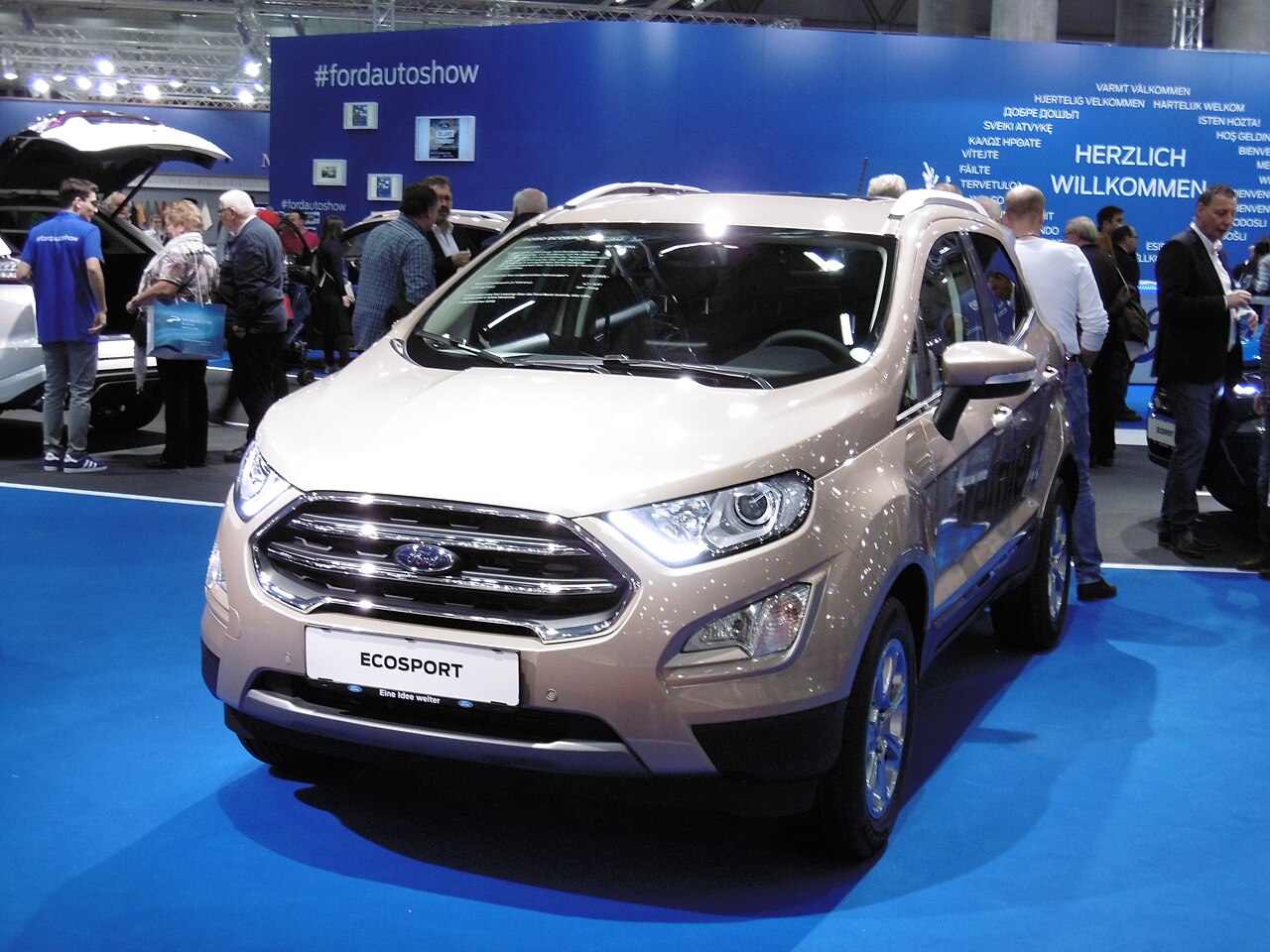
2018 Ford EcoSport facelift SUV
2018 Ford EcoSport (facelift). Photo by Dispvas2018, CC0, via Wikimedia Commons.

How a Ford EcoSport VIN is put together

The 17 characters follow a global standard, so each position carries fixed meaning. The first three are the World Manufacturer Identifier, and because the EcoSport was built in several countries, including India, Romania and Brazil, this code is the key to its origin. Characters four through eight describe the body, the restraint system and the engine, which is where a 1.0 EcoBoost is separated from a normal petrol or a diesel. The ninth character is a check digit, the tenth is the model year, the eleventh is the plant, and the final six are the unique build sequence.

VIN clue What it means
Positions 1 to 3 Manufacturer and country code, showing where the EcoSport was built
Position 9 Check digit that validates the whole VIN
Position 10 Model year code (for example F is 2015, M is 2021)
Positions 4 to 8 Body, restraint system and engine family
Positions 12 to 17 Unique sequential build number

You will find the VIN at the base of the windshield on the driver’s side, on the door jamb label, and in the registration paperwork.

Ford EcoSport VIN position by position

The second generation EcoSport was a global car built in several countries, so the VIN matters as much for confirming where it was made as for the year. It uses the standard seventeen character layout, and reading it in order settles the origin, the year and the engine.

Position Name What it tells you on an EcoSport
1 to 3 World Manufacturer Identifier The country and maker, for example MAJ for a car built in India or WF0 for one built in Europe
4 to 8 Vehicle descriptor Body, trim and engine, where a small three cylinder EcoBoost is separated from the larger units
9 Check digit A calculated character that validates the rest of the VIN
10 Model year A single character, listed in the chart below
11 Assembly plant The factory that built the car
12 to 17 Serial number The build sequence unique to that EcoSport

Ford EcoSport model year codes (position 10)

For the second generation the tenth character reads as follows.

Model year Code in position 10
Ford EcoSport 2013 D
Ford EcoSport 2014 E
Ford EcoSport 2015 F
Ford EcoSport 2016 G
Ford EcoSport 2017 H
Ford EcoSport 2018 J
Ford EcoSport 2019 K
Ford EcoSport 2020 L
Ford EcoSport 2021 M
Ford EcoSport 2022 N
Ford EcoSport 2023 P
Ford EcoSport 2024 R

Where to find the VIN on a Ford EcoSport

Read the VIN through the base of the windscreen on the driver side and check it against the plate or label in the door area. Because these were sold across many markets and some reached other countries as imports, matching the number on the car to the documents is especially worth doing.

Reading an EcoSport VIN in practice

Take a VIN that starts with MAJ and shows J in position ten. That already tells you it is an Indian built Ford from the 2018 model year. The descriptor characters then show the engine and trim, and the closing six digits are the car’s own serial number.

About the Ford EcoSport

The EcoSport is Ford’s subcompact SUV, based on the Fiesta platform and sold across many markets including Europe, India, Brazil and North America. The 2013 to 2024 generation modernised the model with turbocharged EcoBoost engines and SUV styling in a small, affordable package, with a distinctive side-hinged tailgate on many versions.

Phase Years Body Key engines VIN type
Ford EcoSport early 2013 to 2017 Subcompact SUV 1.0 EcoBoost, 1.5 petrol, 1.5 diesel 17-character
Ford EcoSport facelift 2018 to 2024 Subcompact SUV 1.0 and 1.5 EcoBoost, 1.5 petrol and diesel, 2.0 17-character

Ford EcoSport engines and specifications

Because the engine code sits in the middle of the VIN, a check confirms the engine the SUV was built with, which is exactly what you want when a listing is vague about the unit or fuel type.

Configuration Years Power Fuel
Ford EcoSport 1.0 EcoBoost 2013 to 2024 about 125 hp Petrol turbo
Ford EcoSport 1.5 petrol 2013 to 2024 about 110 to 123 hp Petrol
Ford EcoSport 1.5 diesel 2013 to 2024 about 90 to 100 hp Diesel
Ford EcoSport 2.0 (North America) 2018 to 2022 about 166 hp Petrol

Ford EcoSport by model year

The EcoSport follows the standard VIN year letters, so position ten quickly confirms the year a seller claims.

Model year VIN year code Notable engines
Ford EcoSport 2015 F 1.0 EcoBoost, 1.5 petrol and diesel
Ford EcoSport 2018 J 1.0 EcoBoost, 1.5, 2.0
Ford EcoSport 2020 L 1.0 EcoBoost, 1.5, 2.0
Ford EcoSport 2022 N 1.0 EcoBoost, 1.5, 2.0
Ford EcoSport 2023 P Late cars

Reliability and the things worth checking

The EcoSport is generally dependable, but confirm a specific car against the relevant recall database by its VIN.

Area What to check
Ford EcoSport 1.0 EcoBoost Confirm cooling system and cam belt service, since this engine needs regular maintenance
Ford EcoSport tailgate Check the side-hinged tailgate and its hinge, where fitted
Ford EcoSport diesel Confirm particulate filter health on cars used for short trips
Ford EcoSport general Verify open recalls by VIN and confirm a clean accident record

A VIN history check together with a careful inspection is the best way to choose a good EcoSport.

Buying a used Ford EcoSport

Decode the VIN first and confirm the model year, engine and origin match the advertisement, then run that number through the relevant recall database. Decide between the turbocharged EcoBoost, the normal petrol and the diesel, confirm the engine through the VIN rather than the badge, and prioritise a complete service history. When you are ready, enter your Ford EcoSport VIN in the decoder above to confirm the year, engine and configuration before you buy.
Ford Econoline VIN Decoder: E-Series Vans (1992 to 2021) VIN Lookup Guide

Every Ford Econoline carries a 17-character Vehicle Identification Number, and decoding it is the quickest way to confirm what a given van really is before you trust a listing. The VIN reveals the model year, the plant it came from, the engine fitted at the factory, the series and the safety equipment. On the Econoline, also known as the E-Series, this matters most for confirming the engine, telling a gas V8 from a diesel, and identifying the series and weight rating a seller claims. This page covers the fourth-generation Ford Econoline and E-Series from 1992 to 2021. Run any Econoline VIN through the decoder above to read it in seconds, and use the guide below to understand the number and what to check.

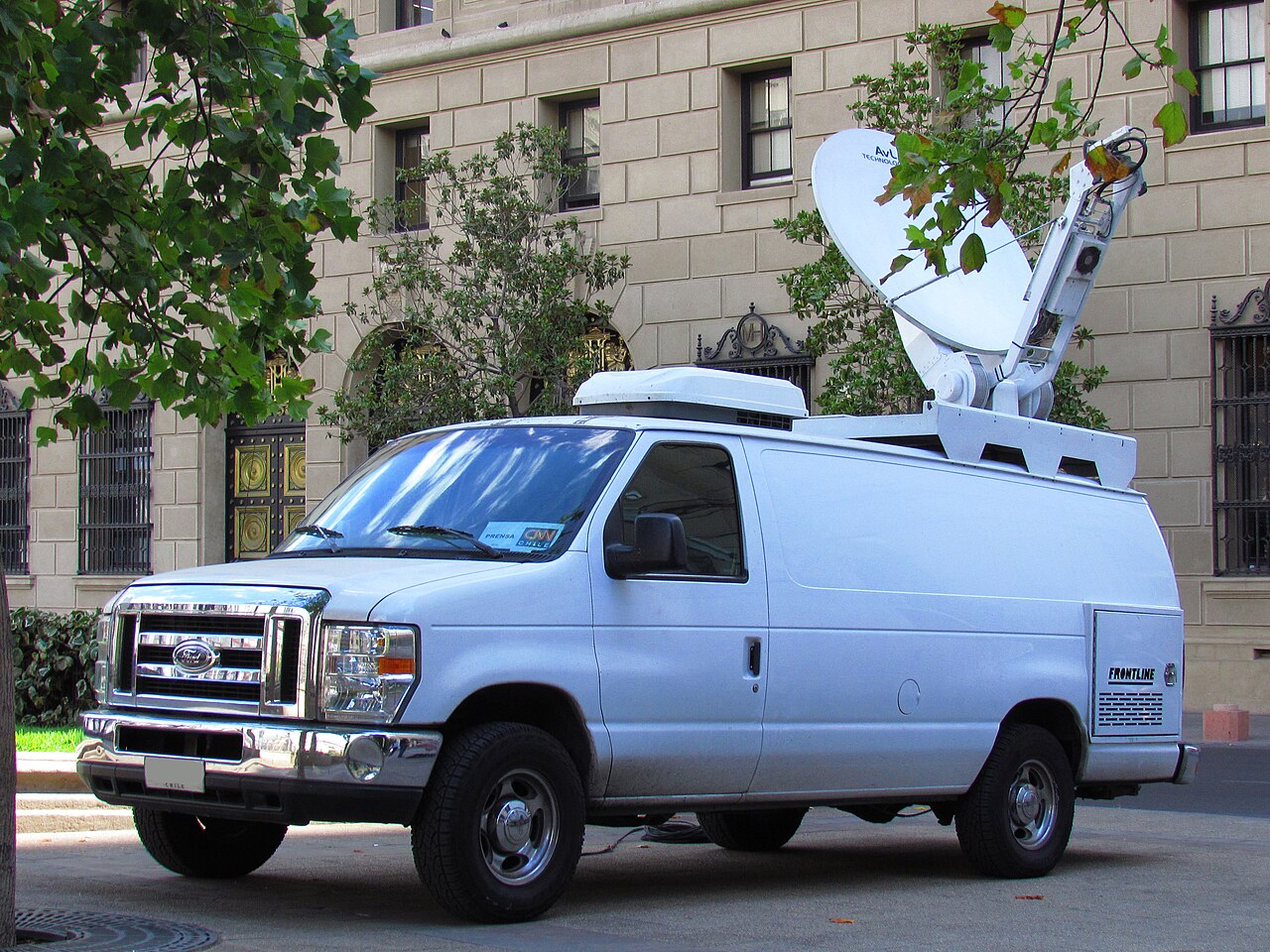
2008 Ford E-350 van
2008 Ford E-350 van. Photo by order_242 from Chile, CC BY-SA 2.0, via Wikimedia Commons.

How a Ford Econoline VIN is put together

The 17 characters follow a global standard, so each position carries fixed meaning. The Econoline was built in the United States, so its VIN begins with a Ford truck or commercial code such as 1FT, 1FB or 1FD, marking a Ford built in the United States. Characters four through eight describe the body, the series and weight rating, the restraint system and the engine. The ninth character is a check digit, the tenth is the model year, the eleventh is the plant, and the final six are the unique build sequence.

VIN clue What it means
WMI 1FT, 1FB or 1FD Ford Econoline built as a Ford van or commercial vehicle in the United States
Position 9 Check digit that validates the whole VIN
Position 10 Model year code (for example F is 2015, L is 2020)
Positions 4 to 8 Series, weight rating, body and engine
Positions 12 to 17 Unique sequential build number

You will find the VIN at the base of the windshield on the driver’s side, on the door jamb label, and in the registration paperwork.

Ford Econoline VIN position by position

The modern Econoline, also sold as the E-Series, uses the seventeen character VIN. Reading it in order tells you the series, the year and the engine, which matters on a van that came in cargo, passenger and cutaway forms with a wide choice of engines.

Position Name What it tells you on an Econoline
1 to 3 World Manufacturer Identifier 1FT for a cargo van and 1FB for a passenger wagon, both Ford built in the United States
4 to 7 Vehicle descriptor The series and body, where E150, E250 and E350 are separated along with the load rating
8 Engine The engine code, read with the year, since the range ran from a V6 to V8 and V10 petrol and several diesels
9 Check digit A calculated character that validates the rest of the VIN
10 Model year A single character, listed in the chart below
11 Assembly plant The Ford factory that built the van, such as Lorain or Avon Lake in Ohio
12 to 17 Serial number The build sequence unique to that van

Ford Econoline model year codes (position 10)

For the modern vans the tenth character reads as follows.

Model year Code in position 10
Ford Econoline 2000 Y
Ford Econoline 2001 1
Ford Econoline 2002 2
Ford Econoline 2003 3
Ford Econoline 2004 4
Ford Econoline 2005 5
Ford Econoline 2006 6
Ford Econoline 2007 7
Ford Econoline 2008 8
Ford Econoline 2009 9
Ford Econoline 2010 A
Ford Econoline 2011 B
Ford Econoline 2012 C
Ford Econoline 2013 D
Ford Econoline 2014 E

Where to find the VIN on a Ford Econoline

Read the VIN through the base of the windshield on the driver side and check it against the door jamb label, which also lists the weight ratings that matter on a work van. Many of these vans led hard commercial lives, so make sure the number is intact and matches the paperwork before you buy.

Reading an Econoline VIN in practice

Take a van whose VIN starts with 1FT and shows 6 in position ten. That marks it as a United States built Ford van from the 2006 model year. The series characters then tell you whether it is an E150, E250 or E350, position eight identifies the engine, and the final digits are the van’s own serial number.

About the Ford Econoline and E-Series

The Econoline, later branded the E-Series, was Ford’s full-size van and a fixture of American commercial fleets for decades. The 1992 to 2021 era covers the long-running fourth generation, offered as cargo and passenger vans and, in its later years, mainly as a cutaway and chassis cab for motorhomes, ambulances and box trucks after the Transit took over the van role.

Series Years Body Key engines VIN type
Ford Econoline E-150 and E-250 1992 to 2014 Cargo and passenger van 4.6, 5.4 V8, 4.2 V6 17-character
Ford Econoline E-350 and E-450 1992 to 2021 Van, cutaway, chassis cab 5.4 and 6.8 V8, diesel 17-character

Ford Econoline engines and specifications

Because the engine code sits in the middle of the VIN, a check confirms the engine the van was built with, which is important for parts and for telling gas from diesel.

Configuration Years Power Fuel
Ford Econoline 5.4 V8 1997 to 2021 about 255 to 305 hp Petrol
Ford Econoline 6.8 V10 1997 to 2019 about 305 to 320 hp Petrol
Ford Econoline 4.6 V8 1997 to 2014 about 225 to 255 hp Petrol
Ford Econoline Power Stroke diesel 1992 to 2010 varies by year Diesel

Ford Econoline by model year

The Econoline follows the standard VIN year characters, so position ten quickly confirms the year a seller claims.

Model year VIN year code Notes
Ford Econoline 2008 8 Vans and cutaways
Ford Econoline 2014 E Last full van year before Transit
Ford Econoline 2016 G Mainly cutaway and chassis cab
Ford Econoline 2019 K Cutaway and chassis cab
Ford Econoline 2021 M Final E-Series year

Reliability and the things worth checking

The Econoline is durable but usually worked hard in commercial or motorhome service, so confirm a specific van against the NHTSA recall database by its VIN.

Area What to check
Ford Econoline 5.4 and 6.8 engines Confirm spark plug and cooling history, and check for high commercial mileage
Ford Econoline transmission and brakes Heavy use wears these faster, so test thoroughly
Ford Econoline body and frame Inspect for rust and load or towing damage, especially on cutaways
Ford Econoline general Verify open recalls by VIN and confirm a clean accident record

A VIN history check together with a careful inspection is essential on a commercial van that may have led a hard life.

Ford Econoline recalls

Below are notable safety recalls recorded for the Ford Econoline, also sold as the E-series, by the American road safety regulator, the NHTSA. This is a reference list, not a check of your individual van, and a recall applies only to certain build dates and VIN ranges.

Model years NHTSA number Area Problem and risk
1992 to 2003 07V336 / 08V051 Speed control switch The cruise control deactivation switch can leak internally and overheat, smoke or burn, causing an under hood fire. A fused wiring harness is installed.
2016, E-350 and E-450 with 6.8L 15V710 / 16V046 Trailer brakes The optional trailer brake controller may not apply the trailer brakes, which lengthens the distance needed to stop. Control module reprogrammed.

Many E-series vans are converted by outside companies into shuttles, campers, wheelchair vans and propane vehicles, and those conversions carry their own separate recalls from the converter. Because of that a VIN check is the reliable way to see the full list for a specific van. Recall data is published by the NHTSA and changes over time, so treat this as background rather than a substitute for the official record for your VIN.

Check a specific VIN for open recalls: use the official NHTSA recalls lookup or the Ford recall page. Both are free and show whether the work has already been done.

Buying a used Ford Econoline

Decode the VIN first and confirm the model year, series, weight rating and engine match the advertisement, then run that number through the NHTSA recall search. Confirm whether the van is gas or diesel and which series it is, since this affects capacity and running costs, and prioritise a documented service history on a hard-working vehicle. When you are ready, enter your Ford Econoline VIN in the decoder above to confirm the year, engine and configuration before you buy.
Ford Econovan VIN Decoder: History and Identification Guide (1987 to 2006)

Every Ford Econovan carries an identification number that tells you what a given van really is, which is useful when buying, servicing or verifying one of these practical workhorses. Because the Econovan was a rebadged Mazda built in Japan, its number reflects Japanese manufacture, and decoding it helps confirm the model year, engine and configuration.

This page covers the Ford Econovan from 1987 to 2006. Run a VIN through the decoder above, and use the guide below to understand the number and what to check.

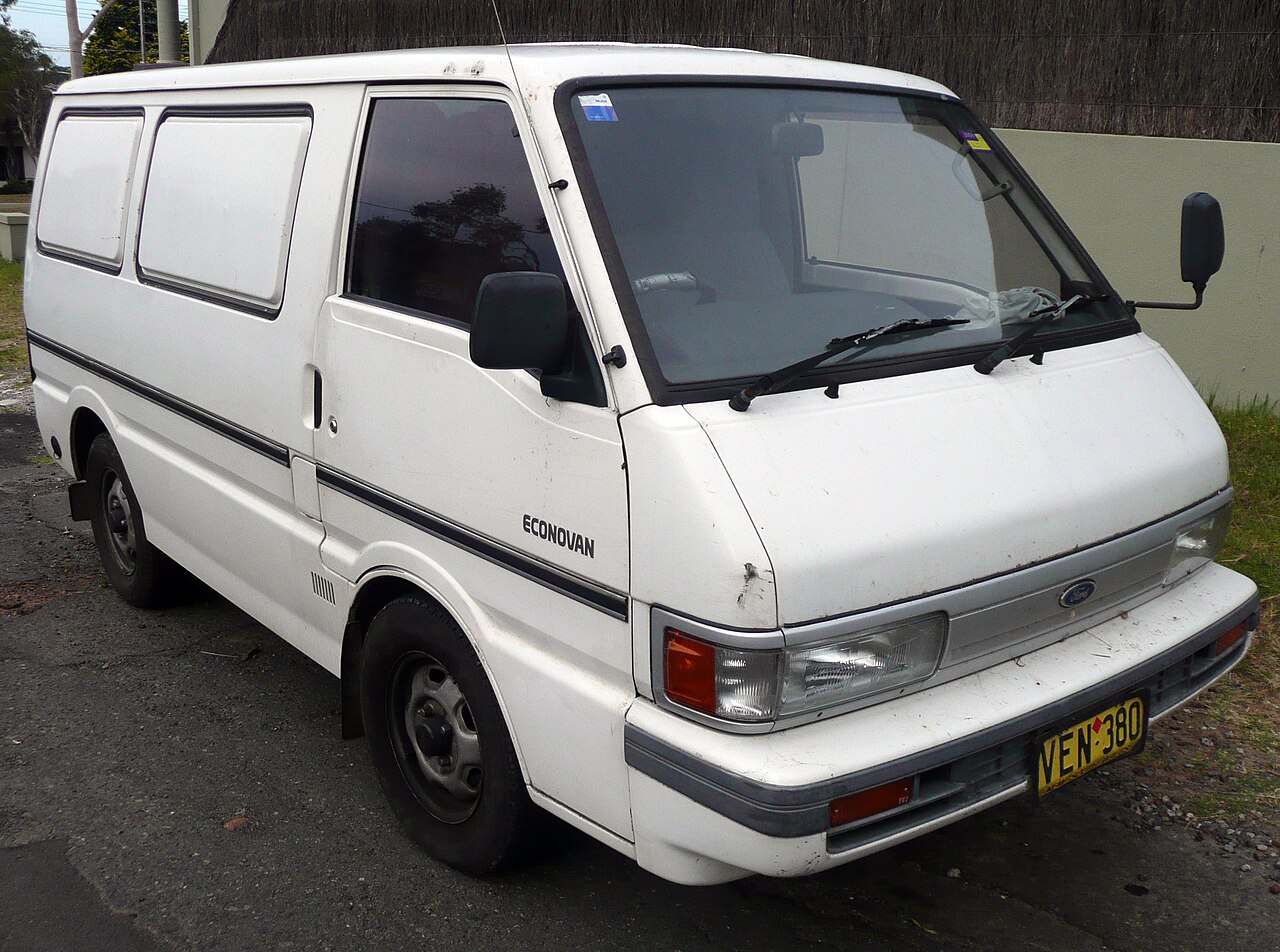
1998 Ford Econovan short wheelbase van
1998 Ford Econovan (JG) SWB. Photo by OSX, Public domain, via Wikimedia Commons.

How a Ford Econovan VIN is put together

The Econovan was built by Mazda in Japan, so its identification reflects Japanese manufacture rather than a Ford United States code. On the 17-character era cars the first three characters are the World Manufacturer Identifier showing Japanese origin, the descriptor section records the body and engine, the tenth character is the model year and the eleventh is the plant. The number confirms whether a van is petrol or diesel and which body it uses.

VIN clue What it means
Japanese WMI Ford Econovan built by Mazda in Japan
Position 9 Check digit that validates the whole VIN
Position 10 Model year code
Positions 4 to 8 Body, restraint system and engine family
Positions 12 to 17 Unique sequential build number

You will find the number on the body plate in the engine bay or cab, on the door area, and in the registration documents.

About the Ford Econovan

The Econovan was Ford’s compact van for Australia, New Zealand and parts of Asia, a rebadged version of the Mazda Bongo and E-Series van. It was a simple, durable cargo and people mover offered with petrol and diesel engines and in short and long-wheelbase forms, popular with tradespeople and small businesses.

Phase Years Body Key engines Origin
Ford Econovan (1987 to 2006) 1987 to 2006 Compact cargo and passenger van 1.8 and 2.0 petrol, 2.0 and 2.2 diesel Built by Mazda in Japan

Ford Econovan engines and specifications

Confirming the engine against the van’s identification helps when sourcing parts for these Mazda-based vehicles.

Configuration Years Power Fuel
Ford Econovan 1.8 petrol 1987 to 2006 about 80 hp Petrol
Ford Econovan 2.0 petrol 1987 to 2006 about 90 hp Petrol
Ford Econovan 2.0 and 2.2 diesel 1987 to 2006 about 65 to 75 hp Diesel

Ford Econovan by configuration

The number and badging help confirm the body and drivetrain on a used Econovan.

If the van is What to expect
Ford Econovan short-wheelbase Compact van for tight city work
Ford Econovan long-wheelbase More load space for heavier duties
Ford Econovan petrol Smoother and quieter for lighter use
Ford Econovan diesel More economical for high-mileage work

Reliability and the things worth checking

The Econovan is simple and tough, but as an older commercial van its condition matters most.

Area What to check
Ford Econovan bodywork Inspect for rust in the floor, sills and around the doors
Ford Econovan engine Confirm cooling, timing belt and general maintenance
Ford Econovan commercial use Check for heavy wear from years of work, including clutch and suspension
Ford Econovan general Confirm the identification details match and look for past accident repair

A careful inspection for rust and a healthy drivetrain is the best way to choose a sound Econovan.

Buying a used Ford Econovan

Confirm the year, engine and body against the van’s identification number and paperwork. On this simple, hard-working van, a rust-free body and a well-maintained engine matter far more than specification.

When you are ready, enter your Ford Econovan details in the decoder above and compare them with the van and its documents.

Ford Custom (1965 to 1981) VIN Decoder: History, Engines and VIN Lookup Guide

Every Ford Custom carries an identification number, and reading it is the quickest way to confirm what a particular car really is before you trust a seller’s description. From 1965 the Custom and Custom 500 were the value full-size Fords sitting below the Galaxie and LTD, sold as plain, durable sedans that were popular with families and fleets, and the Custom 500 continued in Canada into the early 1980s. The number confirms the model year, the engine the car left the line with and the plant that built it. You can run a Custom number through the decoder at the top of this page, and the guide below explains the format, walks through the eras, and points out what matters most when you check one.

How a Ford Custom VIN is put together

Most of these cars predate the 17 character VIN that Ford adopted in 1981, so they carry a shorter identification number found on the data plate and stamped on the body, where the first character is the model year, another is the assembly plant, and further characters give the body and engine codes. The very last Canadian built cars from 1981 use the modern 17 character VIN beginning with a Ford code. The engine code is the part that matters most, because it separates a six from a small-block or big-block V8. The quick reference below covers the clues you will use most often when you read a Ford Custom number.

VIN clue What it means
First character (pre-1981) Model year, for example 6 is 1966 and 0 is 1970
Assembly plant A letter identifying the factory
Engine code For example a 240 six, a 302 or a 429 V8
Body and series Custom or Custom 500 and the body style
Sequential number The build number unique to the car

On a car this old, matching the number on the data plate with the title and any other stampings is the first check worth doing.

How a Ford Custom is identified

This Custom spans the change to the modern VIN. A car from the 1981 model year carries the seventeen character VIN, which begins with 1FA on a United States built Ford passenger car and gives the model year in the tenth character. The earlier cars, up to 1980, predate that system and instead are identified by an older Ford number, a shorter code stamped on the car and set out on the door data plate, where the first character is the model year.

What the old Ford number tells you

On the pre 1981 cars the stamped number and the data plate together record the model year, the plant, the body style and the engine. Because there was no single national standard yet, the exact code letters change from year to year, so restorers translate each field against a year specific Ford chart rather than reading it straight through like a modern VIN.

Where to find the number on a Ford Custom

On the 1981 cars the VIN reads through the windshield at the base of the glass on the driver side and repeats on the door jamb label. On the earlier cars look for the data plate on the door or door pillar and the stamped number on the body. On any car of this age, the plate, the stamped number and the paperwork all need to agree before you buy.

A short history, generation by generation

From 1965 the Custom and Custom 500 were the entry full-size Fords, sharing their bodies and engines with the Galaxie and LTD but with plainer trim, which made them favourites as taxis, police cars and no nonsense family transport. The cars grew and restyled through the late 1960s and early 1970s with the full range of six and V8 engines, and after the line was dropped in the United States the Custom 500 carried on in Canada until the early 1980s. The table below sums up the eras.

Generation Years Body Key engines
Ford Custom mid-1960s 1965 to 1968 Sedan 240 six, 289 to 428 V8
Ford Custom early-1970s 1969 to 1972 Sedan 240 six, 302 to 429 V8
Ford Custom 500 (Canada) 1973 to 1981 Sedan 250 six, 302 to 400 V8

Ford Custom engines and specifications

Because the engine code is part of the number, a proper check confirms the engine the car was born with. The figures below cover the main engines, with power as a range because output changed across the years and the way it was measured changed too.

Configuration Years Power Layout
Ford Custom 240 and 300 six 1965 to 1981 about 150 to 170 hp Inline-6
Ford Custom 289 and 302 V8 1965 to 1981 about 195 to 220 hp Small-block V8
Ford Custom 351 to 400 V8 1969 to 1981 about 150 to 250 hp Windsor, Cleveland and 335 V8
Ford Custom 428 and 429 V8 1966 to 1972 about 320 to 360 hp Big-block V8

Ford Custom by model year

Buyers searching for a specific year want to know what they are getting, so the table below maps several years to the era and engine. Cars before 1981 use the year digit, while the last Canadian cars use the 17 character VIN.

Model year Identification Era Engine options
Ford Custom 1966 6 Mid-1960s 240 six, 289 to 428 V8
Ford Custom 1970 0 Early-1970s 302 to 429 V8
Ford Custom 500 1975 data plate Canada 351 to 400 V8
Ford Custom 500 1979 data plate Canada 302 to 351 V8

Reliability and the things worth checking

These are simple, robust cars by modern standards, but every survivor is old now, so condition and originality matter far more than mechanical complexity. The most common points to check are summarized below.

Engine or area What to check
Ford Custom V8 Durable and easy to service, confirm the engine matches the number and check for overheating
Ford Custom six Tough and simple, check for general age related wear
Ford Custom former fleet use Many were taxis or patrol cars, so check for hard, high mileage use
Ford Custom body and frame Rust in floors, frame and lower panels is the main enemy on survivors

Buying a used Ford Custom

When you find one worth pursuing, read the number first and make sure the model year, engine and body line up with the seller’s description and the title. Check whether the car had a hard fleet life, confirm the engine through the data plate, and inspect the frame and floors for corrosion. When you are ready, enter your Ford Custom number in the decoder above, then use the advice here to make sure the car is genuinely what it claims to be.

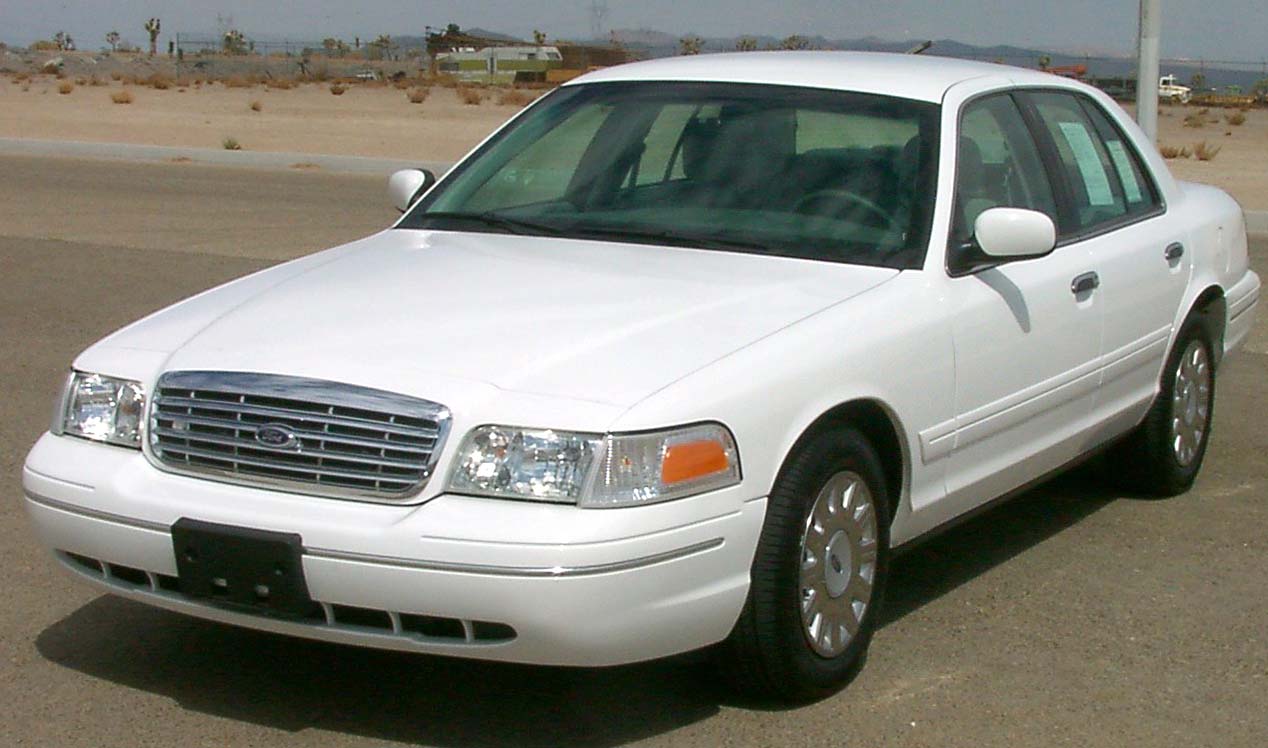
Ford Crown Victoria VIN Decoder: Second Generation (1998 to 2011) VIN Lookup Guide

Every Ford Crown Victoria carries a 17-character Vehicle Identification Number, and decoding it is the quickest way to confirm what a given car really is before you trust a listing. The VIN reveals the model year, the plant it came from, the engine fitted at the factory, the body and the safety equipment. On the Crown Victoria this matters most for confirming the model year, separating a civilian car from a Police Interceptor or fleet model, and verifying what a seller claims. This page covers the second-generation Ford Crown Victoria, sold from 1998 to 2011. Run any Crown Victoria VIN through the decoder above to read it in seconds, and use the guide below to understand the number and what to check.

2003 Ford Crown Victoria sedan, front view
2003 Ford Crown Victoria. Photo by U.S. National Highway Traffic Safety Administration, Public domain, via Wikimedia Commons.

How a Ford Crown Victoria VIN is put together

The 17 characters follow a global standard, so each position carries fixed meaning. The Crown Victoria was built at St. Thomas in Ontario, Canada, so its VIN typically begins with 2FA, marking a Ford passenger car built in Canada. Characters four through eight describe the body, the restraint system and the engine, which is the 4.6 V8, and they also separate the Police Interceptor from civilian models. The ninth character is a check digit, the tenth is the model year, the eleventh is the plant, and the final six are the unique build sequence.

VIN clue What it means
WMI 2FA Ford Crown Victoria built as a Ford car in Canada
Position 9 Check digit that validates the whole VIN
Position 10 Model year code (for example W is 1998, A is 2010)
Positions 4 to 8 Body, restraint system and engine, including Police Interceptor
Positions 12 to 17 Unique sequential build number

You will find the VIN at the base of the windshield on the driver’s side, on the door jamb label, and in the registration paperwork.

Ford Crown Victoria VIN position by position

Every second generation Crown Victoria uses the seventeen character format. Reading it one position at a time confirms the year, the series and the engine before you rely on any advert or listing.

Position Name What it tells you on a Crown Victoria
1 to 3 World Manufacturer Identifier 2FA for a Crown Victoria built by Ford of Canada
4 Restraint system The fitted airbag and seatbelt setup
5 to 7 Line, series and body The P7x code that separates a base car from a Police Interceptor, see the table below
8 Engine The 4.6 litre V8 code, W or 6 depending on the engine plant
9 Check digit A calculated character that validates the other sixteen
10 Model year A single character, see the year chart below
11 Assembly plant X for St. Thomas, Ontario, where every Crown Victoria was built
12 to 17 Serial number The unique build sequence for that car

Ford Crown Victoria series codes (positions 5 to 7)

Positions five to seven are the most useful part of a Crown Victoria VIN, because they tell a plain sedan apart from a fleet or police car. This is the first thing to check when a seller claims a car is a genuine Police Interceptor.

Code Model
P73 Crown Victoria, base four door sedan
P74 Crown Victoria LX
P71 Police Interceptor
P72 Base fleet vehicle
P70 Long wheelbase

Ford Crown Victoria engine code (position 8)

The Crown Victoria used one engine family across its whole life, the 4.6 litre SOHC V8, so position eight mainly tells you which factory built the engine rather than which size it is. Both codes below are the same 4.6 litre V8.

Code Engine
W 4.6 litre SOHC V8, built at the Romeo engine plant
6 4.6 litre SOHC V8, built at the Windsor engine plant

Ford Crown Victoria model year codes (position 10)

The tenth character gives the model year. For the second generation the codes run as follows.

Model year Code in position 10
Ford Crown Victoria 1998 W
Ford Crown Victoria 1999 X
Ford Crown Victoria 2000 Y
Ford Crown Victoria 2001 1
Ford Crown Victoria 2002 2
Ford Crown Victoria 2003 3
Ford Crown Victoria 2004 4
Ford Crown Victoria 2005 5
Ford Crown Victoria 2006 6
Ford Crown Victoria 2007 7
Ford Crown Victoria 2008 8
Ford Crown Victoria 2009 9
Ford Crown Victoria 2010 A
Ford Crown Victoria 2011 B

Where to find the VIN on a Ford Crown Victoria

On a Crown Victoria the VIN is easiest to read through the windshield, on a plate at the base of the glass on the driver side. It is repeated on a label in the driver door jamb, which also carries the tyre and paint information. On police and fleet cars always confirm the two match, because retired interceptors are sometimes rebadged as ordinary sedans.

Reading a Crown Victoria VIN in practice

Take a sample VIN of 2FAFP71W23X123456. The 2FA start confirms a Ford of Canada car, P71 in positions five to seven marks it as a Police Interceptor, W in position eight is the 4.6 litre V8, the 3 in position ten makes it a 2003 model, and X in position eleven places its build at St. Thomas in Ontario. The final digits are the individual serial number. That single line identifies it as a 2003 Police Interceptor with the 4.6 litre V8 before you have seen a single photo.

The second-generation Crown Victoria

The second-generation Crown Victoria continued on the rear-wheel-drive Panther platform and became the definitive American taxi and police car of its era. It arrived for 1998 with a redesigned body, was widely sold to fleets as the Police Interceptor, and ran all the way to 2011, by which point civilian sales had largely given way to fleet and export orders.

Phase Years Body Engine VIN type
Ford Crown Victoria early 1998 to 2002 Full-size sedan 4.6 V8 2FA, 17-character
Ford Crown Victoria updated 2003 to 2007 Full-size sedan 4.6 V8, new chassis updates 2FA, 17-character
Ford Crown Victoria late run 2008 to 2011 Full-size sedan 4.6 V8, mostly fleet and export 2FA, 17-character

Ford Crown Victoria engines and specifications

Because the engine code sits in the middle of the VIN, a check confirms the engine and whether the car is a Police Interceptor, which matters for value and parts.

Configuration Years Power Layout
Ford Crown Victoria 4.6 V8 1998 to 2011 about 200 to 239 hp Naturally aspirated V8
Ford Crown Victoria Police Interceptor 4.6 V8 1998 to 2011 about 235 to 250 hp Naturally aspirated V8

Ford Crown Victoria by model year

The Crown Victoria follows the standard VIN year characters, so position ten quickly confirms the year a seller claims.

Model year VIN year code Notes
Ford Crown Victoria 1998 W First year of the new body
Ford Crown Victoria 2003 3 Chassis and rack-and-pinion updates
Ford Crown Victoria 2006 6 Late second generation
Ford Crown Victoria 2010 A Mostly fleet and export
Ford Crown Victoria 2011 B Final model year

Reliability and the things worth checking

The Crown Victoria is famously durable, but many led hard fleet lives. Confirm a specific car against records by its VIN where possible.

Area What to check
Ford Crown Victoria 4.6 V8 Very durable; some years had intake manifold concerns, so confirm any repairs
Ford Crown Victoria Police Interceptor Often high-mileage and hard-used; check for fleet history and wear
Ford Crown Victoria body and frame Inspect for rust on body and frame, especially in salt-belt cars
Ford Crown Victoria suspension and brakes Check front-end components and brakes, which wear faster on fleet cars

A VIN check together with a careful inspection, especially for former police use and rust, is the best way to choose a good Crown Victoria.

Ford Crown Victoria recalls

The Crown Victoria has had a number of safety recalls, recorded by the American road safety regulator, the NHTSA, some of them specific to the Police Interceptor and fleet cars. The main campaigns are listed below. This is a reference list, not a check of your individual car. To see whether a specific VIN has an open, unrepaired recall, use the official lookups linked underneath.

Model years NHTSA number Area Problem and risk
2005 to 2011 (salt states) 13V385 / 14V704 Steering The intermediate steering shaft may corrode and seize, which can lead to a loss of steering. The best known issue on the later cars.
2003 to 2005 15V861 Headlights The lighting control module may fail, causing a loss of headlights.
2007 to 2008 07V270 Front suspension A front wheel hub may fracture and the wheel can separate from the car.
2004 (fleet and police) 04V328 Rear axle Heavily loaded fleet cars may suffer a rear axle shaft fracture and loss of drive.
Police Interceptor (to 2003) 02I003 / 05V206 Fuel tank / underbody Fuel tank shields were fitted after rear impact fires, and a heat shield could sag onto the catalytic converter, risk of smoke or fire.
2003 (police and taxi) 03V279 Wheels Steel wheels may crack at the weld, causing rapid air loss.
Natural gas cars 03V472 Fuel tank The natural gas tank wrap could be weakened by an interior fire, risk of the tank rupturing.

Recall data is published by the NHTSA and changes over time as new campaigns are announced. This list is a summary of the main ones and is not a substitute for the official record. Always confirm the exact status for a specific car by its VIN.

Check a specific VIN for open recalls: use the official NHTSA recalls lookup or the Ford recall page, which show whether the recall work on that VIN has already been done.

Buying a used Ford Crown Victoria

Decode the VIN first and confirm the model year and whether the car is a Police Interceptor, then judge condition and history. A clean, lower-mileage civilian car with a documented history is worth far more than a retired fleet vehicle, so the VIN and service record matter a great deal here. When you are ready, enter your Ford Crown Victoria VIN in the decoder above to confirm the year, engine and configuration before you buy.
Ford Cougar VIN Decoder: History, Engines and VIN Lookup Guide

Every Ford Cougar carries a 17-character Vehicle Identification Number, and decoding it is the quickest way to confirm what a given car really is before you trust a listing. The VIN reveals the model year, the plant it came from, the engine fitted at the factory, the body and the safety equipment. On the Cougar this matters most for confirming the engine, separating a four-cylinder from the V6, and verifying the model year a seller claims. This page covers the Ford Cougar sport coupe of 1998 to 2002. Run any Cougar VIN through the decoder above to read it in seconds, and use the guide below to understand the number and what to check.

How a Ford Cougar VIN is put together

The 17 characters follow a global standard, so each position carries fixed meaning. The Cougar was built at Flat Rock in Michigan, so its VIN reflects United States assembly and begins with a Ford or Auto Alliance manufacturer code. Characters four through eight describe the body, the restraint system and the engine, which is where the 2.0 four-cylinder is separated from the 2.5 V6. The ninth character is a check digit, the tenth is the model year, the eleventh is the plant, and the final six are the unique build sequence.

VIN clue What it means
Positions 1 to 3 Manufacturer code indicating United States assembly at Flat Rock
Position 9 Check digit that validates the whole VIN
Position 10 Model year code (for example W is 1998, 2 is 2002)
Positions 4 to 8 Body, restraint system and engine family
Positions 12 to 17 Unique sequential build number

You will find the VIN at the base of the windshield on the driver’s side, on the door jamb label, and in the registration paperwork. Note that the earlier and larger Mercury Cougar is a different vehicle covered separately.

Ford Cougar VIN position by position

This European Cougar was a sporty coupe based on the Mondeo, and although it was sold in Europe it was actually built in the United States and shipped across. It uses the seventeen character VIN, and reading it in order settles the origin, the year and the engine.

Position Name What it tells you on a Cougar
1 to 3 World Manufacturer Identifier 1FA marks a Ford passenger car built in the United States, which is where this Cougar was made
4 to 8 Vehicle descriptor Body, trim and engine, where the four cylinder is separated from the V6
9 Check digit A calculated character that validates the rest of the VIN
10 Model year A single character, listed in the chart below
11 Assembly plant The Ford factory that built the car
12 to 17 Serial number The build sequence unique to that Cougar

Ford Cougar model year codes (position 10)

The Cougar was sold for a few years, and the tenth character reads as follows.

Model year Code in position 10
Ford Cougar 1998 W
Ford Cougar 1999 X
Ford Cougar 2000 Y
Ford Cougar 2001 1
Ford Cougar 2002 2

Where to find the VIN on a Ford Cougar

Read the VIN through the base of the windscreen on the driver side and check it against the plate or label in the door area. These were affordable coupes that have thinned out over the years, so a quick VIN read confirms the year and engine match the advert.

Reading a Cougar VIN in practice

Take a car whose VIN opens with 1FA and shows X in position ten. That places it as a United States built Ford from the 1999 model year. The descriptor section then shows whether it left the line as the four cylinder or the V6, and the closing six digits are the car’s own serial number.

About the Ford Cougar

The Ford Cougar was a front-wheel-drive sport coupe sold from 1998 to 2002, based on the Mondeo platform and built in the United States for both European and North American markets, where it was also sold as the Mercury Cougar. Its New Edge styling stood out, and it paired everyday Mondeo mechanicals with a sleek coupe body.

Phase Years Body Key engines VIN type
Ford Cougar 1998 to 2002 Sport coupe 2.0 four-cylinder, 2.5 V6 17-character

Ford Cougar engines and specifications

Because the engine code sits in the middle of the VIN, a check confirms the engine the car was built with, which is exactly what you want when a listing is vague about four-cylinder versus V6.

Configuration Years Power Layout
Ford Cougar 2.0 Zetec I4 1998 to 2002 about 130 hp Naturally aspirated inline-4
Ford Cougar 2.5 Duratec V6 1998 to 2002 about 170 hp Naturally aspirated V6

Ford Cougar by model year

The Cougar follows the standard VIN year characters, so position ten quickly confirms the year a seller claims.

Model year VIN year code Notes
Ford Cougar 1998 W First model year
Ford Cougar 1999 X Early run
Ford Cougar 2000 Y Mid-cycle
Ford Cougar 2001 1 Late run
Ford Cougar 2002 2 Final model year

Reliability and the things worth checking

The Cougar shares mechanicals with the Mondeo, so it is generally robust, but its age means condition matters. Confirm a specific car against records by its VIN where possible.

Area What to check
Ford Cougar 2.5 V6 Confirm cooling system health and that the timing service has been kept up
Ford Cougar bodywork Inspect for rust and past accident repair on a coupe of this age
Ford Cougar electrics Check the electrical systems and interior, which can show their age
Ford Cougar general Check the clutch and gearbox on a road test and confirm a tidy service record

A VIN check together with a careful inspection for rust and a healthy drivetrain is the best way to choose a good Cougar.

Buying a used Ford Cougar

Decode the VIN first and confirm the model year and engine match the advertisement. The V6 is the desirable choice for performance, the four-cylinder is the economical option, and on either one a rust-free body, healthy cooling system and documented history matter most on a car of this age. When you are ready, enter your Ford Cougar VIN in the decoder above to confirm the year, engine and configuration before you buy.
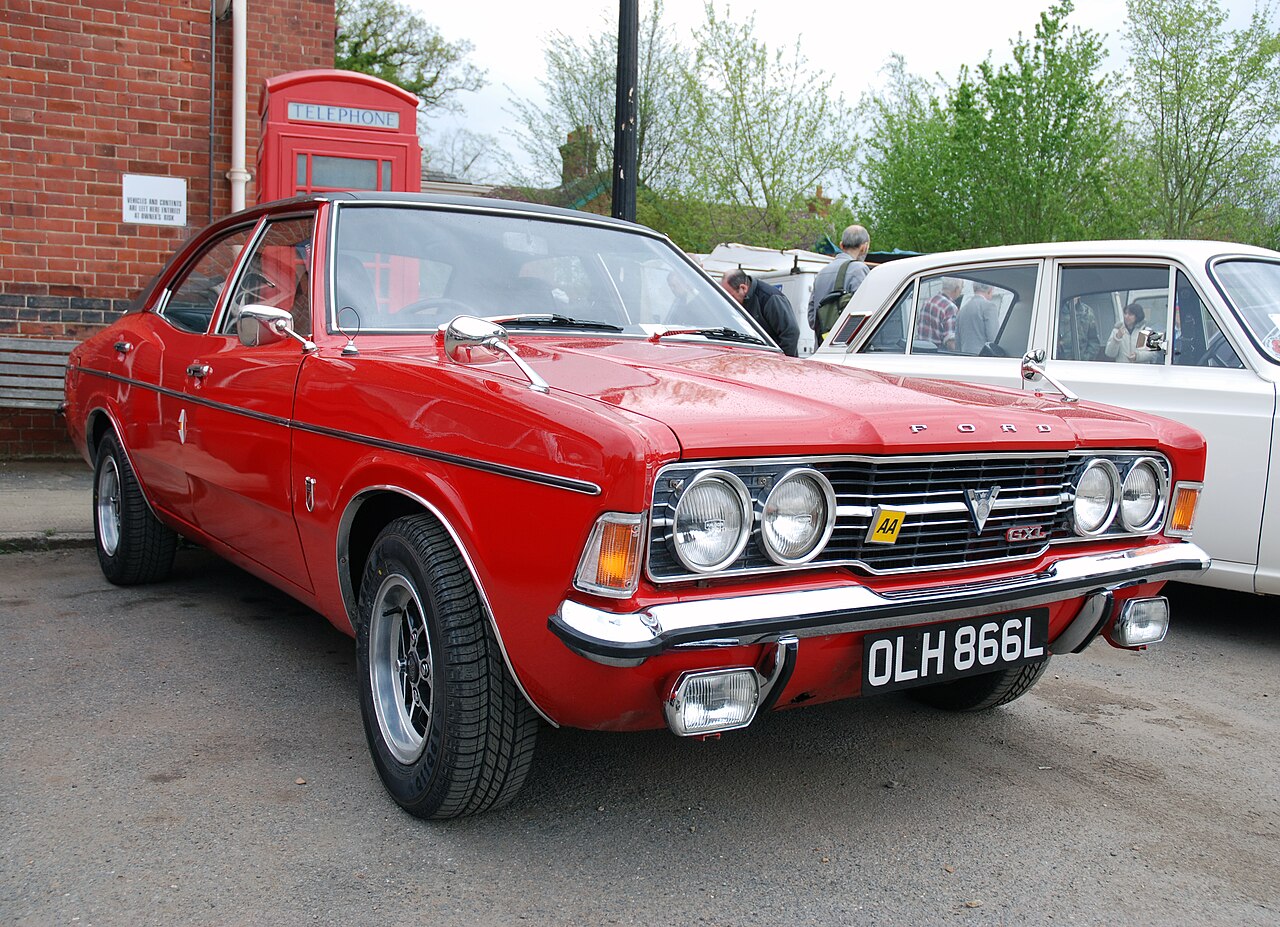
Ford Cortina VIN Decoder: History, Engines and VIN Lookup Guide

The Ford Cortina carries an identification number that tells you what a given car really is, which is invaluable when buying, restoring or verifying one of Britain’s best-selling classics. Most Cortinas were built before the modern 17-character VIN standard, so they use shorter factory numbers read with year-specific references, while the very last cars may carry the standard 17-character format.

This page covers the classic Ford Cortina. Run a number through the decoder above, and use the guide below to understand how Cortina identification works and what to check on a classic.

Ford Cortina Mk3 saloon
Ford Cortina Mk3. Photo by allen watkin from London, UK, CC BY-SA 2.0, via Wikimedia Commons.

How a Ford Cortina is identified

The Cortina was built mainly at Dagenham in the United Kingdom and at other European plants. Cars from the 1960s and 1970s use Ford’s older identification format rather than the 17-character VIN, with codes that record the model, body, engine and assembly details according to year-specific schemes. Only the final cars built around 1981 to 1982 fall into the modern 17-character era. For the older cars, a marque specialist or year-specific reference is the reliable way to read the number.

Identification clue What it means
Pre-1981 Cortinas Use shorter factory codes, read with year-specific references
1981 to 1982 cars May use the standard 17-character VIN
Plant Mainly Dagenham in the United Kingdom
Engine and body Recorded in the descriptor section of the number
Where to find it Engine bay plate, body stampings and registration documents

Generations of the Ford Cortina

The Cortina was Ford of Europe’s mainstream family car from 1962 to 1982 and topped the British sales charts for years. Across five generations it grew from a light, simple saloon into a larger, more comfortable car, and it spawned famous performance and sporting versions including the Lotus Cortina and various GT models.

Generation Years Body Key engines VIN type
Ford Cortina Mk1 1962 to 1966 Saloon and estate 1.2 to 1.5, Lotus Cortina Pre-1981 short code
Ford Cortina Mk2 1966 to 1970 Saloon and estate 1.3 to 1.6, Lotus and GT Pre-1981 short code
Ford Cortina Mk3 1970 to 1976 Saloon and estate 1.3 to 2.0, GT and GXL Pre-1981 short code
Ford Cortina Mk4 and Mk5 1976 to 1982 Saloon and estate 1.3 to 2.3, including V6 Short code, 17-character at the very end

Ford Cortina engines and specifications

Confirming the engine against the car’s documentation matters for value and originality on a classic Cortina.

Configuration Years Notes
Ford Cortina 1.3 and 1.6 four-cylinder 1962 to 1982 Common economical engines
Ford Cortina 2.0 Pinto 1970 to 1982 Popular larger four-cylinder
Ford Cortina 2.3 V6 1977 to 1982 Top engine on later cars
Ford Cortina Lotus and GT 1963 to 1970 Sought-after performance versions

Reliability and the things worth checking

On a classic Cortina, condition and originality matter far more than specification.

Area What to check
Ford Cortina bodywork Rust is the main enemy: inspect arches, sills, floors and chassis legs carefully
Ford Cortina Lotus and GT Confirm authenticity, as these are widely replicated and command a large premium
Ford Cortina engine and gearbox Check for oil leaks, smoke and worn synchros on a test drive
Ford Cortina originality Confirm the engine and trim match the documentation, since many cars were modified

A careful inspection for rust and originality, supported by the car’s documentation, is essential on a classic of this age and following.

Buying a used Ford Cortina

Confirm the model, year and engine against the car’s identification number and paperwork. On the classic Cortina, a solid, rust-free body and a genuine, original drivetrain are everything, and the desirable Lotus and GT models in particular reward careful verification before you pay a premium.

When you are ready, enter your Ford Cortina details in the decoder above and compare them with the car and its documents.

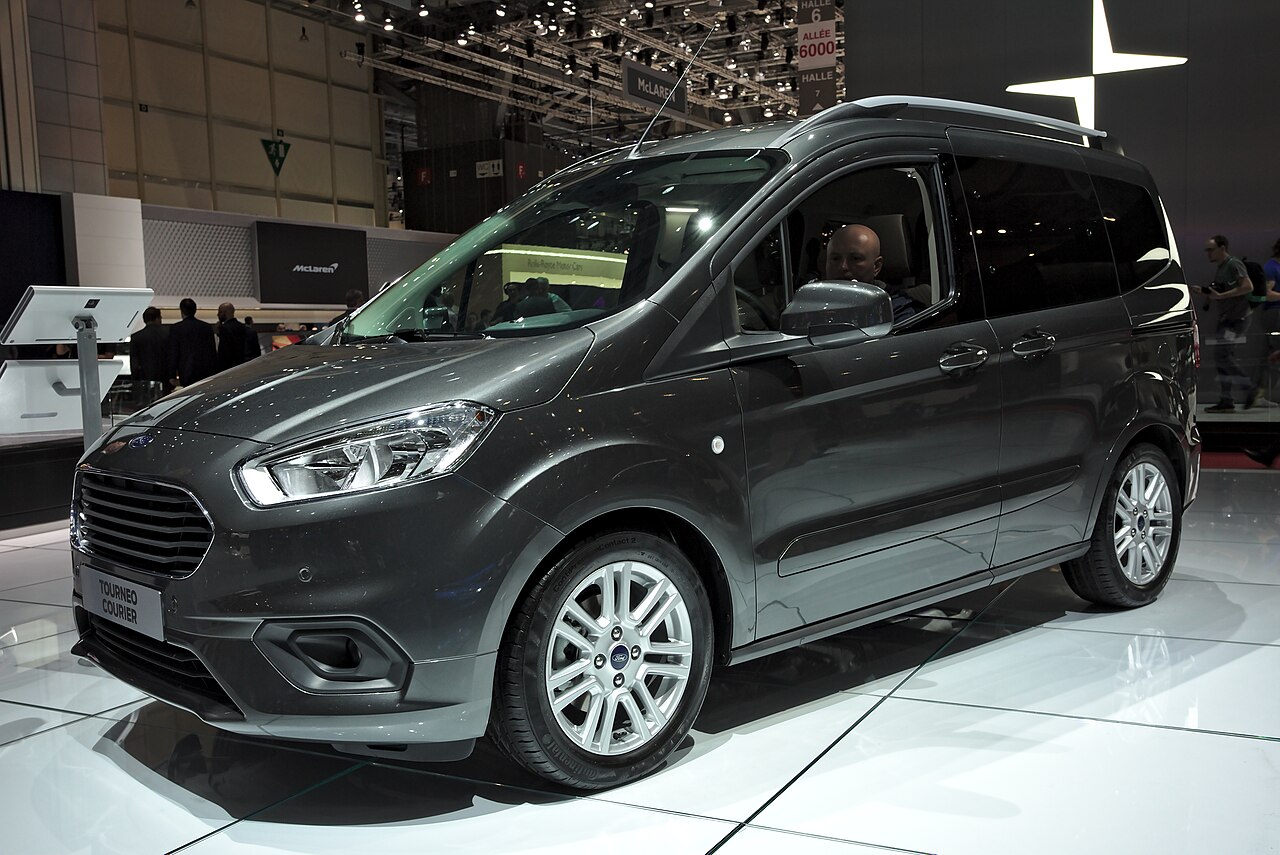
Ford Tourneo Courier VIN Decoder: Generations, Engines and VIN Lookup Guide

Every Ford Tourneo Courier carries a 17 character Vehicle Identification Number, and reading it is the quickest way to confirm what a particular vehicle really is before you trust a listing. The Tourneo Courier is Ford’s smallest passenger van derived MPV, based on the same compact underpinnings as the Fiesta, sold across Europe since 2014 with frugal petrol and diesel engines and now an electric version. The VIN settles the model year, the engine the vehicle left the line with and the plant that built it.

You can run any Tourneo Courier VIN through the decoder at the top of this page and read the result in a few seconds. The rest of this guide explains how the number is built, walks through the generations, and points out what to check when you look one over.

2018 Ford Tourneo Courier, front view
2018 Ford Tourneo Courier. Photo by Alexander Migl, CC BY-SA 4.0, via Wikimedia Commons.

How a Ford Tourneo Courier VIN is put together

The 17 characters split into three blocks, and because the layout follows a global standard, the same position always carries the same kind of information.

The first three characters are the World Manufacturer Identifier, and the European built Tourneo Courier carries a Ford of Europe code such as WF0. Characters four through eight describe the vehicle, including the body and, most usefully, the engine, which is where an EcoBoost petrol is set apart from a TDCi diesel or the electric drive. The ninth character is a check digit that validates the whole number.

The last eight characters describe the individual vehicle, with position ten the model year, position eleven the plant and the final six the sequential build number. The quick reference below covers the clues you will use most often when you read a Ford Tourneo Courier VIN.

VIN clue What it means
WMI WF0 Ford Tourneo Courier built by Ford in Europe
Position 8 Engine code, for example an EcoBoost petrol, a TDCi diesel or electric drive
Position 9 Check digit that validates the whole VIN
Position 10 Model year code, for example F is 2015 and M is 2021
Position 11 Assembly plant code

You will find the number behind the windscreen, on the plate in the door area and on the registration documents, and matching them is the first check worth doing.

A short history, generation by generation

The first Tourneo Courier arrived in 2014 as the seated, windowed version of the small Transit Courier van, giving buyers a tall, practical mini MPV on a low budget. It used small EcoBoost petrol and TDCi diesel engines and stayed in production for nearly a decade. The second generation of 2023 moved to a newer platform shared with the latest small Fords, grew in size and quality, and added a fully electric E-Tourneo Courier. The table below sums up the generations.

Generation Years Body Key engines
Ford Tourneo Courier first generation 2014 to 2023 Mini MPV 1.0 EcoBoost, 1.5 and 1.6 TDCi
Ford Tourneo Courier second generation 2023 to present Mini MPV 1.0 EcoBoost, electric

Ford Tourneo Courier engines and specifications

Because the engine code sits in the middle of the VIN, a proper check confirms the engine the vehicle was born with. The figures below cover the main configurations, with power as a range because output changed across model years.

Configuration Years Power Layout
Ford Tourneo Courier 1.0 EcoBoost 2014 to present about 100 to 125 hp Turbocharged 3-cylinder petrol
Ford Tourneo Courier 1.5 and 1.6 TDCi 2014 to 2023 about 75 to 100 hp Turbocharged diesel
Ford E-Tourneo Courier 2024 to present about 134 hp Battery electric

Ford Tourneo Courier by model year

Buyers searching for a specific year want to know what they are getting, so the table below maps several model years to their VIN year code, generation and engine options. The same model year letter logic runs across the production run.

Model year VIN year code Generation Engine options
Ford Tourneo Courier 2015 F First generation 1.0 EcoBoost, 1.6 TDCi
Ford Tourneo Courier 2018 J First generation 1.0 EcoBoost, 1.5 TDCi
Ford Tourneo Courier 2021 M First generation 1.0 EcoBoost, 1.5 TDCi
Ford Tourneo Courier 2023 P Second generation 1.0 EcoBoost
Ford Tourneo Courier 2024 R Second generation 1.0 EcoBoost, electric

Reliability and the things worth checking

The Tourneo Courier is a simple, practical vehicle, so condition and history matter most, and you should always run the VIN through the relevant recall check. The most common points to check are summarized below.

Engine or area What to check
Ford Tourneo Courier 1.0 EcoBoost Keep on top of cooling and oil and confirm the cambelt service plan
Ford Tourneo Courier diesel Check the diesel particulate filter and injectors on high mileage examples
Ford Tourneo Courier electric On the electric version confirm the battery health and charging
Ford Tourneo Courier interior Check the hard wearing interior and load area for damage

Buying a used Ford Tourneo Courier

When you find one worth pursuing, decode the VIN first and make sure the model year, engine and body line up with the advertisement, then run the same number through the relevant recall check. Confirm a clean service history, and on the electric version check the battery state of health and charging behaviour.

When you are ready, enter your Ford Tourneo Courier VIN in the decoder above to confirm the year, engine and plant, then use the advice here to make sure the vehicle is genuinely what it claims to be.

Fast & Free

Quickly get vehicle details for free.

Reliable Data

We source data from trusted providers.

Global VIN Check

Supports VINs from all over the world.

How to read VIN code?

1
H
G
B
H
4
1
J
X
M
N
1
0
9
1
8
6

What Is a VIN Code for Cars?

A Vehicle Identification Number (VIN) is a unique 17-character code that serves as a car's fingerprint. It contains specific information about the vehicle and is used for identification and tracking purposes.

A VIN provides detailed information about:

  • Manufacturer
  • Model
  • Engine type
  • Production year
  • Assembly plant
  • Serial number

VINs are globally recognized and standardized for vehicle identification.

How Does a VIN Code Work?

A VIN is divided into three main sections, each providing specific information about the vehicle.

1. World Manufacturer Identifier (WMI) - Characters 1-3

This section identifies the manufacturer and country of origin.

Examples: "1HG = Honda, made in the USA", "JHM = Honda, made in Japan"

2. Vehicle Descriptor Section (VDS) - Characters 4-9

This section provides details about the vehicle's model, engine type, body style, and includes a check digit (9th character).

3. Vehicle Identifier Section (VIS) - Characters 10-17

This section reveals the model year (10th character), manufacturing plant (11th), and serial number (12-17).

Examples: "Y in the 10th spot = 2000", "A = 2010", "L = 2020"

Why Is the VIN Important?

VINs are essential for various purposes:

  • Checking vehicle history reports
  • Registering a car
  • Buying or selling a vehicle
  • Insurance purposes
  • Verifying stolen vehicles
  • Recalls and warranty claims

You can typically find the VIN on the dashboard, door frame, or in registration documents.

Want to Decode a VIN?

Ford VIN Decoder is a fast and easy tool to get detailed vehicle information including specifications, manufacturing details, engine type, trim level, and production year.

Decode VIN