Ford GT40 VIN Decoder: History, Engines and VIN Lookup Guide
Every Ford GT40 carries a chassis number, and reading it is the quickest way to confirm what a particular car really is, which on a car this rare and valuable is the whole game. The GT40 was the mid-engined racer Ford built to beat Ferrari at Le Mans, and it did, winning the race four years running from 1966 to 1969. As a 1960s racing and road car it carries a chassis number rather than a modern VIN, and that number, with the car’s documented history, is what proves its identity.
You can run a GT40 number through the decoder at the top of this page, and the guide below explains how the numbering works, walks through the variants, and points out what matters most when you check one.
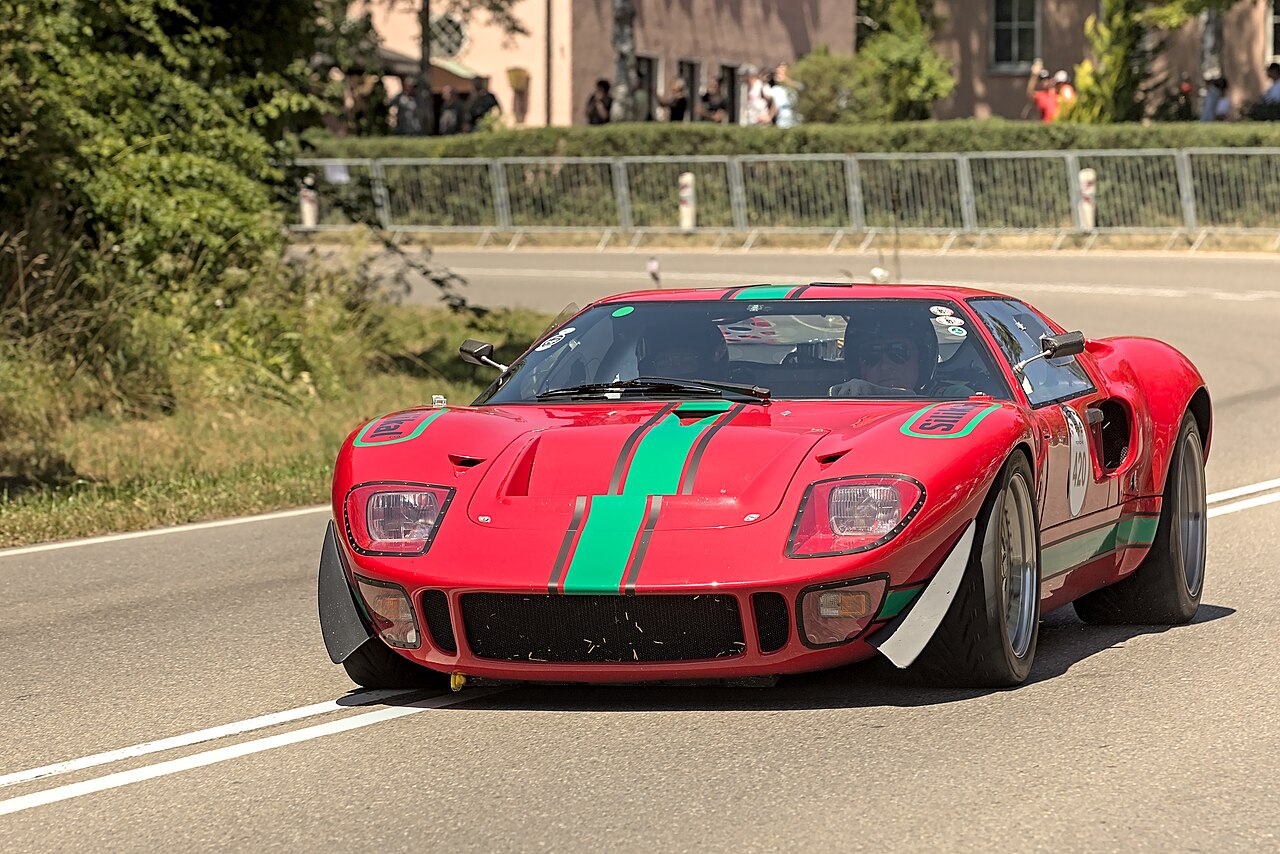
How a Ford GT40 VIN is put together
The GT40 predates the 17 character VIN, so it carries a chassis number rather than a modern VIN. The number identifies the individual car and its build series, for example the prefixes used for the various marks, and on a GT40 it is inseparable from the car’s racing and ownership history, which collectors and historians track in detail.
Because genuine GT40s are worth enormous sums and continuation and replica cars exist, the chassis number must be verified against recognised registries and documented provenance. The quick reference below covers the clues you will use most often when you read a Ford GT40 number.
| VIN clue | What it means |
|---|---|
| Chassis number | Identifies the individual car and its build series |
| Mark | Mk I, Mk II, Mk III or Mk IV |
| Engine | The 4.7 small-block or the 7.0 big-block V8 |
| Registry records | Recognised registries track each genuine chassis |
| Provenance | Racing and ownership history confirm authenticity |
On a car of this value, verifying the chassis number against the registries and the documented history is the single most important check.
A short history, mark by mark
The GT40 began in 1964 as Ford’s weapon against Ferrari, and after early struggles it was developed into a winner. The Mk I used a small-block V8 and took the car from also ran to race winner, the Mk II with its 7.0 litre big-block won Le Mans outright in 1966, and the American built Mk IV won again in 1967. A small number of Mk III road cars were built for the street. The name lived on as the inspiration for the modern Ford GT. The table below sums up the marks.
| Mark | Years | Role | Engine |
|---|---|---|---|
| Ford GT40 Mk I | 1964 to 1968 | Race and road coupe | 4.7 V8 |
| Ford GT40 Mk II | 1965 to 1966 | Race coupe | 7.0 V8 |
| Ford GT40 Mk III | 1967 to 1969 | Road coupe | 4.7 V8 |
| Ford GT40 Mk IV | 1967 | Race coupe | 7.0 V8 |
Ford GT40 engines and specifications
The GT40 used two very different engines, and which one a car has is central to its identity and value. The figures below cover both, with power as a range because race tune varied.
| Configuration | Years | Power | Layout |
|---|---|---|---|
| Ford GT40 4.7 V8 | 1964 to 1969 | about 335 to 380 hp | Small-block V8 |
| Ford GT40 7.0 V8 | 1965 to 1967 | about 485 to 500 hp | FE big-block V8 |
Ford GT40 by model year
The GT40 was built in tiny numbers across the mid to late 1960s, and each car is identified by its chassis number rather than the 17 character VIN. The table below maps the key years and marks.
| Model year | Identification | Marks | Engines |
|---|---|---|---|
| Ford GT40 1965 | chassis number | Mk I and Mk II | 4.7 and 7.0 V8 |
| Ford GT40 1966 | chassis number | Mk I and Mk II | 4.7 and 7.0 V8 |
| Ford GT40 1967 | chassis number | Mk III and Mk IV | 4.7 and 7.0 V8 |
| Ford GT40 1968 | chassis number | Mk I | 4.7 V8 |
Reliability and the things worth checking
A GT40 is a historic competition car rather than an everyday machine, so authenticity, history and the integrity of the car matter far more than ordinary reliability. The most important points to check are summarized below.
| Area | What to check |
|---|---|
| Ford GT40 authenticity | Verify the chassis number against recognised registries and documented provenance |
| Ford GT40 history | Racing and ownership history is central to value, so confirm it in detail |
| Ford GT40 originality | Establish which components are original and which have been replaced over a racing life |
| Ford GT40 expert inspection | Have a recognised marque historian inspect the car before any purchase |
Buying a used Ford GT40
When you find one, the chassis number, the registries and the documented history are everything. Genuine GT40s change hands rarely and for very large sums, so verify the car’s identity through recognised experts, understand exactly what is original, and be clear about whether a car is an original, a continuation or a replica before any money is discussed.
When you are ready, enter your Ford GT40 number in the decoder above, then use the advice here to make sure the car is genuinely what it claims to be.