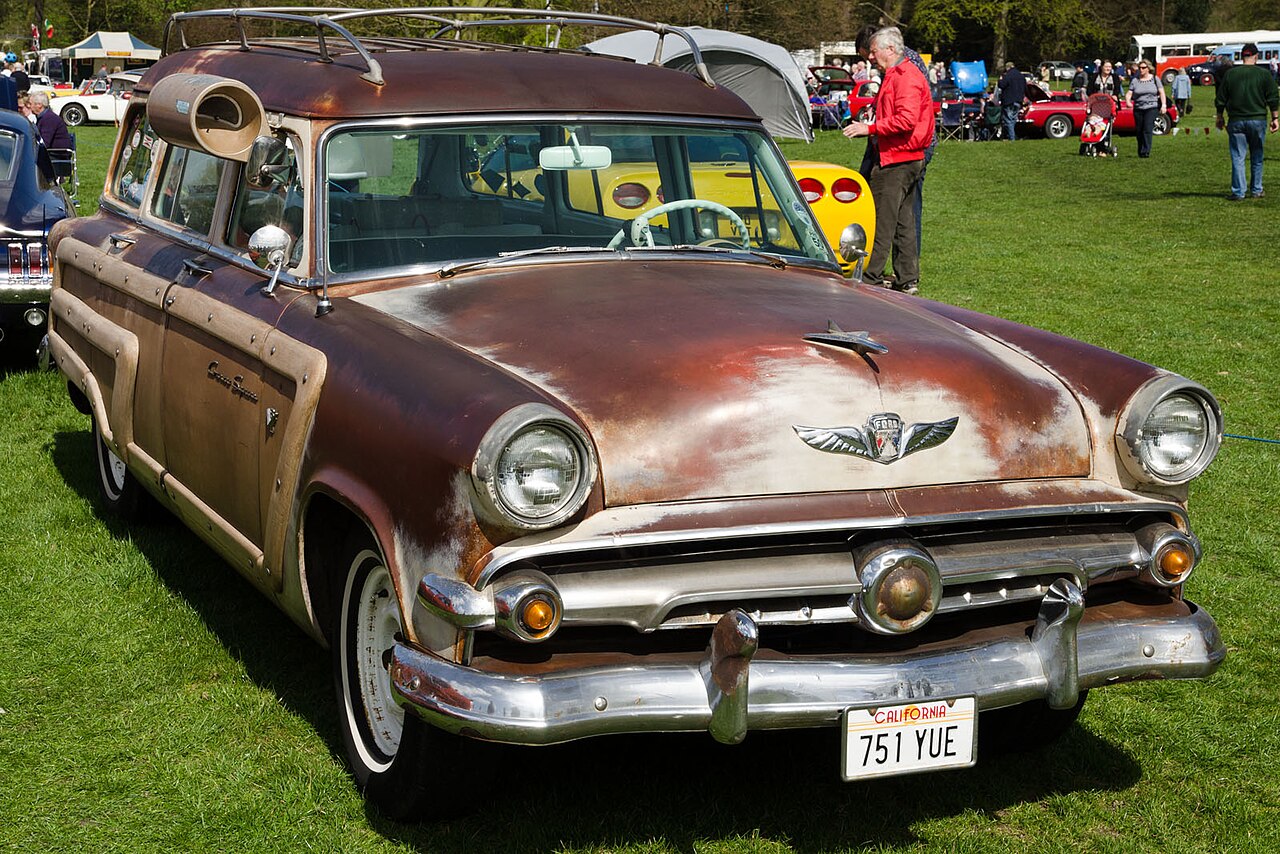
The Ford Country Squire was the top of the full size Ford wagon range for four decades, from 1950 all the way to 1991, and for most of that time it wore the wood look side trim that made it instantly recognisable. Because it ran for so long, the way you read its VIN depends on the year. This page covers both the older cars and the later ones, so you can decode whichever Country Squire you are looking at.
The dividing line is 1981. Wagons from the 1981 model year onward use the modern seventeen character VIN that every car now carries. Earlier Country Squires predate that standard and use a shorter Ford identification number, stamped on the car and repeated on the door data plate. The older number still tells you the year, the plant and the engine, but it does not line up position for position with the modern layout, so the first step is to check which era your car belongs to.
Ford Country Squire VIN position by position (1981 and later)
On the later wagons the seventeen characters break down like this. Reading them in order pins down the year and the factory quickly.
Position
Name
What it tells you on a Country Squire
1 to 3
World Manufacturer Identifier
1FA for a Ford passenger car built in the United States
4 to 8
Vehicle descriptor
Body style, restraint system and engine, the part that identifies the wagon body and the V8
9
Check digit
A calculated character that validates the rest of the VIN
10
Model year
A single character, listed in the chart below
11
Assembly plant
The Ford factory that built the car
12 to 17
Serial number
The build sequence unique to that wagon
Ford Country Squire model year codes (position 10)
For the final run on the full size platform, the tenth character reads as follows.
Model year
Code in position 10
Ford Country Squire 1981
B
Ford Country Squire 1982
C
Ford Country Squire 1983
D
Ford Country Squire 1984
E
Ford Country Squire 1985
F
Ford Country Squire 1986
G
Ford Country Squire 1987
H
Ford Country Squire 1988
J
Ford Country Squire 1989
K
Ford Country Squire 1990
L
Ford Country Squire 1991
M
Engines through the years
Over forty years the Country Squire carried a long line of Ford V8s, so position eight has to be read against the model year. The rough picture is that the 1950s and 1960s cars used the Y block and then the FE big blocks such as the 352, 390 and 428, the 1970s cars moved to the 351, 400 and the big 460, and the downsized 1979 and later wagons settled on the 302, badged 5.0, as the mainstay. A genuine big block car is worth confirming against the door plate rather than the badges alone.
Era
Typical engines
1950s and 1960s
Y block V8, then FE big blocks including the 352, 390 and 428
1970s
351 and 400, plus the 460 big block
1979 to 1991
302 V8, badged 5.0, as the main engine
Where to find the VIN on a Ford Country Squire
On the 1981 and later cars the VIN reads through the windshield at the base of the glass on the driver side, and it repeats on the label in the driver door jamb. On the older wagons look for the plate on the door or door pillar, with the same details set out on the door data tag. If the numbers do not agree, treat that as a warning sign.
Reading a Country Squire VIN in practice
Take a late wagon whose VIN starts with 1FA and shows H in position ten. That marks it as a United States built Ford passenger car from the 1987 model year. Position eight then confirms the engine that left the factory, and the final six digits are the serial number for that individual car.
Reliability and the things worth checking
These were simple, tough, body on frame wagons, and the mechanical side gives little trouble when it has been looked after. Rust is the main concern on any survivor, especially around the tailgate, the wheel arches and the floors. On the wood look cars the applied side trim can lift or fade, and replacing it well is not cheap, so factor that in on a car you want to keep original.
Buying a used Ford Country Squire
Decide whether you want an early big block cruiser or one of the tidier later 5.0 wagons, because they drive and cost very differently. Whatever the year, run the VIN and read the door plate so the year, the engine and the body all agree with what the seller is telling you. A solid, honest wagon with its wood trim intact is far easier to live with than a cheap one hiding rust.
Mercury Cougar VIN Decoder: History, Engines and VIN Lookup Guide
Every Mercury Cougar carries an identification number, and reading it is the quickest way to confirm what a particular car really is before you trust a seller’s description. The Cougar was Mercury’s long running coupe, built from 1967 to 2002, and over those decades it changed from a plush pony car into a mid-size personal coupe and finally a sporty front wheel drive hatch. Because the early cars predate the modern 17 character VIN, this guide covers both the classic Ford and Mercury numbering and the 17 character VIN used from 1981. You can run a Cougar number through the decoder at the top of this page, and the guide below explains how the number is built, walks through the eras, and points out what to check when you look one over.
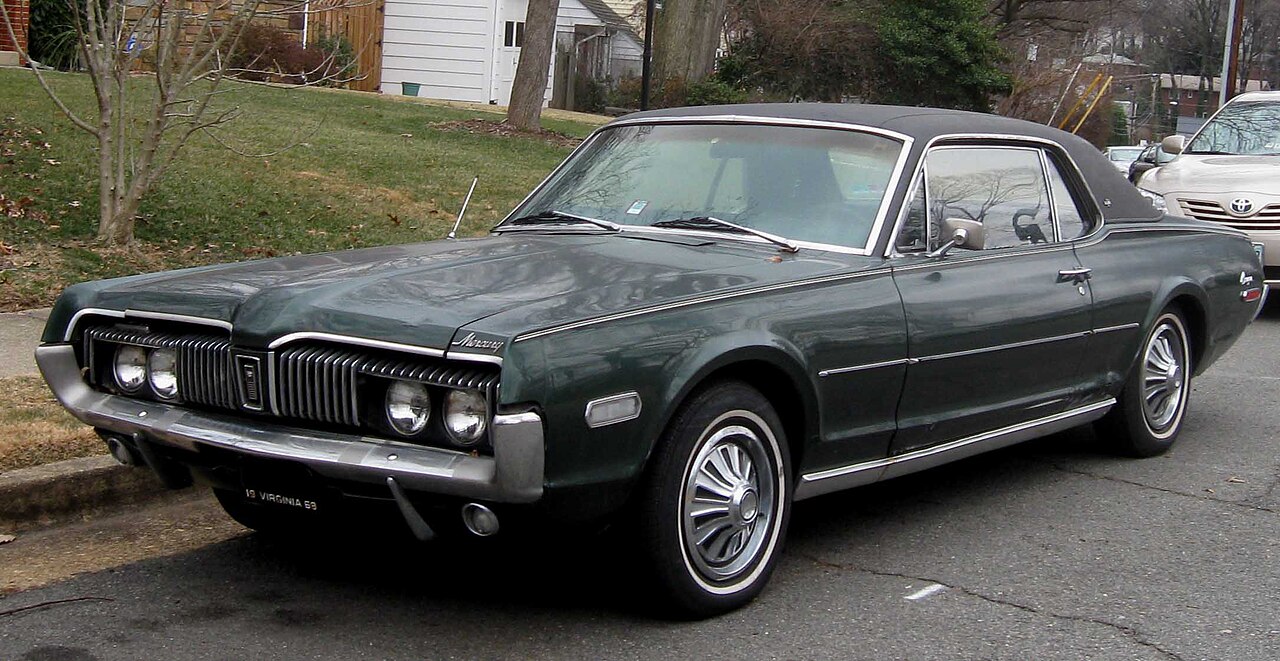
1968 Mercury Cougar. Photo by IFCAR, Public domain, via Wikimedia Commons.
How a Mercury Cougar VIN is put together
Cougars built before 1981 use a shorter identification number where the first character is the model year, the second is the assembly plant, and further characters give the body and engine codes. From 1981 the Cougar uses the 17 character VIN, which begins with a Mercury manufacturer code such as 1ME for cars built in the United States and places the engine in the middle block and the model year at position ten. The engine code is the part that matters most, because the Cougar ranged from small sixes to big-block and supercharged V8s. The quick reference below covers the clues you will use most often when you read a Mercury Cougar number.
VIN clue
What it means
First character (pre-1981)
Model year, for example 8 is 1968 and 3 is 1973
WMI 1ME (1981 on)
Mercury Cougar built by Ford in the United States
Engine code
For example a 302, a 428, a supercharged 3.8 or a 4.6 V8
Position 10 (1981 on)
Model year code, for example M is 1991 and Y is 2000
Assembly plant
The factory that built the car
On a car this old, matching the number on the data plate with the title and any other stampings is the first check worth doing, and on an early collectible car it is essential.
How a Mercury Cougar is identified
The Cougar was Mercury’s version of a Ford, and over its long life it sits across the change to the modern VIN. Cars from the 1981 model year on carry the seventeen character VIN, which on a Mercury begins with a Mercury identifier such as 1ME, and the 1999 to 2002 car built at Flat Rock uses the 1ZW code. The tenth character of the VIN gives the model year. The earlier cars, up to 1980, predate that system and are identified by an older Ford number, stamped on the car and set out on the door data plate.
What the number tells you
On the later cars the seventeen character VIN reads position by position, with the tenth character giving the year and the descriptor section separating the engines, which on the muscle era cars is what matters most. On the earlier cars the stamped number and the data plate together record the year, the plant, the body and the engine, and a genuine big block or an XR7 is worth confirming against the plate rather than the badges.
Where to find the number on a Mercury Cougar
On the later cars the VIN reads through the windshield at the base of the glass on the driver side and repeats on the door jamb label. On the earlier cars look for the data plate on the door or door pillar and the stamped number on the body. On any car of this age the plate, the stamped number and the paperwork all need to agree before you buy.
A short history, generation by generation
The Cougar launched in 1967 as an upmarket cousin of the Mustang, longer and more luxurious, and the early cars including the GT and Eliminator are now sought after classics. Through the 1970s it grew into a mid-size personal luxury coupe, then moved onto the Fox platform in 1980 with the XR-7. The sleek MN12 generation of 1989 brought the supercharged XR7 and later a modular V8, and the final 1999 to 2002 car was a sharp front wheel drive coupe based on the Mondeo and Contour. The table below sums up the eras.
Generation
Years
Body styles
Key engines
Mercury Cougar first generation
1967 to 1970
Coupe, convertible
289 to 428 V8
Mercury Cougar mid-size
1971 to 1979
Coupe
351 to 460 V8
Mercury Cougar XR-7 Fox
1980 to 1988
Coupe
3.3 six, 5.0 V8
Mercury Cougar MN12
1989 to 1997
Coupe
3.8 V6, supercharged 3.8, 4.6 V8
Mercury Cougar front drive
1999 to 2002
Coupe
2.0 and 2.5 V6
Mercury Cougar engines and specifications
Because the engine code is part of the number, a proper check confirms the engine the car was born with, which can swing a classic Cougar’s value dramatically. The figures below cover the main engines, with power as a range because output changed across the years and the way it was measured changed too.
Configuration
Years
Power
Layout
Mercury Cougar V8 classic
1967 to 1979
about 200 to 360 hp
Small and big-block V8
Mercury Cougar 5.0 V8
1980 to 1997
about 140 to 205 hp
Small-block and modular V8
Mercury Cougar 3.8 V6
1989 to 1997
about 140 to 230 hp
V6, supercharged in the XR7
Mercury Cougar 2.5 Duratec V6
1999 to 2002
about 170 hp
V6 petrol
Mercury Cougar by model year
Buyers searching for a specific year want to know what they are getting, so the table below maps several model years to their year code, era and engine options. Cars before 1981 use the year digit, while later cars use the 17 character VIN year code.
Model year
Year code
Era
Engine options
Mercury Cougar 1968
8
First generation
289 to 428 V8
Mercury Cougar 1973
3
Mid-size
351 to 460 V8
Mercury Cougar 1985
F
XR-7 Fox
3.8 V6, 5.0 V8
Mercury Cougar 1991
M
MN12
3.8 V6, 5.0 V8
Mercury Cougar 2000
Y
Front drive
2.0 and 2.5 V6
Reliability and the things worth checking
Reliability depends heavily on the era and engine, and you should always run the number through the NHTSA recall database. The most common points to check are summarized below.
Engine or area
What to check
Mercury Cougar classic V8
Confirm the engine matches the number, as big-block cars are far more valuable
Mercury Cougar supercharged XR7
The supercharger and intercooler need care, so confirm service history
Mercury Cougar 2.5 V6
On the front drive car confirm the timing belt history and cooling
Mercury Cougar body
Rust and tired suspension are the main issues on older cars
Buying a used Mercury Cougar
When you find one worth pursuing, read the number first and make sure the model year, engine and body line up with the seller’s description and the title. On an early car or a supercharged XR7, confirm the car is genuine through the data plate and documentation, and on every Cougar spend your time checking for corrosion. When you are ready, enter your Mercury Cougar number in the decoder above to confirm the year, engine and plant, then use the advice here to make sure the car is genuinely what it claims to be.
Ford Cortina (US) VIN Decoder: History, Engines and VIN Lookup Guide
Every Ford Cortina carries an identification number, and reading it is the quickest way to confirm what a particular car really is before you trust a seller’s description. The Cortina was a British built Ford that was also sold in the United States during the 1960s as an affordable imported compact, including the celebrated Lotus Cortina. Because the Cortina was built before the modern 17 character VIN, it uses a shorter chassis and serial number, and reading it confirms the model and roughly when the car was built.
You can run a Cortina number through the decoder at the top of this page, and the guide below explains the format, walks through the generations, and points out what matters most when you check one.
How a Ford Cortina VIN is put together
The Cortina predates the 17 character VIN that Ford adopted in 1981, so it carries a shorter chassis and serial number rather than a modern VIN. The number is stamped on a plate in the engine bay and on the body, and it identifies the model series and the individual car.
Because these cars are old, the most reliable approach is to match the chassis number on the car with the registration document and any history with it, and an owners club can confirm what a correct number looks like for a given year, which matters most on a Lotus Cortina where value depends on authenticity. The quick reference below covers the clues you will use most often when you read a Ford Cortina number.
VIN clue
What it means
Chassis and serial number
Stamped on a plate in the engine bay and on the body
Model series
Cortina Mk1 or Mk2
Engine
A Kent four on most cars, a twin-cam on the Lotus Cortina
Registration document
Should match the chassis number on the car
Production records
Owners clubs and registries can confirm a genuine car
On a car this old, matching the chassis number with the paperwork is the first and most important check, and on a Lotus Cortina it is essential.
A short history, generation by generation
The Cortina arrived in 1962 as a light, affordable family car that was an instant success in Britain and was exported widely, including to the United States. The Mk1 gave us the GT and the Lotus Cortina, a twin-cam homologation special that became a motorsport legend. The Mk2 of 1966 carried the formula on with cleaner styling and continued the GT and Lotus versions. The table below sums up the generations sold in this era.
Generation
Years
Body styles
Key engines
Ford Cortina Mk1
1962 to 1966
Saloon, estate
1.2 to 1.5 Kent, GT, Lotus
Ford Cortina Mk2
1966 to 1970
Saloon, estate
1.3 to 1.6 Kent, GT, Lotus
Ford Cortina engines and specifications
Because the engine is central to what a Cortina is worth, confirming it against the car is well worth doing, especially on the performance versions. The figures below cover the main engines, with power as a range because output changed across the years.
Configuration
Years
Power
Layout
Ford Cortina 1.2 and 1.5 Kent
1962 to 1970
about 50 to 65 hp
Inline-4 petrol
Ford Cortina GT 1.5 and 1.6
1963 to 1970
about 78 to 88 hp
Inline-4 petrol
Ford Lotus Cortina 1.6 twin-cam
1963 to 1970
about 105 to 109 hp
Twin-cam inline-4
Ford Cortina by model year
Buyers searching for a specific year want to know what they are getting, so the table below maps several years to the model series and engine. These cars predate the 17 character VIN and are identified by their chassis number.
Model year
Identification
Series
Engine
Ford Cortina 1964
chassis number
Mk1
1.2 to 1.5, Lotus
Ford Cortina 1966
chassis number
Mk1 and Mk2
1.5 GT, Lotus
Ford Cortina 1968
chassis number
Mk2
1.3 to 1.6, Lotus
Ford Cortina 1969
chassis number
Mk2
1.3 to 1.6 GT
Reliability and the things worth checking
These are mechanically simple cars, but every survivor is now a classic, so condition and originality matter far more than complexity. The most common points to check are summarized below.
Engine or area
What to check
Ford Cortina Kent engine
Robust and easy to rebuild, check for wear and oil leaks
Ford Lotus Cortina twin-cam
Confirm authenticity through the chassis number and registries, as clones exist
Ford Cortina body
Rust in floors, sills, arches and chassis rails is the main enemy
Ford Cortina originality
Matching numbers and correct trim drive value, so verify carefully
Buying a used Ford Cortina
When you find one worth pursuing, read the chassis number first and make sure it matches the registration document and any history. On a GT or Lotus Cortina confirm the car is genuine through the number and a recognised registry, since the difference in value is large, and on every Cortina spend your time checking for corrosion.
When you are ready, enter your Ford Cortina number in the decoder above, then use the advice here to make sure the car is genuinely what it claims to be.
Ford Contour VIN Decoder: History, Engines and VIN Lookup Guide
Every Ford Contour carries a 17-character Vehicle Identification Number, and decoding it is the quickest way to confirm what a given car really is before you trust a listing. The VIN reveals the model year, the plant it came from, the engine fitted at the factory, the body and the safety equipment. On the Contour this matters most for confirming the engine, separating a four-cylinder from a V6 or the sporty SVT, and verifying the model year a seller claims. Run any Contour VIN through the decoder above to read it in seconds. The guide below explains how the number is built, walks through the model’s run, and points out what to check.
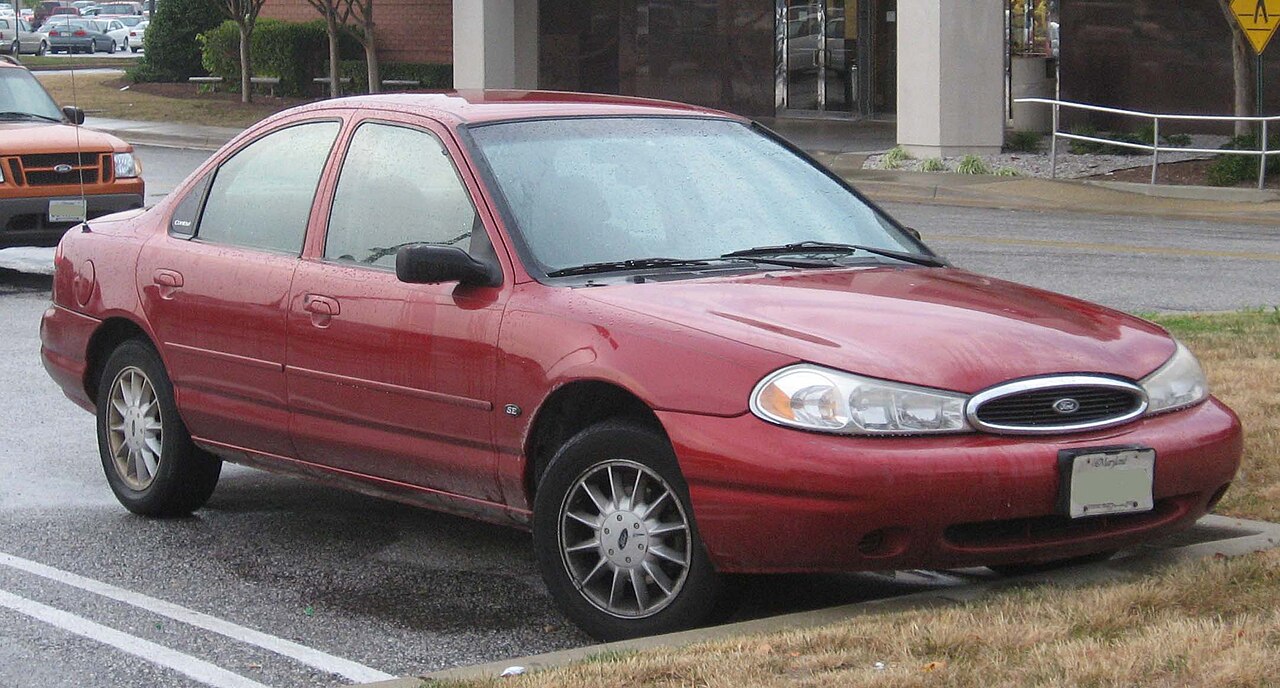
Ford Contour SE, 1998 to 2000. Photo by IFCAR, Public domain, via Wikimedia Commons.
How a Ford Contour VIN is put together
The 17 characters follow a global standard, so each position carries fixed meaning. The Contour was built at Kansas City in the United States, so its VIN begins with 1FA, marking a Ford passenger car built in the United States. Characters four through eight describe the body, the restraint system and the engine, which is where the 2.0 four-cylinder is separated from the 2.5 V6. The ninth character is a check digit, the tenth is the model year, the eleventh is the plant, and the final six are the unique build sequence.
VIN clue
What it means
WMI 1FA
Ford Contour built as a Ford car in the United States
Position 9
Check digit that validates the whole VIN
Position 10
Model year code (for example S is 1995, Y is 2000)
Positions 4 to 8
Body, restraint system and engine family
Positions 12 to 17
Unique sequential build number
You will find the VIN at the base of the windshield on the driver’s side, on the door jamb label, and in the registration paperwork.
Ford Contour VIN position by position
The Contour was the American version of the European Mondeo, and it uses the seventeen character VIN. Read it in order and you can settle the year, the plant and the engine before you trust the advert, which is worth doing to spot a genuine SVT.
Position
Name
What it tells you on a Contour
1 to 3
World Manufacturer Identifier
1FA marks a Ford passenger car built in the United States
4 to 8
Vehicle descriptor
Body, trim and engine, where the four cylinder is separated from the V6 and the SVT
9
Check digit
A calculated character that validates the rest of the VIN
10
Model year
A single character, listed in the chart below
11
Assembly plant
The Ford factory that built the car
12 to 17
Serial number
The build sequence unique to that Contour
Ford Contour model year codes (position 10)
The Contour was sold from 1995 to 2000, and the tenth character reads as follows.
Model year
Code in position 10
Ford Contour 1995
S
Ford Contour 1996
T
Ford Contour 1997
V
Ford Contour 1998
W
Ford Contour 1999
X
Ford Contour 2000
Y
Where to find the VIN on a Ford Contour
Read the VIN through the windshield at the base of the glass on the driver side, and check it against the label in the driver door jamb. A genuine SVT Contour is worth much more than a standard car, so use the VIN and the engine to confirm it rather than trusting the badges.
Reading a Contour VIN in practice
Take a car whose VIN starts with 1FA and shows X in position ten. That marks it as a United States built Ford passenger car from the 1999 model year. Position eight then tells you whether it left the line as the four cylinder or the V6, and the final six digits are the car’s own serial number.
About the Ford Contour
The Contour was Ford’s compact sedan for North America from 1995 to 2000, based on the European Mondeo and sharing its underpinnings with the Mercury Mystique. It was praised for its European-style handling, and the high-performance Contour SVT, with a tuned 2.5 V6, became a sought-after enthusiast model.
Phase
Years
Body
Key engines
VIN type
Ford Contour early
1995 to 1997
Compact sedan
2.0 I4, 2.5 V6
1FA, 17-character
Ford Contour updated and SVT
1998 to 2000
Compact sedan
2.0 I4, 2.5 V6, SVT 2.5 V6
1FA, 17-character
Ford Contour engines and specifications
Because the engine code sits in the middle of the VIN, a check confirms the engine the car was built with, which is exactly what you want when a listing is vague about four-cylinder versus V6.
Configuration
Years
Power
Layout
Ford Contour 2.0 Zetec I4
1995 to 2000
about 125 hp
Naturally aspirated inline-4
Ford Contour 2.5 Duratec V6
1995 to 2000
about 170 hp
Naturally aspirated V6
Ford Contour SVT 2.5 V6
1998 to 2000
about 195 to 200 hp
High-output V6
Ford Contour by model year
The Contour follows the standard VIN year characters, so position ten quickly confirms the year a seller claims.
Model year
VIN year code
Notes
Ford Contour 1995
S
First model year
Ford Contour 1997
V
Early run
Ford Contour 1998
W
Updated styling, SVT introduced
Ford Contour 1999
X
SVT available
Ford Contour 2000
Y
Final model year
Reliability and the things worth checking
As an older car, the Contour’s condition matters most. Confirm a specific car against records by its VIN where possible.
Area
What to check
Ford Contour 2.5 V6
Confirm cooling system health and that the timing service has been kept up
Ford Contour SVT
Confirm authenticity through the VIN and look for hard or modified use
Ford Contour bodywork
Inspect for rust and past accident repair on a car of this age
Ford Contour general
Check the transmission on a road test and confirm a tidy service record
A VIN check together with a careful inspection, especially for SVT authenticity and rust, is the best way to choose a good Contour.
Ford Contour recalls
Below are notable safety recalls recorded for the Ford Contour by the American road safety regulator, the NHTSA. This is a reference list, not a check of your individual car, and a recall applies only to certain build dates and VIN ranges.
Model years
NHTSA number
Area
Problem and risk
1996 to 2000, without ABS
00V075
Rear brakes
In salt belt states a valve in the rear brakes can corrode and fail, letting the rear wheels lock and affecting handling under braking. Improved valves installed.
1999
99V060
Ignition and park lock
On automatic cars the key can be turned to lock and removed without the transmission being in Park, which can allow a rollaway. Steering column replaced where affected.
1999 to 2000, bi-fuel
00V350
Fuel filler pipe
On bi-fuel cars the fuel tank filler pipe grommet may be damaged and can leak fuel, a fire risk. Grommet replaced.
Recall data is published by the NHTSA and changes over time, so treat this as background rather than a substitute for the official record for your VIN.
Check a specific VIN for open recalls: use the official NHTSA recalls lookup or the Ford recall page. Both are free and show whether the work has already been done.
Buying a used Ford Contour
Decode the VIN first and confirm the model year and engine match the advertisement. The four-cylinder is the simple, economical choice, the V6 is smoother and quicker, and the SVT is the enthusiast pick whose authenticity is worth confirming through the VIN and documentation. On any of them, condition and service history matter most. When you are ready, enter your Ford Contour VIN in the decoder above to confirm the year, engine and configuration before you buy.
Ford Consul VIN Decoder: History, Engines and VIN Lookup Guide
Every Ford Consul carries an identification number, and reading it is the quickest way to confirm what a particular car really is before you trust a seller’s description. The Consul name ran through several eras of Ford of Britain, from the smart Consul saloons of the 1950s to the Granada based Consul of the early 1970s. Because most Consuls were built before the modern 17 character VIN, they use a shorter chassis and serial number, and reading it confirms the model and roughly when the car was built. You can run a Consul number through the decoder at the top of this page, and the guide below explains the format, walks through the eras, and points out what matters most when you check one.
The Consul predates the 17 character VIN that Ford adopted in 1981, so it carries a shorter chassis and serial number rather than a modern VIN. The number is stamped on a plate in the engine bay and on the body, and it identifies the model series and the individual car. Because these cars are old, the most reliable approach is to match the chassis number on the car with the registration document and any history that comes with it, and an owners club can confirm what a correct number looks like for a given year. The quick reference below covers the clues you will use most often when you read a Ford Consul number.
VIN clue
What it means
Chassis and serial number
Stamped on a plate in the engine bay and on the body
Model series
The Consul generation, from the 1950s saloons to the Granada based car
Engine
A four cylinder on most cars, a V6 on the 1972 to 1975 Consul
Registration document
Should match the chassis number on the car
Production records
Owners clubs can confirm a correct number for the year
On a car this old, matching the chassis number with the paperwork is the first and most important check.
How a Ford Consul is identified
The Consul is older than the seventeen character VIN, so it does not have one. A British Ford of this era is identified by its chassis number, stamped on the car and shown on the identification plate in the engine bay, with a serial number tying the body to Ford’s records. There is no modern position by position code to read, so the plate and the stamped number, checked against the paperwork, are what establish the car.
Where to find the number on a Ford Consul
Look for the identification plate in the engine bay, usually on the inner wing or the bulkhead, and for the stamped chassis number on the body. On a car of this age the plate, the stamped number and the registration documents all need to agree. A car whose plate is missing or whose numbers do not match is much harder to value, so check carefully before you buy.
Reading a Consul number in practice
Rather than decoding positions as on a modern VIN, you match the chassis and serial numbers against Ford records and the owners clubs to place the car and confirm its history. The clubs keep the knowledge that turns an old number into a year and a specification, so on a car this age they are the best place to verify what you have.
A short history, generation by generation
The Consul arrived in 1951 as the four cylinder member of Ford of Britain’s new Consul, Zephyr and Zodiac family, modern monocoque cars that were a big step forward. The Mk2 of 1956 grew larger, and the Consul Classic of the early 1960s was a more ornate small saloon. The name then rested until 1972, when it returned as the more affordable four cylinder and V6 version of the new Granada, sold until 1975 when both simply became Granada. The table below sums up the eras.
Generation
Years
Body styles
Key engines
Ford Consul Mk1
1951 to 1956
Saloon, convertible
1.5 four
Ford Consul Mk2
1956 to 1962
Saloon, estate
1.7 four
Ford Consul Classic
1961 to 1964
Saloon, coupe
1.3 to 1.5 four
Ford Consul (Granada based)
1972 to 1975
Saloon, estate
2.0 four, 2.5 and 3.0 V6
Ford Consul engines and specifications
Because the engine matters to what a Consul is worth, confirming it against the car is well worth doing. The figures below cover the main engines, with power as a range because output changed across the eras.
Configuration
Years
Power
Layout
Ford Consul 1.5 and 1.7 four
1951 to 1962
about 47 to 59 hp
Inline-4 petrol
Ford Consul Classic 1.3 and 1.5
1961 to 1964
about 54 to 60 hp
Inline-4 petrol
Ford Consul 2.0 four
1972 to 1975
about 82 hp
Inline-4 petrol
Ford Consul 2.5 and 3.0 Essex V6
1972 to 1975
about 120 to 138 hp
V6 petrol
Ford Consul by model year
Buyers searching for a specific year want to know what they are getting, so the table below maps several years to the model series and engine. These cars predate the 17 character VIN and are identified by their chassis number.
Model year
Identification
Series
Engine
Ford Consul 1954
chassis number
Mk1
1.5 four
Ford Consul 1958
chassis number
Mk2
1.7 four
Ford Consul 1962
chassis number
Classic
1.3 to 1.5 four
Ford Consul 1973
chassis number
Granada based
2.0 four, 3.0 V6
Reliability and the things worth checking
These are mechanically simple cars, but every survivor is now a classic, so condition and originality matter far more than complexity. The most common points to check are summarized below.
Engine or area
What to check
Ford Consul four cylinder
Robust and easy to service, check for wear and oil leaks
Ford Consul Essex V6
On the 1970s car confirm the V6 and check cooling and history
Ford Consul body
Rust in floors, sills and lower panels is the main enemy on survivors
Ford Consul originality
Confirm the chassis number matches the paperwork and the trim is correct
Buying a used Ford Consul
When you find one worth pursuing, read the chassis number first and make sure it matches the registration document and any history with the car. Spend most of your time checking for corrosion, and confirm the car is complete, since trim for these models can be hard to find. When you are ready, enter your Ford Consul number in the decoder above, then use the advice here to make sure the car is genuinely what it claims to be.
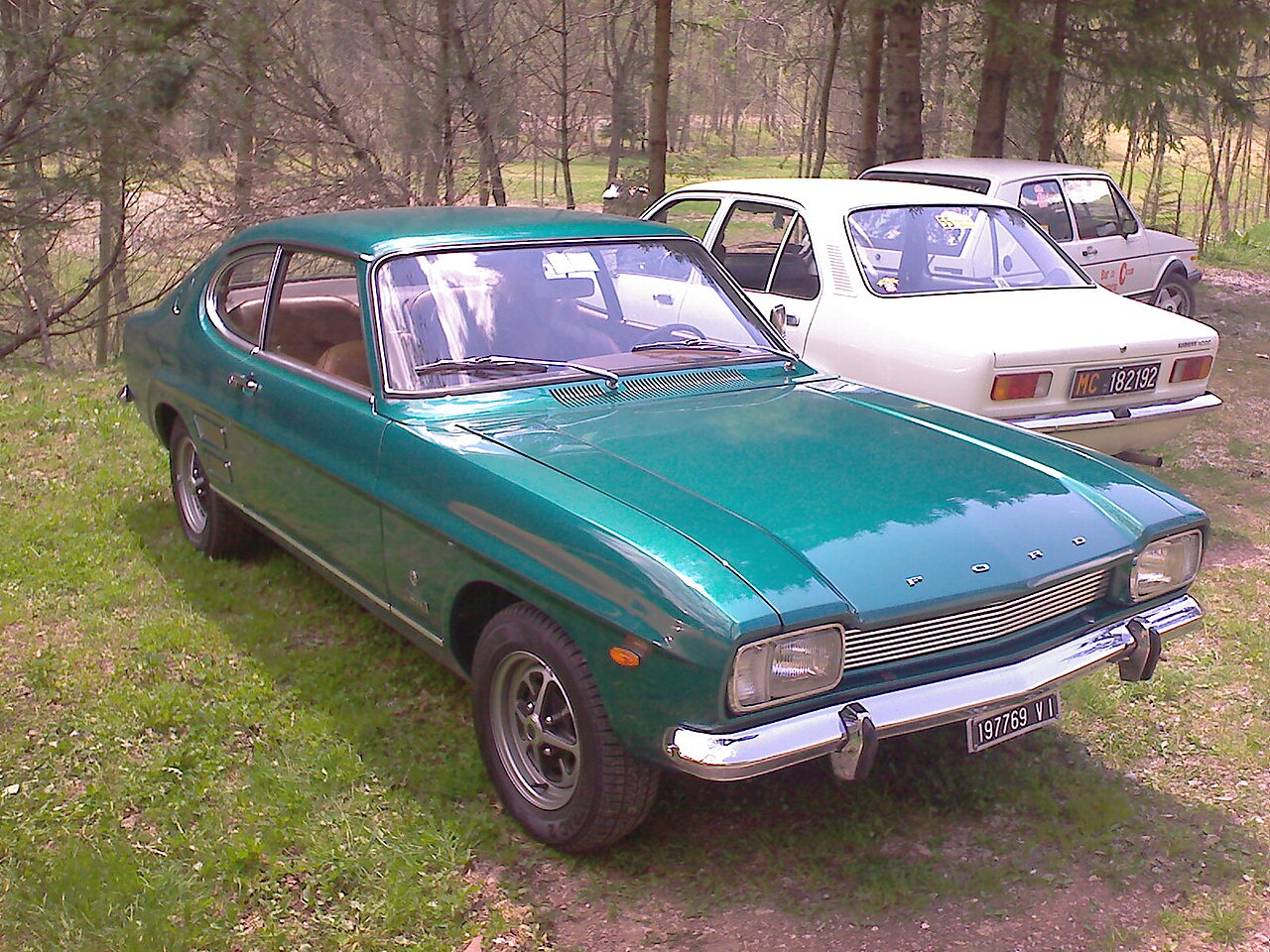
Ford Capri VIN Decoder: History, Engines and VIN Lookup Guide
The Ford Capri carries a Vehicle Identification Number that tells you what a given car really is, which is invaluable when buying, restoring or verifying one of Europe’s most loved coupes. From 1981 onward Capris use the standard 17-character VIN that confirms model year, plant, engine and configuration, while earlier cars use shorter factory numbers read with year-specific references. This page covers the classic Ford Capri coupe. Run a VIN through the decoder above to read it, and use the guide below to understand the number and what to check on a classic Capri.
For cars built from 1981 the 17 characters follow a global standard. The first three are the World Manufacturer Identifier, and European Capris built in Germany typically begin with WF0, the identifier for Ford-Werke. Characters four through eight describe the body, the restraint system and the engine, which is where a four-cylinder car is separated from a V6. The ninth character is a check digit, the tenth is the model year, the eleventh is the plant, and the final six are the unique build sequence. Capris built before 1981 predate this system and use shorter codes specific to each year.
VIN clue
What it means
WMI WF0
Ford Capri built by Ford in Germany (1981 and later)
Position 9
Check digit that validates the whole VIN
Position 10
Model year code on 1981 and later cars
Positions 4 to 8
Body, restraint system and engine family
Pre-1981 Capris
Use shorter factory numbers, read with year-specific references
You will find the VIN at the base of the windshield, on the door jamb label, on body stampings, and in the registration paperwork.
Ford Capri VIN position by position
On a Capri built from 1981 the seventeen characters break down as follows. Reading the VIN one position at a time is the quickest way to confirm the year, the factory and the engine family before you trust any advert or listing.
Position
Name
What it tells you on a Capri
1 to 3
World Manufacturer Identifier
WF0 for a Capri built by Ford-Werke in Cologne, Germany
4 to 8
Vehicle descriptor
Body style, restraint system and engine family, the section where a four cylinder Capri is separated from a V6
9
Check digit
A calculated character that validates the other sixteen
10
Model year
A single letter, see the year chart below
11
Assembly plant
The Ford factory that built the car
12 to 17
Serial number
The unique build sequence for that individual car
Ford Capri model year codes (position 10)
The tenth character carries the model year. For the final Mk3 cars the codes run as below, so a Capri showing E in position ten left the line as a 1984 model.
Model year
Code in position 10
Ford Capri 1981
B
Ford Capri 1982
C
Ford Capri 1983
D
Ford Capri 1984
E
Ford Capri 1985
F
Ford Capri 1986
G
Identifying the Ford Capri engine from the VIN
Character eight of the VIN records the engine family, and on the Capri it is the character that tells a four cylinder car apart from a V6. Because the Capri was sold with several very different engines, the engine code is also stamped on the block and repeated on the identification plate, so a genuine car matches across all three. The main Capri engines were:
Engine
Notes
Ford Capri 1.3 and 1.6 four cylinder
Entry level cars
Ford Capri 2.0 Pinto
The popular 2.0 S and 2.0 Laser four cylinder
Ford Capri 2.0 and 2.3 Cologne V6
Earlier and mid range V6 cars
Ford Capri 2.8 Cologne V6
The fuel injected 2.8 injection and the later 280 Brooklands
Ford Capri 3.0 Essex V6
The earlier 3.0 litre range topper
Where to find the VIN on a Ford Capri
On a classic Capri the identification plate sits in the engine bay, usually on the front slam panel or inner wing, and the chassis number is also stamped into the bodywork nearby. Because these cars are decades old, always check that the plate, the stamped chassis number and the engine number agree with each other and with the paperwork. A number that has been ground down or does not match is a reason to walk away.
Reading a Ford Capri VIN in practice
Take a 1984 Capri built in Cologne as an example. It begins with WF0, which confirms a Ford-Werke car, and it carries E in position ten, which fixes it as a 1984 model. Position eight then separates a four cylinder 2.0 from a 2.8 injection V6, and the final six digits give the individual build number. Cars built before 1981 predate the seventeen character system and instead use a shorter number that has to be read against the year specific tables rather than this modern layout.
About the classic Ford Capri
The Capri was Ford of Europe’s affordable fastback coupe, sold from 1969 to 1986 and marketed as the car you always promised yourself. Across three generations it offered everything from economical four-cylinders to charismatic V6 models such as the 2.8 injection, and it became a motorsport and enthusiast icon. Ford later revived the Capri name for a modern electric SUV, which is a different vehicle from the classic coupe described here.
Generation
Years
Body
Key engines
VIN type
Ford Capri Mk1
1969 to 1974
Fastback coupe
1.3 to 3.0, V6 options
Pre-1981 short VIN
Ford Capri Mk2
1974 to 1978
Fastback coupe with hatch
1.3 to 3.0, V6 options
Pre-1981 short VIN
Ford Capri Mk3
1978 to 1986
Fastback coupe
1.6 and 2.0 four-cylinder, 2.8 V6
17-character from 1981
Ford Capri engines and specifications
Because the engine code sits in the middle of the VIN on 1981 and later cars, a check confirms the engine the car was built with, which is important for value and originality on a classic coupe.
Configuration
Years
Notes
Ford Capri 1.6 four-cylinder
1969 to 1986
Common economical engine
Ford Capri 2.0 four-cylinder
1969 to 1986
Popular mid-range choice
Ford Capri 2.8 injection V6
1981 to 1986
Sought-after performance model
Ford Capri 3.0 V6
1969 to 1981
Classic big-engine Capri
Reliability and the things worth checking
On a classic Capri, condition and originality matter far more than specification. Confirm a 1981 or later car against records by its VIN where possible.
Area
What to check
Ford Capri bodywork
Rust is the main enemy: inspect arches, sills, floors and inner wings carefully
Ford Capri 2.8 injection V6
Confirm authenticity and originality, since these command a strong premium
Ford Capri engine and gearbox
Check for oil leaks, smoke and worn synchros on a test drive
Ford Capri originality
Confirm the engine and trim match the VIN and documentation, as many cars were modified
A VIN check together with a careful inspection for rust and originality is essential on a classic of this age and following.
Buying a used Ford Capri
Decode the VIN first on 1981 and later cars to confirm the model year and engine. On the classic Capri, a solid, rust-free body and a genuine, original drivetrain are everything, and the desirable V6 models in particular reward careful verification through the VIN and history before you pay a premium. When you are ready, enter your Ford Capri VIN in the decoder above to confirm the year, engine and configuration before you buy.
Ford C-MAX VIN Decoder: Generations, Engines and VIN Lookup Guide
Every Ford C-MAX carries a 17-character Vehicle Identification Number, and decoding it is the quickest way to confirm what a given compact MPV really is before you trust a listing. The VIN reveals the model year, the plant it came from, the engine fitted at the factory, the body style and the safety equipment. On a used C-MAX this matters most for confirming the exact engine, telling the five-seat from the seven-seat Grand C-MAX, and verifying the model year a seller claims. Run any C-MAX VIN through the decoder above to read it in seconds. The guide below explains how the number is built, walks through the generations, and points out what to check on each.
The 17 characters follow a global standard, so each position carries fixed meaning. European C-MAX models were built in Germany and Spain and typically begin with WF0, the World Manufacturer Identifier for Ford in Europe, while the North American C-MAX hybrid built in Michigan begins with 1FA. Characters four through eight describe the body, the restraint system and the engine, which is where a 1.0 EcoBoost is separated from a diesel or the hybrid. The ninth character is a check digit, the tenth is the model year, the eleventh is the plant, and the final six are the unique build sequence.
VIN clue
What it means
WMI WF0
Ford C-MAX built by Ford in Europe
WMI 1FA
Ford C-MAX hybrid built in the United States
Position 9
Check digit that validates the whole VIN
Position 10
Model year code (for example E is 2014, J is 2018)
Positions 4 to 8
Body style, restraint system and engine family
You will find the VIN at the base of the windshield on the driver’s side, on the door jamb label, and in the registration paperwork.
Ford C-MAX VIN position by position
The C-MAX is a compact people mover built on the Focus platform. Most were built in Europe, while the hybrid sold in America from 2013 was built in the United States, which the first three characters make clear. It uses the standard seventeen character VIN.
Position
Name
What it tells you on a C-MAX
1 to 3
World Manufacturer Identifier
WF0 for a European built car and 1FA for the American built hybrid
4 to 8
Vehicle descriptor
Body, trim and engine, where a petrol or diesel is separated from the hybrid
9
Check digit
A calculated character that validates the rest of the VIN
10
Model year
A single character, listed in the chart below
11
Assembly plant
The Ford factory that built the car
12 to 17
Serial number
The build sequence unique to that C-MAX
Ford C-MAX model year codes (position 10)
The tenth character gives the model year. Match your letter or number below.
Model year
Code in position 10
Ford C-MAX 2004
4
Ford C-MAX 2005
5
Ford C-MAX 2006
6
Ford C-MAX 2007
7
Ford C-MAX 2008
8
Ford C-MAX 2009
9
Ford C-MAX 2010
A
Ford C-MAX 2011
B
Ford C-MAX 2012
C
Ford C-MAX 2013
D
Ford C-MAX 2014
E
Ford C-MAX 2015
F
Ford C-MAX 2016
G
Ford C-MAX 2017
H
Ford C-MAX 2018
J
Ford C-MAX 2019
K
Where to find the VIN on a Ford C-MAX
Read the VIN through the base of the windscreen on the driver side and check it against the plate or label in the door area. On the hybrid it is also worth matching the VIN to the service and battery records, since the battery history matters on any used hybrid.
Reading a C-MAX VIN in practice
Take a car whose VIN shows E in position ten. That places it as a 2014 model. If it opens with WF0 it is a European car, and if it opens with 1FA it is one of the American built hybrids. The descriptor section confirms the engine, and the closing six digits are the car’s own serial number.
Generations of the Ford C-MAX
The C-MAX was Ford’s compact MPV, built on the same platform as the Focus and offered as a practical five-seat car and a longer seven-seat Grand C-MAX. The first generation arrived in 2003, the second generation from 2010 added EcoBoost engines and the seven-seat version, and a hybrid and plug-in hybrid were sold in North America.
Generation
Years
Body
Key engines
VIN type
Ford C-MAX first generation
2003 to 2010
Five-seat MPV
1.6 to 2.0 petrol, 1.6 and 2.0 TDCi
17-character
Ford C-MAX second generation
2010 to 2019
Five-seat and Grand seven-seat
1.0 to 1.6 EcoBoost, 1.5 and 2.0 diesel
WF0, Europe
Ford C-MAX Hybrid (North America)
2013 to 2018
Five-seat MPV
2.0 hybrid and plug-in hybrid
1FA, Michigan
Ford C-MAX engines and specifications
Because the engine code sits in the middle of the VIN, a check confirms the engine the car was built with, which is exactly what you want when a listing is vague about the unit or fuel type.
Configuration
Years
Power
Fuel
Ford C-MAX 1.0 EcoBoost
2012 to 2019
about 100 to 125 hp
Petrol turbo
Ford C-MAX 1.5 and 1.6 EcoBoost
2010 to 2019
about 150 to 182 hp
Petrol turbo
Ford C-MAX 1.5 and 2.0 TDCi diesel
2003 to 2019
about 95 to 163 hp
Diesel
Ford C-MAX 2.0 Hybrid (North America)
2013 to 2018
about 188 hp combined
Petrol hybrid
Ford C-MAX by model year
The C-MAX follows the standard VIN year letters, so position ten quickly confirms the year a seller claims for the common later cars.
Model year
VIN year code
Notable engines
Ford C-MAX 2013
D
1.0 and 1.6 EcoBoost, diesel, hybrid
Ford C-MAX 2014
E
1.0 EcoBoost, diesel, hybrid
Ford C-MAX 2016
G
1.0 and 1.5 EcoBoost, 1.5 diesel
Ford C-MAX 2017
H
1.0 and 1.5 EcoBoost, 1.5 diesel
Ford C-MAX 2018
J
1.0 and 1.5 EcoBoost, 1.5 diesel
Reliability and the things worth checking
The C-MAX is generally dependable and shares parts with the Focus, but confirm a specific car against the relevant recall database by its VIN.
Area
What to check
Ford C-MAX 1.0 EcoBoost
Confirm cooling system condition, as the small turbo engine is sensitive if neglected
Ford C-MAX dual-clutch automatic (PowerShift)
Some cars could shudder; test shift quality carefully
Ford C-MAX Hybrid (North America)
Check hybrid battery health and service history
Ford C-MAX sliding doors and seats
Check the rear doors and folding seats for wear from family use
A VIN history check together with a careful inspection, especially of the transmission on automatics, is the best way to avoid a C-MAX with a costly hidden fault.
Buying a used Ford C-MAX
Decode the VIN first and confirm the model year, engine and body match the advertisement, then run that number through the relevant recall database. Decide between petrol, diesel and the hybrid, confirm whether you need the five-seat or the seven-seat Grand C-MAX, and prioritise a complete service history, paying attention to the automatic gearbox on cars that have it. When you are ready, enter your Ford C-MAX VIN in the decoder above to confirm the year, engine and configuration before you buy.
Ford Bronco II VIN Decoder: History, Engines and VIN Lookup Guide
Every Ford Bronco II carries a 17-character Vehicle Identification Number, and decoding it is the quickest way to confirm what a given SUV really is before you trust a listing. The VIN reveals the model year, the plant it came from, the engine fitted at the factory, the drivetrain and the safety equipment. On the Bronco II this matters most for confirming the engine and whether the vehicle is rear-wheel drive or four-wheel drive, and verifying the model year a seller claims. Run any Bronco II VIN through the decoder above to read it in seconds. The guide below explains how the number is built, walks through the model’s run, and points out what to check.
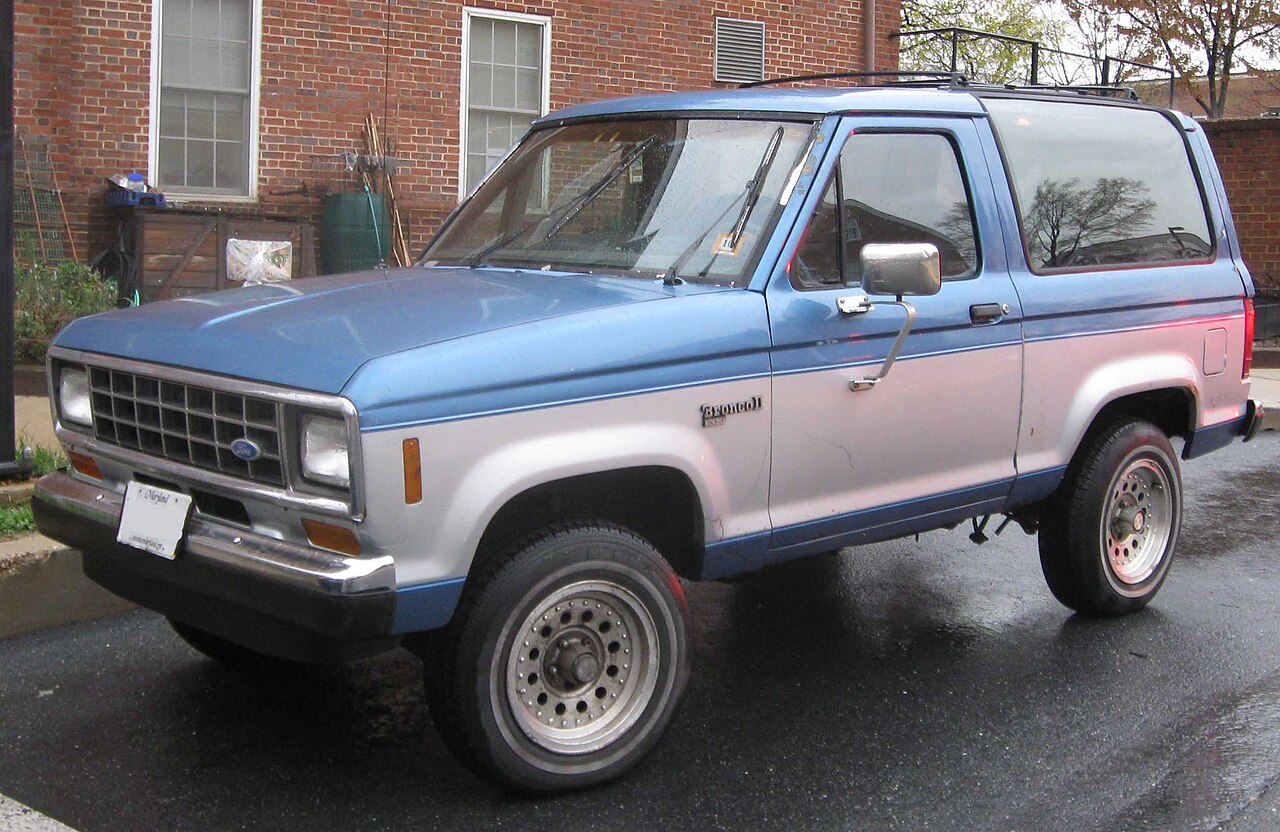
Ford Bronco II. Photo by IFCAR, Public domain, via Wikimedia Commons.
How a Ford Bronco II VIN is put together
The 17 characters follow a global standard, so each position carries fixed meaning. The Bronco II was built in the United States, and its VIN begins with 1FM, marking a Ford sport utility built in the United States. Characters four through eight describe the body, the restraint system, the drivetrain and the engine. The ninth character is a check digit, the tenth is the model year, the eleventh is the plant, and the final six are the unique build sequence.
VIN clue
What it means
WMI 1FM
Ford Bronco II built as a Ford SUV in the United States
Position 9
Check digit that validates the whole VIN
Position 10
Model year code (for example E is 1984, L is 1990)
Positions 4 to 8
Body, drivetrain, restraint system and engine
Positions 12 to 17
Unique sequential build number
You will find the VIN at the base of the windshield on the driver’s side, on the door jamb label, and in the registration paperwork.
Ford Bronco II VIN position by position
The Bronco II uses the seventeen character VIN from the start, so every one reads the same way. Go through it in order and you can settle the year, the plant and the engine before you rely on the seller’s word.
Position
Name
What it tells you on a Bronco II
1 to 3
World Manufacturer Identifier
1FM marks a Ford built in the United States as an SUV or multipurpose vehicle
4 to 7
Vehicle descriptor
Body and drive layout, where two wheel drive is separated from four wheel drive
8
Engine
The engine code, read with the year, since the range ran from the V6 to a turbodiesel
9
Check digit
A calculated character that validates the rest of the VIN
10
Model year
A single character, listed in the chart below
11
Assembly plant
The Ford factory that built the vehicle
12 to 17
Serial number
The build sequence unique to that Bronco II
Ford Bronco II model year codes (position 10)
The Bronco II ran for a short window, and the tenth character reads as follows.
Model year
Code in position 10
Ford Bronco II 1984
E
Ford Bronco II 1985
F
Ford Bronco II 1986
G
Ford Bronco II 1987
H
Ford Bronco II 1988
J
Ford Bronco II 1989
K
Ford Bronco II 1990
L
Where to find the VIN on a Ford Bronco II
Read the VIN through the base of the windshield on the driver side and check it against the label in the driver door jamb. On a small four wheel drive that has often been used off road, make sure the number is intact and matches the paperwork before you buy, since hard use and rust take their toll on these.
Reading a Bronco II VIN in practice
Take a VIN that starts with 1FM and shows H in position ten. That marks it as a United States built Ford SUV from the 1987 model year. The descriptor characters then tell you whether it is two or four wheel drive, position eight identifies the engine, and the final digits are the vehicle’s own serial number.
About the Ford Bronco II
The Bronco II was a compact SUV sold from 1984 to 1990, based on the Ranger pickup and slotting below the full-size Bronco. It offered rear-wheel drive or four-wheel drive and a compact, capable package that made it popular before the Explorer replaced it. It used the German-designed Cologne V6 family throughout its life.
Phase
Years
Body
Key engines
VIN type
Ford Bronco II early
1984 to 1986
Compact SUV
2.8 Cologne V6
1FM, 17-character
Ford Bronco II late
1986 to 1990
Compact SUV
2.9 Cologne V6
1FM, 17-character
Ford Bronco II engines and specifications
Because the engine code sits in the middle of the VIN, a check confirms the engine the SUV was built with, which matters for parts on an older vehicle.
Configuration
Years
Power
Layout
Ford Bronco II 2.8 V6
1984 to 1986
about 115 hp
Cologne V6
Ford Bronco II 2.9 V6
1986 to 1990
about 140 hp
Cologne V6
Ford Bronco II by model year
The Bronco II follows the standard VIN year characters, so position ten quickly confirms the year a seller claims.
Model year
VIN year code
Engine
Ford Bronco II 1984
E
2.8 V6
Ford Bronco II 1986
G
2.8 then 2.9 V6
Ford Bronco II 1988
J
2.9 V6
Ford Bronco II 1989
K
2.9 V6
Ford Bronco II 1990
L
Final model year
Reliability and the things worth checking
As an older compact SUV, the Bronco II’s condition matters most. Confirm a specific vehicle against records by its VIN where possible.
Area
What to check
Ford Bronco II body and frame
Rust is the main enemy: inspect the body, floors and frame thoroughly
Ford Bronco II 2.9 V6
Confirm cooling system and general maintenance, and check for overheating history
Ford Bronco II four-wheel drive
On 4WD models, confirm the transfer case and front axle work correctly
Ford Bronco II suspension
Check suspension and steering components, which wear on an off-road-capable vehicle
A VIN check together with a careful inspection for rust and a working drivetrain is essential on a vehicle of this age.
Ford Bronco II recalls
Below are the safety recalls recorded for the Ford Bronco II by the American road safety regulator, the NHTSA. This is a reference list, not a check of your individual vehicle, and a recall applies only to certain build dates and VIN ranges. Note that the Bronco II’s well known rollover reputation was the subject of NHTSA investigations but did not lead to a rollover recall.
Model years
NHTSA number
Area
Problem and risk
1989
89V109
Front wheel bearing
The front wheel bearing adjusting nut retaining keys may be missing, so the nut can loosen and the wheel and hub can detach from the axle, causing loss of control. Retaining keys installed where missing.
Recall data is published by the NHTSA and changes over time, so treat this as background rather than a substitute for the official record for your VIN.
Check a specific VIN for open recalls: use the official NHTSA recalls lookup or the Ford recall page. Both are free and show whether the work has already been done.
Buying a used Ford Bronco II
Decode the VIN first and confirm the model year, engine and drivetrain match the advertisement. On these compact SUVs, a rust-free body and frame and a healthy drivetrain matter far more than cosmetics, and four-wheel-drive examples should be checked carefully for proper operation. When you are ready, enter your Ford Bronco II VIN in the decoder above to confirm the year, engine and configuration before you buy.
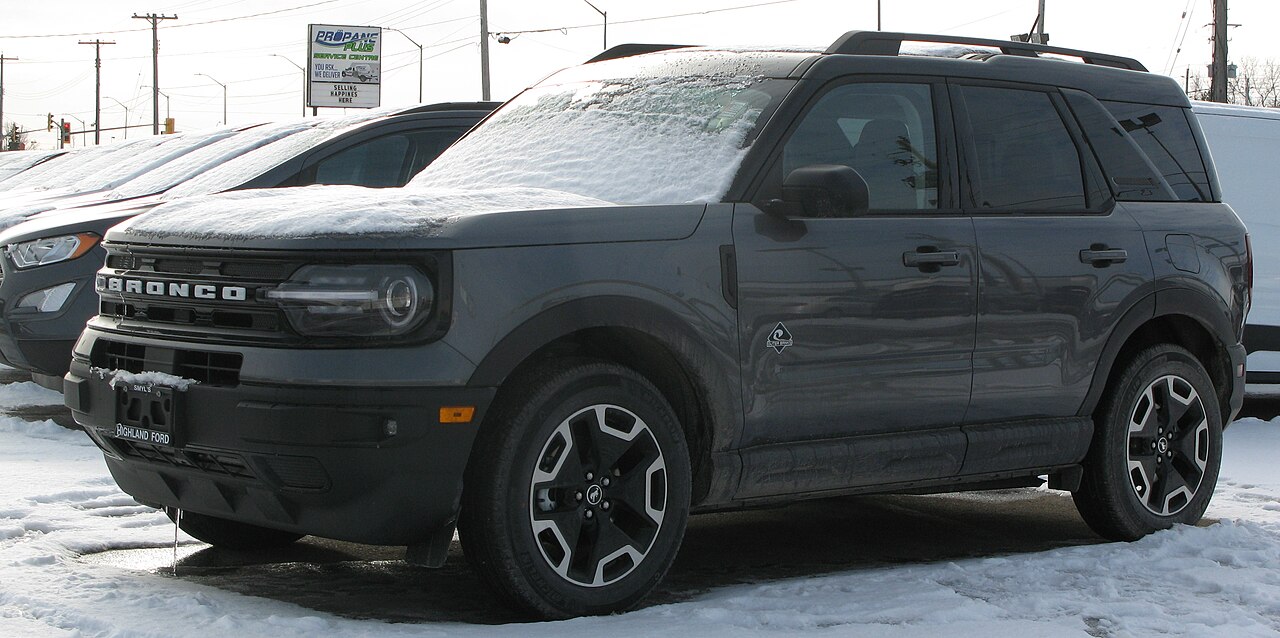
Ford Bronco Sport VIN Decoder: Specifications and VIN Lookup Guide
Every Ford Bronco Sport carries a 17-character Vehicle Identification Number, and decoding it is the quickest way to confirm what a given SUV really is before you trust a listing. The VIN reveals the model year, the plant it came from, the engine fitted at the factory, the body and the safety equipment. On the Bronco Sport this matters most for confirming whether a vehicle has the standard three-cylinder or the stronger 2.0 EcoBoost, and verifying the model year and trim a seller claims. This page covers the Ford Bronco Sport, the unibody compact SUV launched for 2021. Run any Bronco Sport VIN through the decoder above to read it in seconds, and use the guide below to understand the number and what to check.
The 17 characters follow a global standard, so each position carries fixed meaning. The Bronco Sport is built in Hermosillo, Mexico, so its VIN begins with 3FM, marking a Ford sport utility built in Mexico. Characters four through eight describe the body, the restraint system and the engine, which is where the 1.5 EcoBoost is separated from the 2.0 EcoBoost. The ninth character is a check digit, the tenth is the model year, the eleventh is the plant, and the final six are the unique build sequence.
VIN clue
What it means
WMI 3FM
Ford Bronco Sport built as a Ford SUV in Mexico
Position 9
Check digit that validates the whole VIN
Position 10
Model year code (for example M is 2021, R is 2024)
Positions 4 to 8
Body, restraint system and engine family
Positions 12 to 17
Unique sequential build number
You will find the VIN at the base of the windshield on the driver’s side, on the door jamb label, and in the registration paperwork. Note that the Bronco Sport is a different vehicle from the larger body-on-frame Bronco, which has its own page.
Ford Bronco Sport VIN position by position
The Bronco Sport is a compact crossover built in Mexico, and it uses the seventeen character VIN. Read it in order and you can settle the year, the plant and the engine before you trust the advert.
Position
Name
What it tells you on a Bronco Sport
1 to 3
World Manufacturer Identifier
3FM marks a Ford SUV built in Mexico, at Hermosillo, where the Bronco Sport is made
4 to 7
Vehicle descriptor
Trim and body, from the base models up to the more off road focused versions
8
Engine
The engine code, either the 1.5 or the 2.0 EcoBoost, read with the year
9
Check digit
A calculated character that validates the rest of the VIN
10
Model year
A single character, listed in the chart below
11
Assembly plant
The Ford factory that built the vehicle
12 to 17
Serial number
The build sequence unique to that Bronco Sport
Ford Bronco Sport model year codes (position 10)
The tenth character gives the model year. Match the letter below.
Model year
Code in position 10
Ford Bronco Sport 2021
M
Ford Bronco Sport 2022
N
Ford Bronco Sport 2023
P
Ford Bronco Sport 2024
R
Ford Bronco Sport 2025
S
Where to find the VIN on a Ford Bronco Sport
Read the VIN through the windshield at the base of the glass on the driver side, and check it against the label in the driver door jamb. On a small SUV that is often bought for light off road use, a quick VIN read is the easiest way to confirm the trim and engine match the advert.
Reading a Bronco Sport VIN in practice
Take a VIN that starts with 3FM and shows N in position ten. That marks it as a Mexican built Ford SUV from the 2022 model year. Position eight then tells you whether it left the line with the 1.5 or the 2.0 EcoBoost, and the final six digits are the vehicle’s own serial number.
The Ford Bronco Sport
The Bronco Sport arrived for 2021 as a rugged-looking unibody compact SUV built on the same platform family as the Escape, with standard all-wheel drive and genuine light off-road ability in the Badlands trim. It pairs everyday running costs with off-road styling, which made it an instant success.
Phase
Years
Body
Key engines
VIN type
Ford Bronco Sport launch
2021 to 2023
Unibody compact SUV
1.5 EcoBoost, 2.0 EcoBoost
3FM, Hermosillo
Ford Bronco Sport updated
2024 to present
Unibody compact SUV
1.5 EcoBoost, 2.0 EcoBoost
3FM, Hermosillo
Ford Bronco Sport engines and specifications
Because the engine code sits in the middle of the VIN, a check confirms the engine the SUV was built with, which is exactly what you want when a listing is unclear about which unit is fitted.
Configuration
Years
Power
Layout
Ford Bronco Sport 1.5 EcoBoost
2021 to present
about 181 hp
Turbocharged inline-3
Ford Bronco Sport 2.0 EcoBoost (Badlands)
2021 to present
about 245 to 250 hp
Turbocharged inline-4
Ford Bronco Sport by model year
The Bronco Sport follows the standard VIN year letters, so position ten quickly confirms the year a seller claims.
Model year
VIN year code
Engine options
Ford Bronco Sport 2021
M
1.5 EcoBoost, 2.0 EcoBoost
Ford Bronco Sport 2022
N
1.5 EcoBoost, 2.0 EcoBoost
Ford Bronco Sport 2023
P
1.5 EcoBoost, 2.0 EcoBoost
Ford Bronco Sport 2024
R
1.5 EcoBoost, 2.0 EcoBoost
Ford Bronco Sport 2025
S
1.5 EcoBoost, 2.0 EcoBoost
Reliability and the things worth checking
The Bronco Sport is still a young model, but confirm a specific vehicle against the NHTSA recall database by its VIN.
Area
What to check
Ford Bronco Sport 1.5 EcoBoost
Confirm cooling system condition and oil service, since small turbo engines are sensitive if neglected
Ford Bronco Sport 2.0 EcoBoost (Badlands)
Inspect for off-road use and confirm service history
Ford Bronco Sport all-wheel drive
Listen for driveline noise and confirm the system engages properly
Ford Bronco Sport general
Verify open recalls by VIN, since early vehicles had several
A VIN history check together with a careful inspection is the best way to avoid a Bronco Sport that has had a hard or poorly documented life.
Ford Bronco Sport recalls
Below are notable safety recalls recorded for the Ford Bronco Sport by the American road safety regulator, the NHTSA. Many of these are shared with the Escape and Maverick, which use the same platform and engines. This is a reference list, not a check of your individual car. A recall applies only to certain build dates and VIN ranges, so a model year here does not mean every car of that year is affected.
Model years
NHTSA number
Area
Problem and risk
2021 to 2026
26V340
Front suspension
Front lower control arm ball joints may be built or repaired wrong, letting the arm separate from the wheel knuckle and causing loss of control. Owners are told not to drive until it is fixed.
2021 to 2024
25V467
Fuel injector, 1.5L
A fuel injector can crack and leak fuel inside the engine bay near hot parts, a fire risk. Software updated and fuel rail and injector replaced. This replaces several earlier attempts at the same problem.
2020 to 2022
22V191
Engine oil separator, 1.5L
The engine oil separator housing can crack and leak oil near hot parts, a fire risk. Separator and seals inspected and replaced.
2021 to 2022
21V625
Fuel pump
The fuel delivery module can leak inside the tank, causing low fuel pressure and an engine stall. Module replaced.
2022
22V787
Fuel pump bracket
The fuel pump control module bracket may not be secured to the tank, which can cause module failure and an engine stall. Fuel tank replaced.
2021 to 2022
21V922
Brakes
The rear brake linings may be made wrong, so braking is reduced and stopping takes more pedal force and distance. Brake pads replaced.
2021 to 2023
25V019
12 volt battery
The 12 volt battery can degrade and fail suddenly, cutting electrical accessories or drive power. Battery inspected and replaced.
2021 to 2024
25V685
Engine block heater
The engine block heater can crack, leak coolant and short out when plugged in, a fire risk. Heater replaced. Owners are told not to plug it in until fixed.
2022 to 2023
22V686
Parking lights
The parking lights can flicker when the headlights are on, reducing visibility. LED driver module replaced.
2021 to 2024
25V442
Rear camera
A software error can blank the rearview image or leave it on the screen after reversing. Camera software updated.
Recall data is published by the NHTSA and changes over time, so treat this as background rather than a substitute for the official record for your VIN. Check a specific VIN for open recalls: use the official NHTSA recalls lookup or the Ford recall page. Both are free and show whether the work has already been done.
Buying a used Ford Bronco Sport
Decode the VIN first and confirm the model year, engine and trim match the advertisement, then run that number through the NHTSA recall search, which is worthwhile on the early vehicles. Decide whether the efficient 1.5 or the stronger 2.0 Badlands suits you, confirm the trim through the VIN rather than the badges, and prioritise a complete service history. When you are ready, enter your Ford Bronco Sport VIN in the decoder above to confirm the year, engine and configuration before you buy.
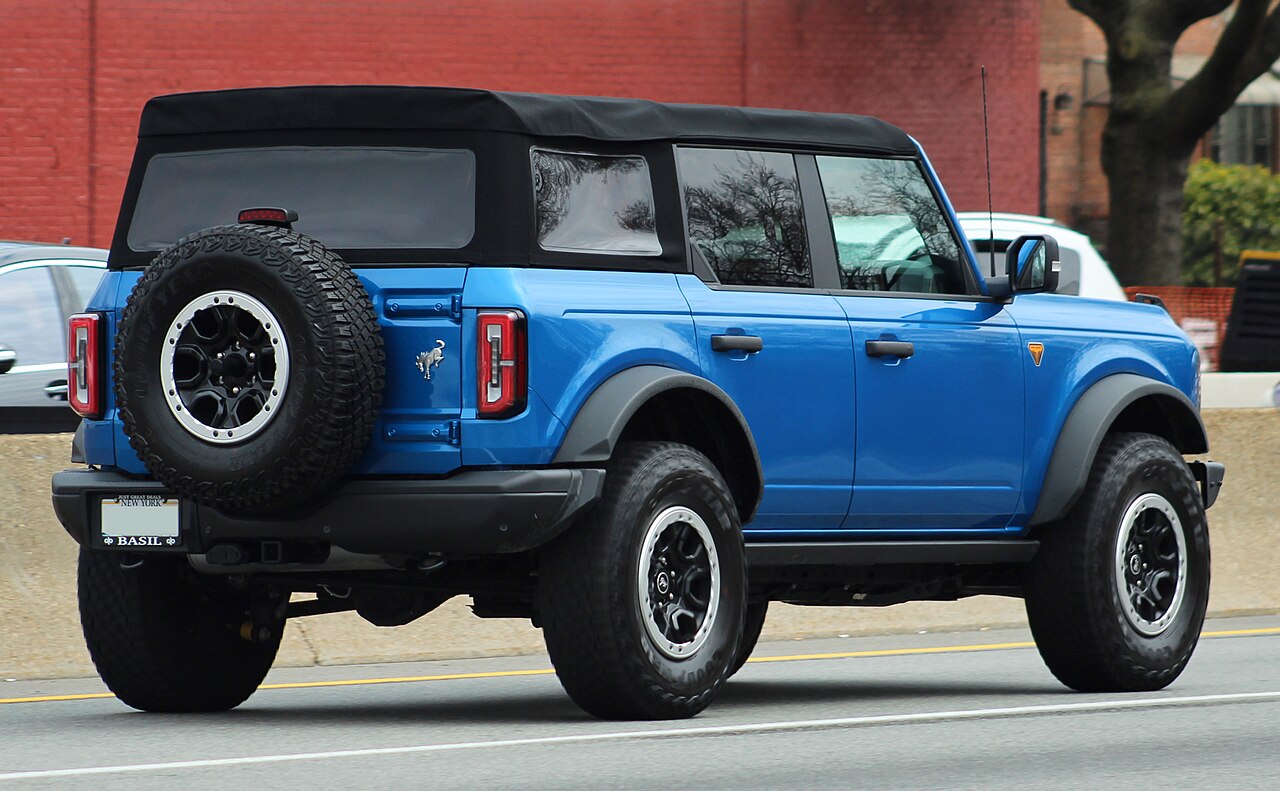
Ford Bronco VIN Decoder: Full History, Generations and VIN Lookup Guide
The Ford Bronco wears a 17-character Vehicle Identification Number on every model built since 1981, and reading it is the fastest way to confirm what a truck really is before you trust a listing. The VIN tells you the model year, the plant it came from, the engine fitted at the factory, the body style and the safety equipment. For a vehicle as heavily modified and as collectible as the Bronco, that confirmation matters: it separates a genuine early 4×4 or a real Raptor from a lookalike, and it stops you buying the wrong configuration. Enter any Bronco VIN in the decoder above to read it in seconds. Below we explain how the number is built, walk through every generation, and point out what to check on each one.
The 17 characters follow a global standard, so each position always means the same thing. The first three are the World Manufacturer Identifier, which on the modern Bronco is 1FM, marking a Ford sport utility built in the United States at the Michigan Assembly Plant in Wayne. Characters four through eight describe the body, the restraint system and the engine, which is where a 2.3 EcoBoost is separated from a 2.7 EcoBoost V6 or a Bronco Raptor. The ninth character is a check digit that validates the whole number. The tenth is the model year, the eleventh is the assembly plant, and the last six are the unique build sequence for that truck.
VIN clue
What it means
WMI 1FM
Ford Bronco built as a Ford SUV in the United States
Position 9
Check digit that validates the whole VIN
Position 10
Model year code (for example M is 2021, R is 2024)
Positions 4 to 8
Body style, restraint system and engine family
Positions 12 to 17
Unique sequential build number
This logic applies to the 1981 and later trucks. The classic Broncos built before 1981 use shorter factory numbers with a different layout and must be read with year-specific references. You will find the VIN at the base of the windshield on the driver’s side, on the door jamb label, and in the registration paperwork.
Ford Bronco VIN position by position
The Bronco name covers the original full size four wheel drive from 1966 to 1996 and the modern Bronco that arrived in 2021. The trucks from 1981 on use the seventeen character VIN, while the earlier ones carry a shorter Ford number on the door tag and the frame, so the first step is to work out which side of 1981 your Bronco sits on.
Position
Name
What it tells you on a Bronco
1 to 3
World Manufacturer Identifier
1FM marks a Ford built in the United States as an SUV or multipurpose vehicle
4 to 7
Vehicle descriptor
Body, series and drive, all of these being four wheel drive trucks
8
Engine
The engine code, read with the year, from the classic V8s to the modern EcoBoost units
9
Check digit
A calculated character that validates the rest of the VIN
10
Model year
A single character, listed in the charts below
11
Assembly plant
The Ford factory that built the vehicle
12 to 17
Serial number
The build sequence unique to that Bronco
Full size Bronco model year codes, 1981 to 1996 (position 10)
Model year
Code in position 10
Ford Bronco 1981
B
Ford Bronco 1984
E
Ford Bronco 1987
H
Ford Bronco 1990
L
Ford Bronco 1993
P
Ford Bronco 1996
T
New Bronco model year codes, 2021 on (position 10)
Model year
Code in position 10
Ford Bronco 2021
M
Ford Bronco 2022
N
Ford Bronco 2023
P
Ford Bronco 2024
R
Ford Bronco 2025
S
Where to find the VIN on a Ford Bronco
On the modern truck read the VIN through the windshield at the base of the glass on the driver side and check it against the door jamb label. On a classic look for the door tag and the number stamped on the frame. These are among the most desirable and most modified Fords, so on both the old and the new trucks it is worth confirming the number matches the paperwork.
Reading a Bronco VIN in practice
Take a modern truck whose VIN starts with 1FM and shows N in position ten, which places it as a 2022. On a classic, an H in that slot on a seventeen character VIN points to a 1987 full size Bronco. The descriptor characters confirm the drive and body, position eight identifies the engine, and the closing digits are the serial number.
A short history, generation by generation
The Bronco began in 1966 as a compact, purpose-built 4×4 rival to the Jeep, then grew into a full-size SUV based on the F-Series for most of its first life. After the fifth-generation truck ended in 1996 the name went quiet for more than two decades, until Ford revived it for 2021 as a body-on-frame off-roader sharing its underpinnings with the global Ranger. The reborn Bronco is offered with turbocharged EcoBoost engines and a hardcore Raptor at the top of the range. Note that the unibody Bronco Sport is a separate model with its own page.
Generation
Years
Body
Key engines
VIN type
Ford Bronco first generation
1966 to 1977
Compact 4×4
Inline-6, 289/302 V8
Pre-1981 short VIN
Ford Bronco full-size (early)
1978 to 1979
Full-size SUV
5.8 and 6.6 V8
Pre-1981 short VIN
Ford Bronco third generation
1980 to 1986
Full-size SUV
4.9 I6, 5.0/5.8 V8
17-character
Ford Bronco fourth generation
1987 to 1991
Full-size SUV
4.9 I6, 5.0/5.8 V8
17-character
Ford Bronco fifth generation
1992 to 1996
Full-size SUV
5.0 and 5.8 V8
17-character
Ford Bronco sixth generation
2021 to present
Body-on-frame SUV
2.3 and 2.7 EcoBoost, 3.0 Raptor
1FM, Michigan Assembly
Ford Bronco engines and specifications
Because the engine code lives in the middle of the VIN, a check confirms the engine the truck was built with, which is what you want when a seller’s description is vague. The modern range is summarized below.
Configuration
Years
Power
Layout
Ford Bronco 2.3 EcoBoost
2021 to present
about 300 hp
Turbocharged inline-4
Ford Bronco 2.7 EcoBoost V6
2021 to present
about 330 hp
Turbocharged V6
Ford Bronco Raptor 3.0 EcoBoost V6
2022 to present
about 418 hp
Twin-turbo V6
Ford Bronco classic V8
1978 to 1996
varies by year
5.0 and 5.8 V8
Ford Bronco by model year
The modern Bronco maps to the standard VIN year letters, so a quick check of position ten confirms the year a seller claims.
Model year
VIN year code
Engine options
Ford Bronco 2021
M
2.3 EcoBoost, 2.7 EcoBoost V6
Ford Bronco 2022
N
2.3 EcoBoost, 2.7 V6, Raptor 3.0
Ford Bronco 2023
P
2.3 EcoBoost, 2.7 V6, Raptor 3.0
Ford Bronco 2024
R
2.3 EcoBoost, 2.7 V6, Raptor 3.0
Ford Bronco 2025
S
2.3 EcoBoost, 2.7 V6, Raptor 3.0
Reliability and the things worth checking
Reliability depends on the generation and on how hard the truck has been used off-road. Always confirm a specific vehicle against the NHTSA recall database by its VIN.
Area
What to check
Ford Bronco 2.7 EcoBoost V6
Strong and torquey, but confirm cooling and service history on hard-used trucks
Ford Bronco hardtop (early 2021 build)
Early molded-in-color hardtops had quality concerns later addressed under program replacement; check condition
Ford Bronco off-road use
Inspect underbody, skid plates, suspension and tyres for trail damage
Ford Bronco classic full-size
Age is the issue: rust in the body, frame and floors, plus tired drivetrain parts
Because Broncos are bought to be driven off-road and modified, a VIN history check together with a careful physical inspection counts for a lot here.
Ford Bronco recalls
Below are notable safety recalls recorded for the sixth generation Ford Bronco, from 2021 on, by the American road safety regulator, the NHTSA. This is a reference list, not a check of your individual car. A recall applies only to certain build dates and VIN ranges, so a model year here does not mean every car of that year is affected.
Model years
NHTSA number
Area
Problem and risk
2022 to 2023
23V155
Steering, Raptor and Wildtrak
Internal steering gear damage can make the wheel hard to turn or lock it up, causing loss of steering control. Owners are told not to drive until the gear is replaced.
2023
23V283
Wheels
Driver side lug nuts may be improperly tightened and a wheel can come off while driving. Owners are told not to drive until the nuts are checked.
2021 to 2023
23V546 / 23V070
Transmission park
The transmission park system can be damaged so the parking pawl does not fully hold, and the car can roll away even in Park. Transmission inspected and replaced.
2021 to 2025
26V236
Transmission and transfer case
A misaligned transmission to transfer case joint can wear the splines, causing loss of drive power or rollaway. Parts inspected and replaced as needed.
2021 to 2024
25V025
Rear suspension
The rear shock absorbers can corrode and fail, and the external reservoir can detach and become a road hazard. Shocks replaced as needed.
2023 to 2024
24V142
Rear glass
The rear quarter glass panels may be poorly installed on the hard top and can detach, a road hazard. Panels reinstalled or replaced.
2021 to 2023
25V721
Front seats
A loose or dislodged seat height adjust pivot bolt can leave the seat unable to restrain properly in a crash. Pivot links and bolts inspected and replaced.
2023 to 2024
24V189
Child lock
The left rear door can be opened from inside even with the child safety lock on. Latch inspected and replaced as needed.
2021 to 2023
25V455
Fuel pump
The low pressure fuel pump can fail and cause the engine to stall while driving. Remedy in development.
2021 to 2024
25V685
Engine block heater
The engine block heater can crack, leak coolant and short out when plugged in, a fire risk. Heater replaced. Owners are told not to plug it in until fixed.
2022 to 2026
26V403
Fender flares
The fender flares may not be secured and can detach and become a road hazard. Flares inspected and repaired.
Recall data is published by the NHTSA and changes over time, so treat this as background rather than a substitute for the official record for your VIN.
Check a specific VIN for open recalls: use the official NHTSA recalls lookup or the Ford recall page. Both are free and show whether the work has already been done.
Buying a used Ford Bronco
Decode the VIN first and confirm the model year, engine and plant match the advertisement, then run that number through the NHTSA recall search. Check that the engine matches the badge, that a Raptor really is a Raptor, and on classic trucks spend your time looking for rust and frame corrosion. On any modified Bronco, ask what was changed and whether it was done properly, since lift kits, regears and oversized tyres affect reliability and value.
Common questions
Buyers often ask whether the Bronco and Bronco Sport are the same, and they are not: the Bronco is a body-on-frame off-roader while the Bronco Sport is a smaller unibody crossover with its own VIN and platform. People also ask whether a pre-1981 Bronco can be decoded here, and the answer is that the standard 17-character tool only covers 1981 and newer trucks. If your VIN starts with 1FM, you have a Ford sport utility built in the United States. When you are ready, enter your Ford Bronco VIN in the decoder above to confirm the year, engine and configuration before you commit to a purchase.
Fast & Free
Quickly get vehicle details for free.
Reliable Data
We source data from trusted providers.
Global VIN Check
Supports VINs from all over the world.
How to read VIN code?
1
H
G
B
H
4
1
J
X
M
N
1
0
9
1
8
6
What Is a VIN Code for Cars?
A Vehicle Identification Number (VIN) is a unique 17-character code that serves as a car's fingerprint. It contains specific information about the vehicle and is used for identification and tracking purposes.
A VIN provides detailed information about:
Manufacturer
Model
Engine type
Production year
Assembly plant
Serial number
VINs are globally recognized and standardized for vehicle identification.
How Does a VIN Code Work?
A VIN is divided into three main sections, each providing specific information about the vehicle.
1. World Manufacturer Identifier (WMI) - Characters 1-3
This section identifies the manufacturer and country of origin.
Examples: "1HG = Honda, made in the USA", "JHM = Honda, made in Japan"
This section reveals the model year (10th character), manufacturing plant (11th), and serial number (12-17).
Examples: "Y in the 10th spot = 2000", "A = 2010", "L = 2020"
Why Is the VIN Important?
VINs are essential for various purposes:
Checking vehicle history reports
Registering a car
Buying or selling a vehicle
Insurance purposes
Verifying stolen vehicles
Recalls and warranty claims
You can typically find the VIN on the dashboard, door frame, or in registration documents.
Want to Decode a VIN?
Ford VIN Decoder is a fast and easy tool to get detailed vehicle information including specifications, manufacturing details, engine type, trim level, and production year.