VIN Decoder - Check Your VIN Number

Ford F-2 VIN Decoder: History, Engines and VIN Lookup Guide

Every Ford F-2 carries an identification number, and reading it is the quickest way to confirm what a particular truck really is before you trust a seller’s description. The F-2 was the three quarter ton member of Ford’s first generation F-Series, the Bonus Built trucks sold from 1948 to 1952 that launched the F-Series name. Because these trucks were built long before the modern 17 character VIN, they use a shorter serial number, and reading it confirms the model, the engine family and roughly when the truck was built.

You can run an F-2 number through the decoder at the top of this page, and the guide below explains the classic format, covers the engines, and points out what matters most when you check one.

How a Ford F-2 VIN is put together

The F-2 predates the 17 character VIN that Ford adopted in 1981, so it carries a shorter serial number stamped on a plate in the cab and on the frame. The number identifies the model, the engine and the production sequence rather than packing in the detailed coded fields of a modern VIN.

Because these trucks are so old and were worked hard, the most reliable approach is to match the serial number on the truck with the title and any history, and a marque specialist or club can confirm what a correct number looks like for the year. The quick reference below covers the clues you will use most often when you read a Ford F-2 number.

VIN clue What it means
Serial number plate Stamped on a plate in the cab and on the frame
Model identifier Marks the truck as an F-2 three quarter ton
Engine The 226 flathead six or the 239 flathead V8
Title and paperwork Should match the serial number on the truck
Production records Clubs and specialists can confirm a correct number for the year

On a truck this old, matching the serial number with the paperwork is the first and most important check.

A short history of the Ford F-2

The F-Series arrived in 1948 as the Bonus Built range, Ford’s first purpose designed postwar trucks, sold in a ladder of sizes from the half ton F-1 upward. The F-2 sat a step above as the three quarter ton workhorse, built for heavier loads on farms and worksites. The whole first generation ran to 1952, after which the 1953 redesign renamed the line, so the F-2 became the F-250. The table below sums up the truck.

Generation Years Body Key engines
Ford F-2 first generation 1948 to 1952 Three quarter ton pickup 226 six, 239 flathead V8

Ford F-2 engines and specifications

Because the engine matters to what an F-2 is worth and how it drives, confirming it against the truck is well worth doing. The figures below cover the two engines.

Configuration Years Power Layout
Ford F-2 226 six 1948 to 1952 about 95 hp Flathead inline-6
Ford F-2 239 flathead V8 1948 to 1952 about 100 hp Flathead V8

Ford F-2 by model year

Buyers searching for a specific year want to know what they are getting, so the table below maps several years to the engine options. These trucks predate the 17 character VIN and are identified by their serial number.

Model year Identification Engine options
Ford F-2 1948 serial number 226 six, 239 V8
Ford F-2 1950 serial number 226 six, 239 V8
Ford F-2 1951 serial number 226 six, 239 V8
Ford F-2 1952 serial number 226 six, 239 V8

Reliability and the things worth checking

The F-2 is mechanically simple and built to work, but every survivor is now a classic that has likely led a hard life, so condition and originality matter most. The most common points to check are summarized below.

Engine or area What to check
Ford F-2 flathead engine Simple and rebuildable, check for wear, oil leaks and cooling
Ford F-2 frame and bed Check the frame, bed and cab mounts for rust and working damage
Ford F-2 body Rust in floors, cab corners and fenders is the main enemy on survivors
Ford F-2 originality Confirm the serial number matches the paperwork and the truck is complete

Buying a used Ford F-2

When you find one worth pursuing, read the serial number first and make sure it matches the title and any history. Because these trucks worked for a living, inspect the frame, bed and cab carefully for corrosion and repairs, and confirm the truck is reasonably complete, since some parts are harder to find than common F-1 items.

When you are ready, enter your Ford F-2 number in the decoder above, then use the advice here to make sure the truck is genuinely what it claims to be.
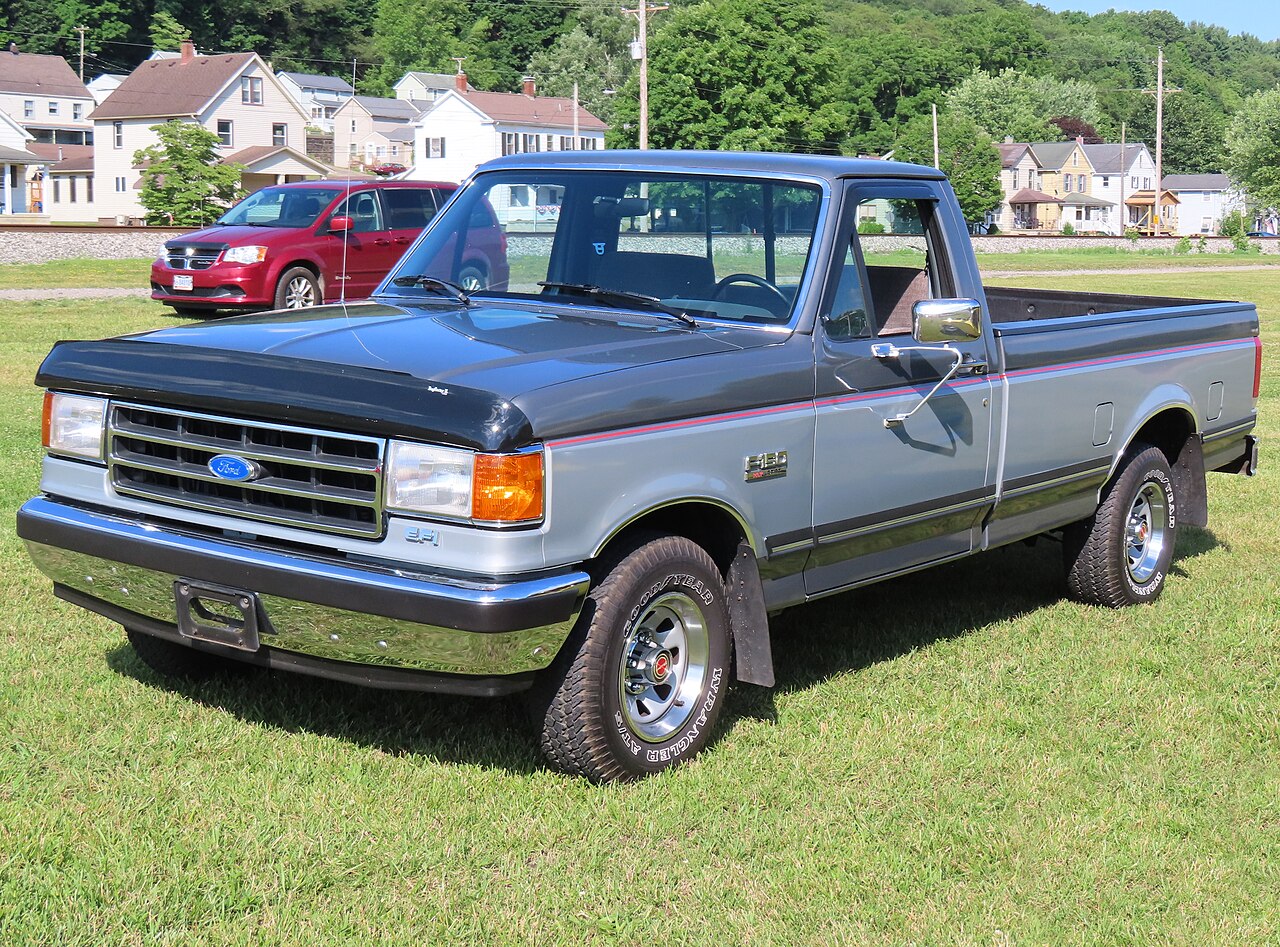
Ford F-150 VIN Decoder: Classic F-Series History and VIN Lookup (1948 to 1996)

The classic Ford F-Series carries a Vehicle Identification Number that tells you what a given truck really is, which is invaluable when you are buying, restoring or verifying a vintage pickup. From 1981 onward these trucks use the standard 17-character VIN that confirms model year, plant, engine and configuration, while earlier trucks use shorter factory numbers read with year-specific references. This page covers the classic F-Series and F-150 from 1948 to 1996. Run a VIN through the decoder above to read it, and use the guide below to understand the number and what to check on an older truck.

1990 Ford F-150 XLT Lariat regular cab pickup, front left view
1990 Ford F-150 XLT Lariat. Photo by MercurySable99, CC BY-SA 4.0, via Wikimedia Commons.

How a classic Ford F-150 VIN is put together

For trucks built from 1981 the 17 characters follow a global standard. The first three are the World Manufacturer Identifier, and F-Series trucks begin with 1FT, marking a Ford truck built in the United States. Characters four through eight describe the cab, the bed, the restraint system and the engine. The ninth character is a check digit, the tenth is the model year, the eleventh is the plant, and the final six are the unique build sequence. Trucks built before 1981 predate this system and use shorter codes specific to each year.

VIN clue What it means
WMI 1FT Ford F-150 built as a Ford truck in the United States (1981 and later)
Position 9 Check digit that validates the whole VIN
Position 10 Model year code (for example N is 1992, T is 1996)
Positions 4 to 8 Cab, bed, restraint system and engine family
Pre-1981 trucks Use shorter factory numbers, read with year-specific references

You will find the VIN at the base of the windshield on the driver’s side, on the door jamb label, on frame stampings, and in the registration paperwork.

Ford F-150 VIN position by position

The dividing line for these trucks is 1981. From that model year on the F-150 uses the seventeen character VIN, which reads cleanly position by position. The earlier trucks predate it and carry a shorter Ford number on the door tag and the frame, so the first step is to work out which side of 1981 your truck sits on.

Position Name What it tells you on an F-150
1 to 3 World Manufacturer Identifier 1FT for a Ford truck built in the United States
4 to 7 Vehicle descriptor The series and body, where F100, F150 and F250 are separated along with the cab and drive type
8 Engine The engine code, read with the year, since the range spanned the inline six, several V8s and a diesel
9 Check digit A calculated character that validates the rest of the VIN
10 Model year A single character, listed in the chart below
11 Assembly plant The Ford factory that built the truck
12 to 17 Serial number The build sequence unique to that truck

Ford F-150 model year codes (position 10)

For the trucks that carry the seventeen character VIN, the tenth character reads as follows.

Model year Code in position 10
Ford F-150 1981 B
Ford F-150 1982 C
Ford F-150 1983 D
Ford F-150 1984 E
Ford F-150 1985 F
Ford F-150 1986 G
Ford F-150 1987 H
Ford F-150 1988 J
Ford F-150 1989 K
Ford F-150 1990 L
Ford F-150 1991 M
Ford F-150 1992 N
Ford F-150 1993 P
Ford F-150 1994 R
Ford F-150 1995 S
Ford F-150 1996 T

Where to find the VIN on a Ford F-150

On the 1981 and later trucks the VIN reads through the base of the windshield on the driver side and repeats on the door jamb label, which also lists the weight ratings. On an earlier F-Series look for the door tag and the number stamped on the frame. Work trucks lead hard lives, so make sure the number is intact and matches the paperwork before you buy.

Reading an F-150 VIN in practice

Take a truck whose VIN starts with 1FT and shows K in position ten. That places it as a 1989 model built by Ford in the United States. The series characters then tell you whether it is an F150 or a heavier F250, position eight identifies the engine, and the final digits are the truck’s own serial number.

Generations of the classic F-Series

The F-Series began in 1948 and grew into the backbone of the American truck market. The F-150 name itself arrived in 1975 as the half-ton model. The trucks you can decode with a modern 17-character tool are the 1981 and later examples, which include the end of the seventh generation and the eighth and ninth generations.

Generation Years Key engines VIN type
Ford F-Series early generations 1948 to 1979 Inline-6 and small and big-block V8 Pre-1981 short VIN
Ford F-150 seventh generation 1980 to 1986 4.9 I6, 5.0, 5.8 and 7.5 V8 17-character from 1981
Ford F-150 eighth generation 1987 to 1991 4.9 I6, 5.0 and 5.8 V8 1FT, 17-character
Ford F-150 ninth generation 1992 to 1996 4.9 I6, 5.0 and 5.8 V8 1FT, 17-character

Ford F-150 engines and specifications

Because the engine code sits in the middle of the VIN on 1981 and later trucks, a check confirms the engine the truck was built with, which matters for parts and restoration on a vintage pickup.

Configuration Years Notes
Ford F-150 4.9 inline-six (300) 1980 to 1996 Legendary durable workhorse six
Ford F-150 5.0 V8 (302) 1980 to 1996 Common small-block V8
Ford F-150 5.8 V8 (351) 1980 to 1996 Larger small-block for towing
Ford F-150 7.5 V8 (460) 1983 to 1996 Big-block for heavy duty

Ford F-150 by model year

For 1981 and later trucks the standard VIN year characters apply, so position ten confirms the year a seller claims.

Model year VIN year code Generation
Ford F-150 1987 H Eighth generation
Ford F-150 1990 L Eighth generation
Ford F-150 1992 N Ninth generation
Ford F-150 1994 R Ninth generation
Ford F-150 1996 T Final classic model year

Reliability and the things worth checking

On a classic truck, condition matters far more than original specification. Where possible, confirm a 1981 or later truck against records by its VIN.

Area What to check
Ford F-150 body and frame Rust is the main enemy: inspect cab corners, bed, rockers and the frame thoroughly
Ford F-150 4.9 inline-six Extremely durable, but confirm general maintenance and oil history
Ford F-150 drivetrain Check transmission and, on 4×4 trucks, the transfer case and front axle
Ford F-150 authenticity Confirm engine and configuration against the VIN rather than the badges on modified trucks

A VIN check together with a careful inspection for rust and originality is essential on a truck of this age.

Buying a classic Ford F-150

Decode the VIN first on 1981 and later trucks to confirm the model year, engine and configuration. On older pickups, focus on rust in the cab, bed and frame, confirm the drivetrain works correctly, and verify that any engine swap matches what is advertised. Originality and a solid body drive value on these trucks far more than cosmetics. When you are ready, enter your Ford F-150 VIN in the decoder above to confirm the year, engine and configuration before you buy.

Ford Explorer Sport Trac VIN Decoder: History, Engines and VIN Lookup Guide

Every Ford Explorer Sport Trac carries a 17-character Vehicle Identification Number, and decoding it is the quickest way to confirm what a given truck really is before you trust a listing. The VIN reveals the model year, the plant it came from, the engine fitted at the factory, the drivetrain and the safety equipment. On the Sport Trac this matters most for confirming the engine, telling the V6 from the available V8, and verifying the model year a seller claims. Run any Explorer Sport Trac VIN through the decoder above to read it in seconds. The guide below explains how the number is built, covers both generations, and points out what to check.

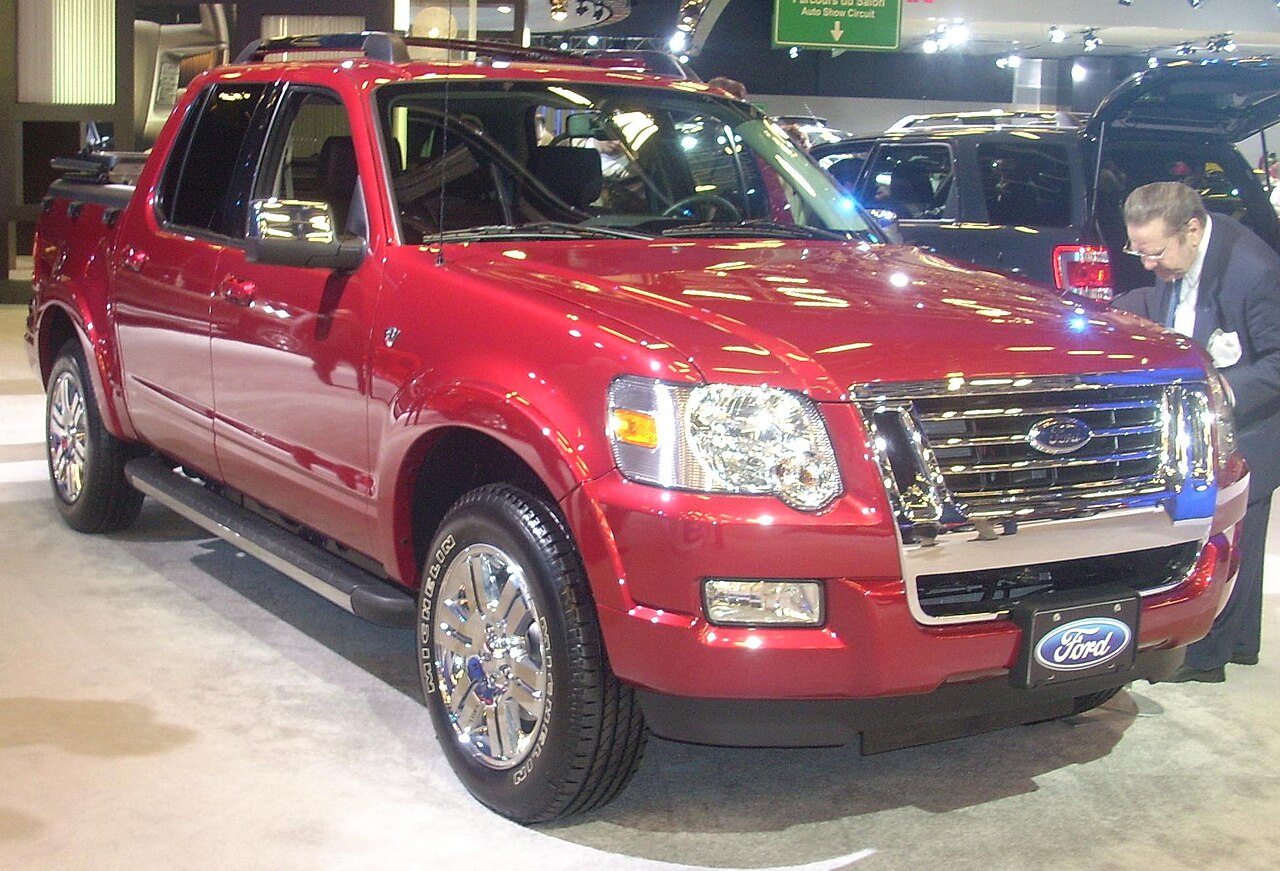
2008 Ford Explorer Sport Trac pickup
2008 Ford Explorer Sport Trac. Photo by Bull-Doser, Public domain, via Wikimedia Commons.

How a Ford Explorer Sport Trac VIN is put together

The 17 characters follow a global standard, so each position carries fixed meaning. The Sport Trac was built in the United States, so its VIN begins with 1FM, marking a Ford sport utility built in the United States. Characters four through eight describe the body, the restraint system, the drivetrain and the engine, which is where the V6 is separated from the V8. The ninth character is a check digit, the tenth is the model year, the eleventh is the plant, and the final six are the unique build sequence.

VIN clue What it means
WMI 1FM Ford Explorer Sport Trac built as a Ford SUV in the United States
Position 9 Check digit that validates the whole VIN
Position 10 Model year code (for example 1 is 2001, A is 2010)
Positions 4 to 8 Body, drivetrain, restraint system and engine
Positions 12 to 17 Unique sequential build number

You will find the VIN at the base of the windshield on the driver’s side, on the door jamb label, and in the registration paperwork.

Ford Explorer Sport Trac VIN position by position

The Explorer Sport Trac took the Explorer SUV and added a short pickup bed, and it uses the seventeen character VIN. Read it in order and you can settle the year and the engine before you trust the advert.

Position Name What it tells you on a Sport Trac
1 to 3 World Manufacturer Identifier 1FM marks a Ford built in the United States as an SUV or multipurpose vehicle
4 to 7 Vehicle descriptor Body, trim and drive layout, where rear drive is separated from four wheel drive
8 Engine The engine code, either the V6 or the later V8, read with the year
9 Check digit A calculated character that validates the rest of the VIN
10 Model year A single character, listed in the chart below
11 Assembly plant The Ford factory that built the vehicle
12 to 17 Serial number The build sequence unique to that Sport Trac

Ford Explorer Sport Trac model year codes (position 10)

The tenth character gives the model year. Match your letter or number below.

Model year Code in position 10
Ford Explorer Sport Trac 2001 1
Ford Explorer Sport Trac 2002 2
Ford Explorer Sport Trac 2003 3
Ford Explorer Sport Trac 2004 4
Ford Explorer Sport Trac 2005 5
Ford Explorer Sport Trac 2007 7
Ford Explorer Sport Trac 2008 8
Ford Explorer Sport Trac 2009 9
Ford Explorer Sport Trac 2010 A

Where to find the VIN on a Ford Explorer Sport Trac

Read the VIN through the windshield at the base of the glass on the driver side, and check it against the label in the driver door jamb. A quick VIN read is the easiest way to confirm whether it has the V6 or the V8 and whether it is rear or four wheel drive before you go by the badges.

Reading a Sport Trac VIN in practice

Take a VIN that starts with 1FM and shows 4 in position ten. That marks it as a United States built Ford from the 2004 model year. Position eight then tells you whether it left the line with the V6 or the V8, and the final six digits are the vehicle’s own serial number.

About the Ford Explorer Sport Trac

The Explorer Sport Trac was a midsize pickup based on the Explorer SUV, combining a four-door cabin with a short open bed. The first generation arrived for 2001 with V6 power, and the second generation from 2007 added a more refined design and an available V8, making it a practical, car-like alternative to a traditional truck.

Generation Years Body Key engines VIN type
Ford Explorer Sport Trac first generation 2001 to 2005 Midsize crew-cab pickup 4.0 V6 1FM, 17-character
Ford Explorer Sport Trac second generation 2007 to 2010 Midsize crew-cab pickup 4.0 V6, 4.6 V8 1FM, 17-character

Ford Explorer Sport Trac engines and specifications

Because the engine code sits in the middle of the VIN, a check confirms the engine the truck was built with, which is exactly what you want when a listing is vague about V6 versus V8.

Configuration Years Power Layout
Ford Explorer Sport Trac 4.0 V6 2001 to 2010 about 205 to 210 hp Naturally aspirated V6
Ford Explorer Sport Trac 4.6 V8 2007 to 2010 about 292 hp Naturally aspirated V8

Ford Explorer Sport Trac by model year

The Sport Trac follows the standard VIN year characters, so position ten quickly confirms the year a seller claims.

Model year VIN year code Notable engines
Ford Explorer Sport Trac 2001 1 4.0 V6, first generation
Ford Explorer Sport Trac 2004 4 4.0 V6
Ford Explorer Sport Trac 2007 7 4.0 V6, 4.6 V8 introduced
Ford Explorer Sport Trac 2009 9 4.0 V6, 4.6 V8
Ford Explorer Sport Trac 2010 A Final model year

Reliability and the things worth checking

The Sport Trac shares much with the Explorer, so it is generally durable, but confirm a specific truck against the NHTSA recall database by its VIN.

Area What to check
Ford Explorer Sport Trac 4.0 V6 Confirm cooling system and timing chain condition on higher-mileage trucks
Ford Explorer Sport Trac 4.6 V8 Strong engine; confirm service history and look for hard use
Ford Explorer Sport Trac bed and frame Inspect the open bed and frame for rust and load damage
Ford Explorer Sport Trac general Verify open recalls by VIN and confirm a clean accident record

A VIN history check together with a careful inspection is the best way to choose a good Sport Trac.

Ford Explorer Sport Trac recalls

Below are safety recalls recorded for the Ford Explorer Sport Trac by the American road safety regulator, the NHTSA. This is a reference list, not a check of your individual truck, and a recall applies only to certain build dates and VIN ranges.

Model years NHTSA number Area Problem and risk
2007 07V181 Steering The two bolts that hold the steering gear to the frame may be over tightened and can fracture, leaving the steering gear loose and reducing steering control. Bolts and nuts replaced.

First generation Sport Tracs, roughly 2001 to 2005, are also covered by two large industry campaigns: the Ford speed control deactivation switch recall, where the cruise control switch can leak and cause an under hood fire, and the Takata airbag inflator recalls. Because these depend on build date, a VIN check is the reliable way to see if they apply to your truck.

Recall data is published by the NHTSA and changes over time, so treat this as background rather than a substitute for the official record for your VIN.

Check a specific VIN for open recalls: use the official NHTSA recalls lookup or the Ford recall page. Both are free and show whether the work has already been done.

Buying a used Ford Explorer Sport Trac

Decode the VIN first and confirm the model year, engine and drivetrain match the advertisement, then run that number through the NHTSA recall search. Decide whether you want the economical V6 or the stronger V8, confirm the engine through the VIN rather than the badge, and prioritise a clean body, sound frame and documented service history. When you are ready, enter your Ford Explorer Sport Trac VIN in the decoder above to confirm the year, engine and configuration before you buy.

Ford Explorer EV VIN Decoder: Electric SUV VIN Lookup Guide

Every Ford Explorer EV carries a 17-character Vehicle Identification Number, and decoding it is the quickest way to confirm what a given electric SUV really is before you trust a listing. The VIN reveals the model year, the plant it came from, the drive configuration set at the factory, the body and the safety equipment. On this electric model the VIN is also the clearest way to tell it apart from the petrol Explorer, which is a completely different vehicle. Run any Explorer EV VIN through the decoder above to read it in seconds. The guide below explains how the number is built and what to check.

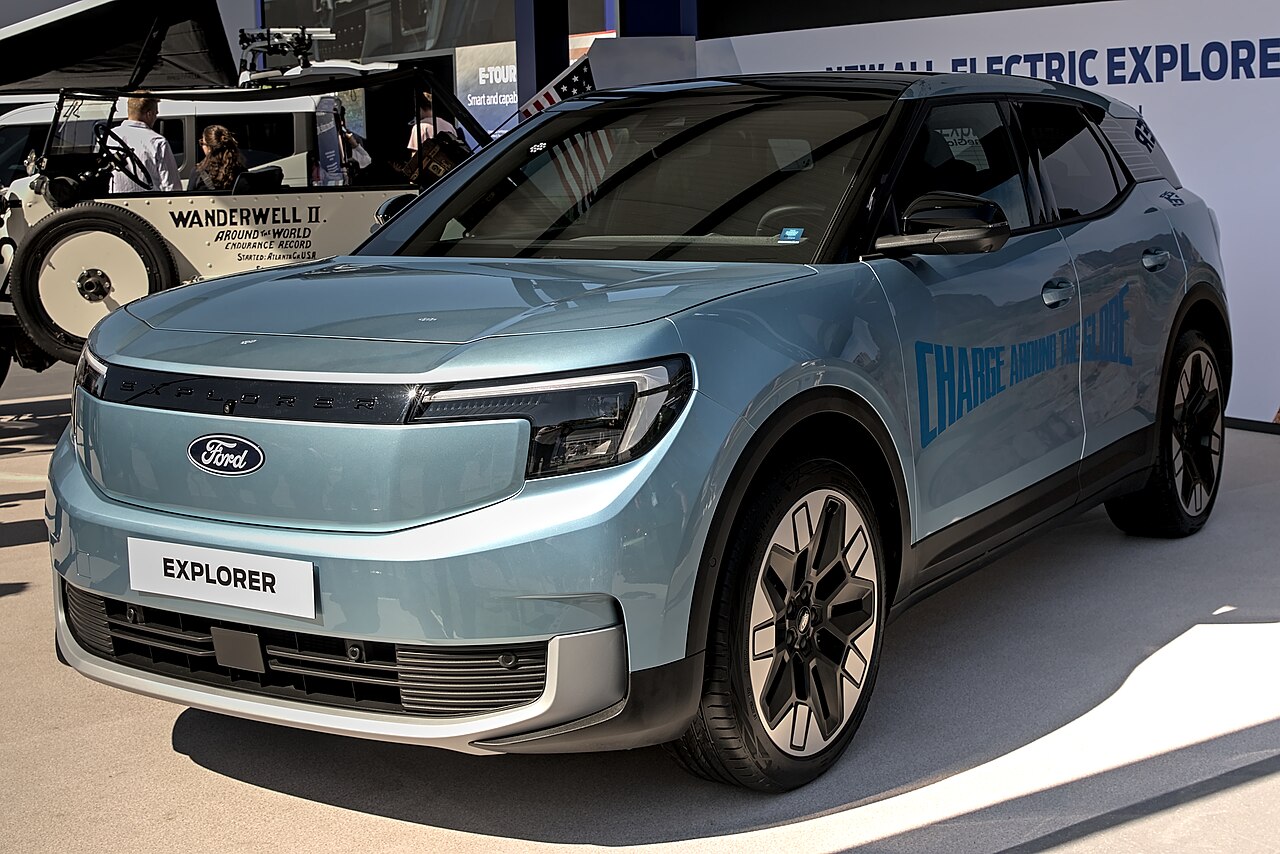
Ford Explorer EV, European electric SUV
Ford Explorer EV. Photo by Alexander-93, CC BY-SA 4.0, via Wikimedia Commons.

How a Ford Explorer EV VIN is put together

The 17 characters follow a global standard, so each position carries fixed meaning. The electric Explorer is built in Cologne, Germany, so its VIN typically begins with WF0, the World Manufacturer Identifier for Ford in Europe. Characters four through eight describe the body, the restraint system and the drive system, which is where a single-motor rear-drive car is separated from a dual-motor all-wheel-drive one. The ninth character is a check digit, the tenth is the model year, the eleventh is the plant, and the final six are the unique build sequence.

VIN clue What it means
WMI WF0 Ford Explorer EV built by Ford in Europe (Cologne, Germany)
Position 9 Check digit that validates the whole VIN
Position 10 Model year code (for example R is 2024, S is 2025)
Positions 4 to 8 Body, restraint system and drive configuration
Positions 12 to 17 Unique sequential build number

You will find the VIN at the base of the windshield on the driver’s side, on the door jamb label, and in the registration paperwork. Note that the petrol Ford Explorer is a separate vehicle covered on its own page.

Ford Explorer EV VIN position by position

The Explorer EV is a European electric SUV built in Cologne on Volkswagen’s electric platform, and it is a different car from the American Explorer. It uses the seventeen character VIN, which describes the electric drive rather than a petrol engine.

Position Name What it tells you on an Explorer EV
1 to 3 World Manufacturer Identifier WF0 marks a Ford built in Europe, and this Explorer is built in Cologne in Germany
4 to 8 Vehicle descriptor Trim, body and the electric drive, where a single motor rear drive is separated from a dual motor all wheel drive
9 Check digit A calculated character that validates the rest of the VIN
10 Model year A single character, listed in the chart below
11 Assembly plant The European Ford factory that built the car
12 to 17 Serial number The build sequence unique to that Explorer EV

Ford Explorer EV model year codes (position 10)

The tenth character gives the model year. Match the letter below.

Model year Code in position 10
Ford Explorer EV 2024 R
Ford Explorer EV 2025 S

Where to find the VIN on a Ford Explorer EV

Read the VIN through the base of the windscreen on the driver side and check it against the plate or label in the door area. On an electric car it is also worth matching the VIN to the service and battery records, since the battery history matters as much as the mileage.

Reading an Explorer EV VIN in practice

Take a VIN that opens with WF0 and shows R in position ten. That places it as a European built Ford from the 2024 model year. The descriptor characters then tell you whether it is single or dual motor, and the closing six digits are the car’s own serial number.

About the Ford Explorer EV

The Explorer EV is Ford’s electric compact SUV for Europe, launched in 2024 and built on a dedicated electric platform. It is offered with single-motor rear-wheel drive and dual-motor all-wheel drive, with different battery sizes, and it shares no mechanical relationship with the larger petrol Explorer sold elsewhere.

Phase Years Body Drive VIN type
Ford Explorer EV 2024 to present Electric compact SUV Single-motor RWD and dual-motor AWD WF0, Cologne

Ford Explorer EV configurations

Because the drive system is encoded in the VIN, a check confirms whether the car is rear-wheel drive or all-wheel drive and which battery it carries.

Configuration Years Power Drive
Ford Explorer EV Standard Range RWD 2024 to present about 170 hp Single motor, rear-wheel drive
Ford Explorer EV Extended Range RWD 2024 to present about 286 hp Single motor, rear-wheel drive
Ford Explorer EV Extended Range AWD 2024 to present about 340 hp Dual motor, all-wheel drive

Ford Explorer EV by model year

The Explorer EV follows the standard VIN year letters, so position ten quickly confirms the year a seller claims.

Model year VIN year code Notes
Ford Explorer EV 2024 R First model year
Ford Explorer EV 2025 S Full range available

Reliability and the things worth checking

As a new electric model, the Explorer EV has limited history, but confirm a specific car against the relevant recall database by its VIN.

Area What to check
Ford Explorer EV battery Confirm battery health and any remaining warranty
Ford Explorer EV charging Check that AC and DC charging work correctly and ask about the charging cables
Ford Explorer EV software Confirm software is up to date and any recall updates have been applied
Ford Explorer EV general Verify open recalls by VIN and confirm a clean accident record

A VIN history check together with a battery health report is the best way to choose a good Explorer EV.

Buying a used Ford Explorer EV

Decode the VIN first and confirm the model year and drive configuration match the advertisement, then run that number through the relevant recall database. Decide between rear-wheel and all-wheel drive and the battery options, confirm battery health and remaining warranty, and make sure charging works as it should. When you are ready, enter your Ford Explorer EV VIN in the decoder above to confirm the year, configuration and details before you buy.

Ford Explorer VIN Decoder: Full History, Generations and VIN Lookup Guide

Every Ford Explorer carries a 17-character Vehicle Identification Number, and decoding it is the quickest way to confirm what a given SUV really is before you trust a listing. The VIN reveals the model year, the plant it came from, the engine fitted at the factory, the body style and the safety equipment. On a used Explorer this matters most for confirming the engine, separating a four-cylinder turbo from the powerful 3.0 V6 in the ST, and verifying the model year and drivetrain a seller claims. Run any Explorer VIN through the decoder above to read it in seconds. The guide below explains how the number is built, walks through the generations, and points out what to check on each.

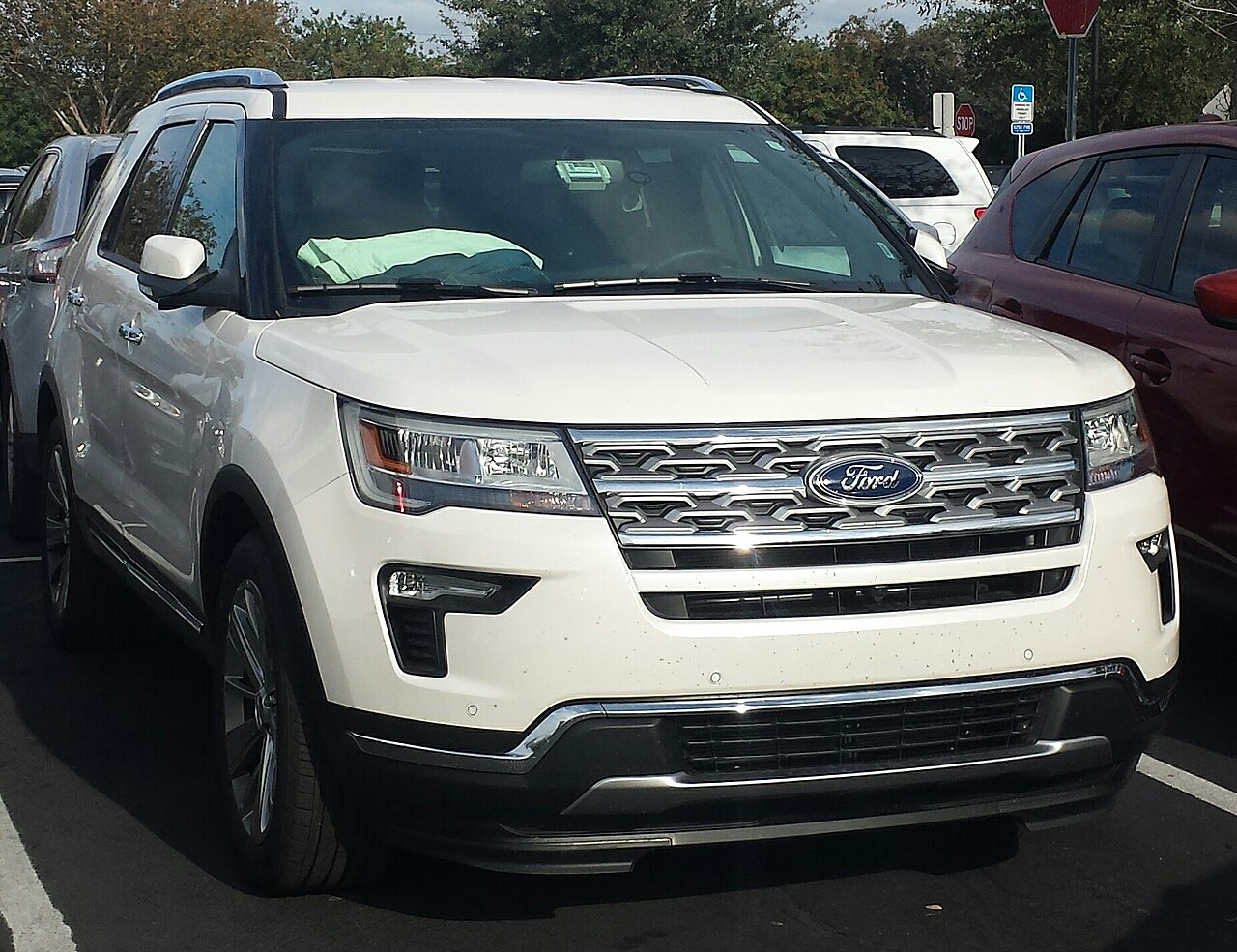
2018 Ford Explorer SUV
2018 Ford Explorer. Photo by Bull-Doser, Public domain, via Wikimedia Commons.

How a Ford Explorer VIN is put together

The 17 characters follow a global standard, so each position carries fixed meaning. The first three are the World Manufacturer Identifier. Explorers are built at Chicago Assembly and begin with 1FM, marking a Ford sport utility built in the United States. Characters four through eight describe the body, restraint system and engine, which is where a 2.3 EcoBoost is separated from the 3.0 EcoBoost V6 or the hybrid. The ninth character is a check digit. The tenth is the model year, the eleventh is the plant, and the final six are the unique build sequence.

VIN clue What it means
WMI 1FM Ford Explorer built as a Ford SUV in the United States
Position 9 Check digit that validates the whole VIN
Position 10 Model year code (for example M is 2021, R is 2024)
Positions 4 to 8 Body style, restraint system and engine family
Positions 12 to 17 Unique sequential build number

You will find the VIN at the base of the windshield on the driver’s side, on the door jamb label, and in the registration paperwork.

Ford Explorer VIN position by position

The Explorer has used the seventeen character VIN throughout its life, so every one reads the same way. Take it position by position and you can settle the year, the plant and the engine family before you trust the seller’s word.

Position Name What it tells you on an Explorer
1 to 3 World Manufacturer Identifier 1FM marks a Ford built in the United States as an SUV or multipurpose vehicle
4 to 7 Vehicle descriptor Trim, body and drive layout, where rear drive is separated from four wheel drive
8 Engine One character for the engine, read together with the year since the same letter was reused over time
9 Check digit A calculated character that validates the rest of the VIN
10 Model year A single character, listed in the chart below
11 Assembly plant The Ford factory that built the car
12 to 17 Serial number The build sequence unique to that Explorer

Ford Explorer model year codes (position 10)

The tenth character is the quickest way to date an Explorer. These are the codes for the recent generations that make up most of the used market.

Model year Code in position 10
Ford Explorer 2011 B
Ford Explorer 2012 C
Ford Explorer 2013 D
Ford Explorer 2014 E
Ford Explorer 2015 F
Ford Explorer 2016 G
Ford Explorer 2017 H
Ford Explorer 2018 J
Ford Explorer 2019 K
Ford Explorer 2020 L
Ford Explorer 2021 M
Ford Explorer 2022 N
Ford Explorer 2023 P
Ford Explorer 2024 R
Ford Explorer 2025 S

Where to find the VIN on a Ford Explorer

Read the VIN through the windshield at the base of the glass on the driver side, and check it against the label in the driver door jamb. The two should always match. Because the Explorer is such a common family SUV, a quick VIN read is the easiest way to be sure an advert is describing the actual car rather than a similar trim.

Reading an Explorer VIN in practice

Take a VIN that starts with 1FM and shows K in position ten. That already tells you it is a United States built Ford SUV from the 2019 model year. Position eight then narrows the engine to the V6 or one of the EcoBoost units offered that year, and the final six digits are the car’s own serial number.

A short history, generation by generation

The Explorer arrived for 1991 and effectively created the mainstream midsize SUV market in America. The first four generations were traditional body-on-frame or truck-derived SUVs, the fifth generation in 2011 switched to a car-like unibody with turbocharged EcoBoost options, and the sixth generation from 2020 moved to a rear-drive-based architecture that improved towing and handling while adding the performance ST and a hybrid.

Generation Years Body Key engines VIN type
Ford Explorer first generation 1991 to 1994 Midsize SUV 4.0 V6 17-character
Ford Explorer second to fourth 1995 to 2010 Midsize SUV 4.0 V6, 4.6 V8 17-character
Ford Explorer fifth generation 2011 to 2019 Unibody SUV 2.0 and 2.3 EcoBoost, 3.5 V6 17-character
Ford Explorer sixth generation 2020 to present RWD-based SUV 2.3 EcoBoost, 3.0 EcoBoost V6, 3.3 hybrid 1FM, Chicago

Ford Explorer engines and specifications

Because the engine code sits in the middle of the VIN, a check confirms the engine the SUV was built with, which is exactly what you want when a listing is unclear about the powertrain.

Configuration Years Power Layout
Ford Explorer 2.3 EcoBoost 2020 to present about 300 hp Turbocharged inline-4
Ford Explorer 3.0 EcoBoost V6 (ST, Platinum) 2020 to present about 365 to 400 hp Twin-turbo V6
Ford Explorer 3.3 Hybrid 2020 to present about 318 hp combined Hybrid V6
Ford Explorer 3.5 V6 2011 to 2019 about 290 hp Naturally aspirated V6

Ford Explorer by model year

The Explorer follows the standard VIN year letters, so position ten quickly confirms the year a seller claims.

Model year VIN year code Engine options
Ford Explorer 2020 L 2.3 EcoBoost, 3.0 EcoBoost V6, 3.3 Hybrid
Ford Explorer 2021 M 2.3 EcoBoost, 3.0 EcoBoost V6, 3.3 Hybrid
Ford Explorer 2022 N 2.3 EcoBoost, 3.0 EcoBoost V6, 3.3 Hybrid
Ford Explorer 2023 P 2.3 EcoBoost, 3.0 EcoBoost V6, 3.3 Hybrid
Ford Explorer 2024 R 2.3 EcoBoost, 3.0 EcoBoost V6
Ford Explorer 2025 S 2.3 EcoBoost, 3.0 EcoBoost V6

Reliability and the things worth checking

Reliability varies by generation, and you should always confirm a specific car against the NHTSA recall database by its VIN.

Area What to check
Ford Explorer 3.0 EcoBoost V6 (ST) Strong but worked hard in the ST; confirm cooling and service history
Ford Explorer sixth generation (early) The 2020 launch had several quality recalls; verify they were completed by VIN
Ford Explorer fifth generation Check for exhaust odour concerns reported on some cars and confirm transmission behaviour
Ford Explorer general Inspect for towing wear and confirm a clean accident record

A VIN history check together with a careful inspection is the best way to avoid an Explorer with a hard or poorly documented life.

Ford Explorer recalls

The Explorer has had many safety recalls, recorded by the American road safety regulator, the NHTSA. The main campaigns are listed below by the years they affect. This is a reference list, not a check of your individual car. To see whether a specific VIN has an open, unrepaired recall, use the official lookups linked underneath.

Model years NHTSA number Area Problem and risk
2011 to 2017 (salt states) 16V245 / 19V435 / 20V675 / 21V537 / 21V746 Rear suspension Rear suspension toe link ball joint may corrode and fracture, sudden loss of steering control. One of the best known Explorer issues.
2011 to 2013 14V286 Steering Electric power steering may shut off, much greater steering effort at low speed.
2011 to 2013 15V171 Doors Interior door handle spring may unseat, a door may unlatch in a side impact.
2011 to 2019 24V031 Body trim A-pillar trim clips may not hold, the trim can detach and become a road hazard.
2012 to 2013 13V109 Fuel tank Fuel tank seam may be poorly sealed, weaker in a crash and may leak.
2013 13V227 / 15V812 Fuel system Fuel delivery module may crack and leak fuel, risk of fire.
2020 19V859 Fuel system Vapour line sleeve may chafe the fuel line, fuel leak and risk of fire.
2020 (2.3 engine) 20V730 Fuel tank Fuel tank inlet valve may be poorly welded, could leak in a crash, risk of fire.
2020 to 2021 20V788 Engine Right motor mount bolts may loosen, axle may disconnect, loss of drive power.
2020 (all wheel drive) 20V693 Driveline Drive shaft may fracture at the weld, rollaway or loss of drive, possible fuel leak and fire.
2020 to 2022 23V675 / 23V199 / 25V166 Driveline Rear axle bolt may fracture and the driveshaft disconnect, rollaway or loss of drive.
2020 21V154 Suspension Rear lower control arm bolts may not be heat treated and can break, loss of steering control.
2020 to 2026 20V549 / 25V093 / 26V159 Seat belts Seat belt buckle or anchor bolts may be loose, may not restrain an occupant in a crash.
2020 to 2022 (plug in hybrid) 23V626 High voltage battery Battery cell defect may cause an internal short, loss of drive power and risk of fire.
2020 19V687 Electrical Wiring harness may rub the A/C pulley and short the battery wire, risk of fire.
2016 to 2023 (2.0 engine) 25V685 Engine block heater Block heater may crack and short when plugged in, risk of fire.

Recall data is published by the NHTSA and changes over time as new campaigns are announced. This list is a summary of the main ones and is not a substitute for the official record. Always confirm the exact status for a specific car by its VIN.

Check a specific VIN for open recalls: use the official NHTSA recalls lookup or the Ford recall page, which show whether the recall work on that VIN has already been done.

Buying a used Ford Explorer

Decode the VIN first and confirm the model year, engine and plant match the advertisement, then run that number through the NHTSA recall search, which is especially worthwhile on the early sixth-generation cars. Decide whether you want the four-cylinder, the V6 or the hybrid, confirm an ST is genuine, and prioritise a complete service history on a vehicle that is often used for towing and family duty.

Common questions

Buyers often ask how to tell an Explorer ST from a regular Explorer, and the answer is in the engine and series codes of the VIN backed up by documentation rather than the badges alone. People also ask whether the newer Explorer is still truck-based, and the sixth generation uses a rear-drive-biased unibody platform rather than the older body-on-frame design. The standard 17-character decoding applies across the Explorer range from 1991 onward. When you are ready, enter your Ford Explorer VIN in the decoder above to confirm the year, engine and configuration before you buy.

Ford Expedition VIN Decoder: Full History, Generations and VIN Lookup Guide

Every Ford Expedition carries a 17-character Vehicle Identification Number, and decoding it is the quickest way to confirm what a given full-size SUV really is before you trust a listing. The VIN reveals the model year, the plant it came from, the engine fitted at the factory, the body length and the safety equipment. On a used Expedition this matters most for confirming the engine, telling apart the standard and extended-length bodies, and verifying the model year and configuration a seller claims. Run any Expedition VIN through the decoder above to read it in seconds. The guide below explains how the number is built, walks through the generations, and points out what to check on each.

2018 Ford Expedition SUV
2018 Ford Expedition. Photo by Bull-Doser, Public domain, via Wikimedia Commons.

How a Ford Expedition VIN is put together

The 17 characters follow a global standard, so each position carries fixed meaning. The first three are the World Manufacturer Identifier. Expeditions are built at the Kentucky Truck Plant in Louisville and begin with 1FM, marking a Ford sport utility built in the United States. Characters four through eight describe the body and length, the restraint system and the engine, which on the modern truck is the 3.5 EcoBoost V6 in different states of tune. The ninth character is a check digit. The tenth is the model year, the eleventh is the plant, and the final six are the unique build sequence.

VIN clue What it means
WMI 1FM Ford Expedition built as a Ford SUV in the United States
Position 9 Check digit that validates the whole VIN
Position 10 Model year code (for example M is 2021, R is 2024)
Positions 4 to 8 Body length, restraint system and engine family
Positions 12 to 17 Unique sequential build number

You will find the VIN at the base of the windshield on the driver’s side, on the door jamb label, and in the registration paperwork.

Ford Expedition VIN position by position

The Expedition uses the seventeen character VIN across its whole life, so every one reads the same way. Go through it in order and you can fix the year, the plant and the engine before you rely on the seller’s word.

Position Name What it tells you on an Expedition
1 to 3 World Manufacturer Identifier 1FM marks a Ford built in the United States as an SUV or multipurpose vehicle
4 to 7 Vehicle descriptor Trim, body and drive layout, where the standard length is separated from the longer Max or EL
8 Engine The engine code, read with the year, since it ran from the V8 Triton engines to the EcoBoost V6 and a hybrid
9 Check digit A calculated character that validates the rest of the VIN
10 Model year A single character, listed in the chart below
11 Assembly plant The Ford factory that built the vehicle
12 to 17 Serial number The build sequence unique to that Expedition

Ford Expedition model year codes (position 10)

The tenth character is the quickest way to date an Expedition. Match the letter or number below.

Model year Code in position 10
Ford Expedition 2007 7
Ford Expedition 2008 8
Ford Expedition 2009 9
Ford Expedition 2010 A
Ford Expedition 2011 B
Ford Expedition 2012 C
Ford Expedition 2013 D
Ford Expedition 2014 E
Ford Expedition 2015 F
Ford Expedition 2016 G
Ford Expedition 2017 H
Ford Expedition 2018 J
Ford Expedition 2019 K
Ford Expedition 2020 L
Ford Expedition 2021 M
Ford Expedition 2022 N
Ford Expedition 2023 P
Ford Expedition 2024 R

Where to find the VIN on a Ford Expedition

Read the VIN through the windshield at the base of the glass on the driver side, and check it against the label in the driver door jamb. The two should match. On a large family SUV that has often towed or carried a full load, a quick VIN read is the easiest way to confirm the advert matches the actual truck.

Reading an Expedition VIN in practice

Take a VIN that starts with 1FM and shows H in position ten. That marks it as a United States built Ford SUV from the 2017 model year. Position eight then tells you whether it left the line with a V8 or the EcoBoost V6, and the final six digits are the vehicle’s own serial number.

A short history, generation by generation

The Expedition arrived for 1997 as Ford’s full-size SUV, sharing much of its engineering with the F-150 and offering three rows of seats and serious towing capacity. It used V8 power for its first three generations, then switched entirely to the turbocharged 3.5 EcoBoost V6 with the fourth generation in 2018, which improved both power and efficiency. A redesigned model arrived for 2025.

Generation Years Body Key engines VIN type
Ford Expedition first generation 1997 to 2002 Full-size SUV 4.6 and 5.4 V8 17-character
Ford Expedition second generation 2003 to 2006 Full-size SUV 4.6 and 5.4 V8 17-character
Ford Expedition third generation 2007 to 2017 Full-size SUV 5.4 V8, 3.5 EcoBoost V6 17-character
Ford Expedition fourth generation 2018 to 2024 Full-size SUV 3.5 EcoBoost V6 1FM, Kentucky Truck

Ford Expedition engines and specifications

Because the engine code sits in the middle of the VIN, a check confirms the engine the SUV was built with, which is what you want when a listing is vague about output or tune.

Configuration Years Power Layout
Ford Expedition 3.5 EcoBoost V6 2018 to 2024 about 375 to 440 hp Twin-turbo V6
Ford Expedition 3.5 EcoBoost V6 (early) 2015 to 2017 about 365 hp Twin-turbo V6
Ford Expedition 5.4 V8 1999 to 2014 about 260 to 310 hp Naturally aspirated V8
Ford Expedition 4.6 V8 1997 to 2008 about 230 to 300 hp Naturally aspirated V8

Ford Expedition by model year

The Expedition follows the standard VIN year letters, so position ten quickly confirms the year a seller claims.

Model year VIN year code Engine
Ford Expedition 2019 K 3.5 EcoBoost V6
Ford Expedition 2020 L 3.5 EcoBoost V6
Ford Expedition 2021 M 3.5 EcoBoost V6
Ford Expedition 2022 N 3.5 EcoBoost V6
Ford Expedition 2023 P 3.5 EcoBoost V6
Ford Expedition 2024 R 3.5 EcoBoost V6

Reliability and the things worth checking

Reliability is generally good, but you should always confirm a specific car against the NHTSA recall database by its VIN.

Area What to check
Ford Expedition 3.5 EcoBoost V6 Confirm cooling system and turbo health, plus service history on tow-heavy trucks
Ford Expedition 5.4 V8 (older) Known for spark plug and cam phaser issues on certain years; confirm repairs
Ford Expedition transmission Confirm smooth shifts on a road test, especially on high-mileage trucks
Ford Expedition general Inspect for heavy towing wear and verify open recalls by VIN

A VIN history check alongside a careful inspection is the best way to avoid an Expedition that has towed hard without proper maintenance.

Ford Expedition recalls

Below are notable safety recalls recorded for the Ford Expedition by the American road safety regulator, the NHTSA, with a focus on the fourth generation from 2018 on. This is a reference list, not a check of your individual car. A recall applies only to certain build dates and VIN ranges, so a model year here does not mean every car of that year is affected.

Model years NHTSA number Area Problem and risk
2018 to 2022 26V344 Seat belt pretensioner The front seat belt pretensioner can lock the belt so it will not retract or extend, so it may not restrain properly in a crash. Retractors inspected and replaced.
2016 to 2017 22V150 Brakes, 3.5L EcoBoost The brake master cylinder can leak fluid into the booster, reducing front braking and needing more pedal effort and distance to stop. Master cylinder replaced.
2022 to 2024 25V314 Front brakes The front brake line can rub the air cleaner pipe and be damaged, causing a fluid leak and loss of brake function. Line or pipe inspected and replaced.
2018 18V392 Fuel pump, 3.5L High pressure fuel pump welds can crack and leak oil or fuel, a fire risk. Pump and related parts replaced.
2018 18V213 / 18V214 10-speed transmission A missing roll pin or unseated shift cable clip can cause loss of the Park function, so the car can roll away. Parts inspected and repaired.
2022 25V455 Fuel pump The low pressure fuel pump can fail and cause the engine to stall while driving. Remedy in development.
2021 to 2022 22V193 Trailer brakes A software error can leave a towed trailer’s electric brakes not working. Trailer brake module software updated.
2022 to 2024 25V315 Rear camera A software error can delay, freeze or blank the rearview camera image in reverse. Software updated by a dealer or over the air.
2021 to 2023 26V204 Wipers The windshield wiper arms can break and the wipers fail. Wiper arms inspected and replaced.
2021 to 2022 25V729 Moonroof The moonroof wind deflector clips can be poorly attached and the deflector can detach and become a road hazard. Deflector inspected and repaired.

Recall data is published by the NHTSA and changes over time, so treat this as background rather than a substitute for the official record for your VIN.

Check a specific VIN for open recalls: use the official NHTSA recalls lookup or the Ford recall page. Both are free and show whether the work has already been done.

Buying a used Ford Expedition

Decode the VIN first and confirm the model year, engine and plant match the advertisement, then run that number through the NHTSA recall search. Decide whether you need the standard or the longer Max body, confirm the engine and tune, and on older V8 trucks ask specifically about spark plug and cam phaser work. A complete service history is essential on a heavy SUV that is often used for towing.

Common questions

Buyers often ask about the difference between the Expedition and the Expedition Max, and it comes down to body length and cargo room, both readable from the body code in the VIN. People also ask when the Expedition dropped the V8, and the answer is the 2018 fourth generation, which moved entirely to the 3.5 EcoBoost V6. The standard 17-character decoding applies across the Expedition range from 1997 onward. When you are ready, enter your Ford Expedition VIN in the decoder above to confirm the year, engine and configuration before you buy.

Ford Excursion VIN Decoder: History, Engines and VIN Lookup Guide

Every Ford Excursion carries a 17-character Vehicle Identification Number, and decoding it is the quickest way to confirm what a given SUV really is before you trust a listing. The VIN reveals the model year, the plant it came from, the engine fitted at the factory, the drivetrain and the safety equipment. On the Excursion this matters most for confirming the engine, especially whether the vehicle has a gas V8 or one of the diesels, and verifying the model year a seller claims. Run any Excursion VIN through the decoder above to read it in seconds. The guide below explains how the number is built, covers the model’s run, and points out what to check.

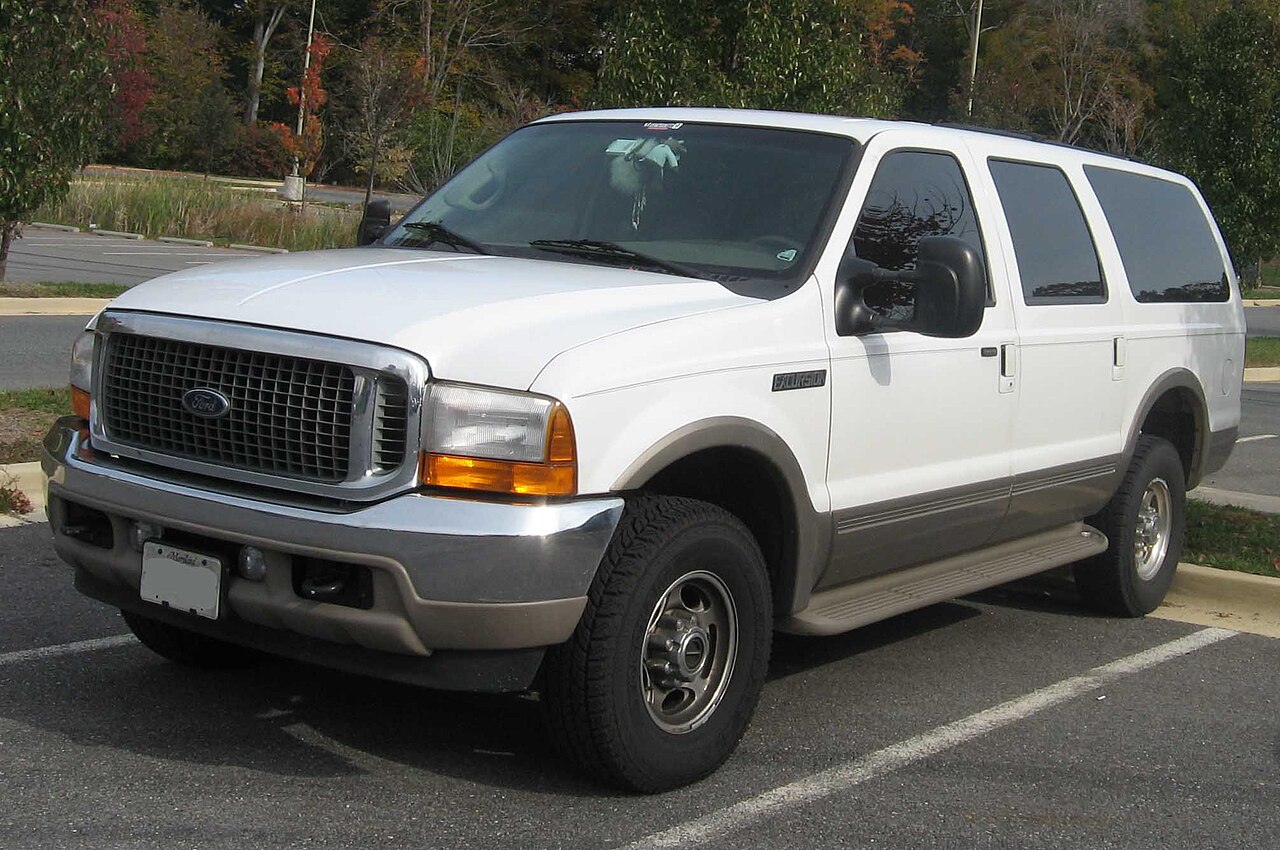
Ford Excursion full-size SUV, 2000 to 2004
Ford Excursion, 2000 to 2004. Photo by IFCAR, Public domain, via Wikimedia Commons.

How a Ford Excursion VIN is put together

The 17 characters follow a global standard, so each position carries fixed meaning. The Excursion was built in the United States, so its VIN begins with 1FM, marking a Ford sport utility built in the United States. Characters four through eight describe the body, the restraint system, the drivetrain and the engine, which is the key to telling the gas V8s from the diesels. The ninth character is a check digit, the tenth is the model year, the eleventh is the plant, and the final six are the unique build sequence.

VIN clue What it means
WMI 1FM Ford Excursion built as a Ford SUV in the United States
Position 9 Check digit that validates the whole VIN
Position 10 Model year code (for example Y is 2000, 5 is 2005)
Positions 4 to 8 Body, drivetrain, restraint system and engine
Positions 12 to 17 Unique sequential build number

You will find the VIN at the base of the windshield on the driver’s side, on the door jamb label, and in the registration paperwork.

Ford Excursion VIN position by position

The Excursion was Ford’s largest SUV, built on the Super Duty truck platform, and it uses the seventeen character VIN. Read it in order and you can settle the year, the plant and the engine before you trust the advert, which matters most for telling the big gas engines apart from the diesels.

Position Name What it tells you on an Excursion
1 to 3 World Manufacturer Identifier 1FM marks a Ford built in the United States as an SUV or multipurpose vehicle
4 to 7 Vehicle descriptor Body, series and drive, where two wheel drive is separated from four wheel drive
8 Engine The engine code, read with the year, from the V8 and V10 gas engines to the Power Stroke diesels
9 Check digit A calculated character that validates the rest of the VIN
10 Model year A single character, listed in the chart below
11 Assembly plant The Ford factory that built the vehicle
12 to 17 Serial number The build sequence unique to that Excursion

Ford Excursion model year codes (position 10)

The Excursion was built from 2000 to 2005, and the tenth character reads as follows.

Model year Code in position 10
Ford Excursion 2000 Y
Ford Excursion 2001 1
Ford Excursion 2002 2
Ford Excursion 2003 3
Ford Excursion 2004 4
Ford Excursion 2005 5

Where to find the VIN on a Ford Excursion

Read the VIN through the windshield at the base of the glass on the driver side, and check it against the label in the driver door jamb, which also lists the weight ratings. On these big haulers the diesel is worth a clear premium, so use the VIN to confirm the engine before you go by the badges.

Reading an Excursion VIN in practice

Take a VIN that starts with 1FM and shows 3 in position ten. That marks it as a United States built Ford SUV from the 2003 model year. Position eight then tells you whether it left the line with a gas engine or a Power Stroke diesel, and the final six digits are the vehicle’s own serial number.

About the Ford Excursion

The Excursion was Ford’s largest SUV, sold from 2000 to 2005 and based on the heavy-duty Super Duty truck. It offered massive interior space, serious towing capacity and a choice of big gas V8s or Power Stroke diesels, and it remains popular with families and towers who need maximum capability.

Phase Years Body Key engines VIN type
Ford Excursion early 2000 to 2002 Full-size heavy-duty SUV 5.4 and 6.8 V8, 7.3 Power Stroke diesel 1FM, 17-character
Ford Excursion late 2003 to 2005 Full-size heavy-duty SUV 5.4 and 6.8 V8, 6.0 Power Stroke diesel 1FM, 17-character

Ford Excursion engines and specifications

Because the engine code sits in the middle of the VIN, a check confirms the engine the SUV was built with, which is critical given the value difference between gas and diesel models.

Configuration Years Power Fuel
Ford Excursion 5.4 V8 2000 to 2005 about 255 to 260 hp Petrol
Ford Excursion 6.8 V10 2000 to 2005 about 310 hp Petrol
Ford Excursion 7.3 Power Stroke diesel 2000 to 2003 about 250 hp Diesel
Ford Excursion 6.0 Power Stroke diesel 2003 to 2005 about 325 hp Diesel

Ford Excursion by model year

The Excursion follows the standard VIN year characters, so position ten quickly confirms the year a seller claims.

Model year VIN year code Notable engines
Ford Excursion 2000 Y 5.4 and 6.8 V8, 7.3 diesel
Ford Excursion 2002 2 7.3 Power Stroke diesel
Ford Excursion 2003 3 6.0 Power Stroke diesel introduced
Ford Excursion 2004 4 5.4 and 6.8 V8, 6.0 diesel
Ford Excursion 2005 5 Final model year

Reliability and the things worth checking

The Excursion is tough but heavy and often used for towing, so confirm a specific vehicle against the NHTSA recall database by its VIN.

Area What to check
Ford Excursion 6.0 Power Stroke diesel This engine is known for issues if neglected; confirm key repairs and upgrades
Ford Excursion 7.3 Power Stroke diesel Highly regarded; confirm maintenance on these high-mileage trucks
Ford Excursion towing wear Inspect frame, hitch, brakes and transmission for heavy towing use
Ford Excursion general Verify open recalls by VIN and check for rust on northern vehicles

A VIN history check together with a careful inspection, especially of the diesel and drivetrain, is essential on a heavy vehicle like this.

Ford Excursion recalls

Below are notable safety recalls recorded for the Ford Excursion by the American road safety regulator, the NHTSA. This is a reference list, not a check of your individual vehicle, and a recall applies only to certain build dates and VIN ranges.

Model years NHTSA number Area Problem and risk
2003 to 2005, 6.0L diesel 05V270 Engine stall Diesel models can stall without warning while driving and may not restart, a crash risk. Fuel injection control module harness and pressure sensor connector upgraded.
2002 to 2005 11V352 Exterior lighting A deformed multi function switch part can stop the turn signals, tail lights, hazards or brake lights from working. Switch replaced.

Early Excursions, roughly 2000 to 2002, are also covered by the Ford speed control deactivation switch recall, where the cruise control switch can leak and cause an under hood fire. Because it depends on build date, a VIN check is the reliable way to see if it applies. Recall data is published by the NHTSA and changes over time, so treat this as background rather than a substitute for the official record for your VIN.

Check a specific VIN for open recalls: use the official NHTSA recalls lookup or the Ford recall page. Both are free and show whether the work has already been done.

Buying a used Ford Excursion

Decode the VIN first and confirm the model year, engine and drivetrain match the advertisement, then run that number through the NHTSA recall search. The engine choice is the biggest decision, since the 7.3 diesel is especially prized and the 6.0 diesel needs proof of proper care, so confirm exactly what is fitted through the VIN and prioritise a documented history. When you are ready, enter your Ford Excursion VIN in the decoder above to confirm the year, engine and configuration before you buy.

Ford Evos VIN Decoder: History, Engine and VIN Lookup Guide

Every Ford Evos carries a 17-character Vehicle Identification Number, and decoding it is the quickest way to confirm what a given car really is before you trust a listing. The VIN reveals the model year, the country and plant it came from, the engine fitted at the factory, the body and the safety equipment. As a China-market model, the Evos is best confirmed through its VIN, which also records its origin and configuration. Run any Evos VIN through the decoder above to read it in seconds. The guide below explains how the number is built and what to check.

How a Ford Evos VIN is put together

The 17 characters follow a global standard, so each position carries fixed meaning. The Evos is built in China, so its World Manufacturer Identifier reflects Chinese manufacture rather than a United States code. Characters four through eight describe the body, the restraint system and the engine, which is a turbocharged EcoBoost. The ninth character is a check digit, the tenth is the model year, the eleventh is the plant, and the final six are the unique build sequence.

VIN clue What it means
Chinese WMI Ford Evos built in China for the local market
Position 9 Check digit that validates the whole VIN
Position 10 Model year code (for example M is 2021, R is 2024)
Positions 4 to 8 Body, restraint system and engine family
Positions 12 to 17 Unique sequential build number

You will find the VIN at the base of the windshield on the driver’s side, on the door jamb label, and in the registration paperwork.

Ford Evos VIN position by position

The Evos is a large crossover sold only in China, built there through Ford’s local joint venture, and it uses the seventeen character VIN. Read it in order and you can confirm the origin, the year and the engine before you trust the advert.

Position Name What it tells you on an Evos
1 to 3 World Manufacturer Identifier A Chinese country code, beginning with L, since the Evos is built in China
4 to 8 Vehicle descriptor Body, trim and engine
9 Check digit A calculated character that validates the rest of the VIN
10 Model year A single character, listed in the chart below
11 Assembly plant The factory that built the car
12 to 17 Serial number The build sequence unique to that Evos

Ford Evos model year codes (position 10)

The tenth character gives the model year. Match the letter below.

Model year Code in position 10
Ford Evos 2021 M
Ford Evos 2022 N
Ford Evos 2023 P
Ford Evos 2024 R

Where to find the VIN on a Ford Evos

Read the VIN through the base of the windscreen on the driver side and check it against the plate or label in the door area. Because it was sold only in China, matching the number to the local documents is the key check on any car that has since been exported.

Reading an Evos VIN in practice

Take a VIN that begins with a Chinese L code and shows N in position ten. That places it as a Chinese built Ford from the 2022 model year. The descriptor characters then show the trim and engine, and the closing six digits are the car’s own serial number.

About the Ford Evos

The Evos is a crossover-styled fastback sold in China, launched in 2021 on a platform shared with the Mondeo and Edge. It is known for its sleek body, large dual-screen interior and a turbocharged EcoBoost engine, positioned as a modern, technology-led model for the Chinese market. It shares its name with an earlier 2011 Ford concept car, but the production Evos is a different, China-built vehicle.

Phase Years Body Engine Origin
Ford Evos 2021 to present Crossover fastback 2.0 EcoBoost turbo Built in China

Ford Evos engine and specifications

Because the engine is encoded in the VIN, a check confirms what the car was built with.

Configuration Years Power Layout
Ford Evos 2.0 EcoBoost 2021 to present about 238 hp Turbocharged inline-4
Ford Evos automatic 2021 to present paired with an eight-speed automatic Front-wheel drive

Ford Evos by model year

The Evos follows the standard VIN year letters, so position ten quickly confirms the year a seller claims.

Model year VIN year code Notes
Ford Evos 2021 M First model year
Ford Evos 2022 N 2.0 EcoBoost
Ford Evos 2023 P 2.0 EcoBoost
Ford Evos 2024 R 2.0 EcoBoost

Reliability and the things worth checking

As a newer China-market model, the Evos has limited history elsewhere, so confirm a specific vehicle against local records by its VIN.

Area What to check
Ford Evos 2.0 EcoBoost Confirm cooling system condition and service history
Ford Evos large screens Check the dual-screen infotainment and electronics work correctly
Ford Evos import status If imported, confirm paperwork and parts and service availability
Ford Evos general Confirm the identification details match and look for past accident repair

A VIN check together with a careful inspection is the best way to choose a good Evos.

Buying a used Ford Evos

Decode the VIN first and confirm the model year, engine and origin match the advertisement. As a China-market car, confirming the configuration through the VIN and checking parts and service availability is especially important, alongside a clean history and condition. When you are ready, enter your Ford Evos VIN in the decoder above to confirm the year, engine and configuration before you buy.

Ford Everest VIN Decoder: Generations, Engines and VIN Lookup Guide

Every Ford Everest carries a 17 character Vehicle Identification Number, and reading it is the quickest way to confirm what a particular vehicle really is before you trust a listing. The Everest is Ford’s body on frame SUV, built on the Ranger pickup platform and sold mainly across Asia Pacific, Australia and other markets since 2003, with tough diesel engines and serious off road ability. The VIN settles the model year, the engine the vehicle left the line with, the drive system and the region that built it. You can run any Everest VIN through the decoder at the top of this page and read the result in a few seconds. The rest of this guide explains how the number is built, walks through every generation, and points out what to check when you look one over.

Second generation Ford Everest SUV
Ford Everest, second generation. Photo by JamesYoung8167, CC BY-SA 4.0, via Wikimedia Commons.

How a Ford Everest VIN is put together

The 17 characters split into three blocks, and because the layout follows a global standard, the same position always carries the same kind of information. The first three characters are the World Manufacturer Identifier, which identify where Ford built the vehicle. Because the Everest is produced for Asia Pacific markets, mainly in Thailand, the code reflects that region rather than the North American or European codes you see on other Fords. Characters four through eight describe the vehicle, including the body and, most usefully, the engine, which is where a four cylinder diesel is set apart from the five cylinder or the V6. The ninth character is a check digit that validates the whole number. The last eight characters describe the individual vehicle, with position ten the model year, position eleven the plant and the final six the sequential build number. The quick reference below covers the clues you will use most often when you read a Ford Everest VIN.

VIN clue What it means
WMI (Asia Pacific) Ford Everest built in Ford’s Asia Pacific region, often Thailand
Position 8 Engine code, for example a TDCi diesel, a bi-turbo diesel or a V6
Position 9 Check digit that validates the whole VIN
Position 10 Model year code, for example G is 2016 and N is 2022
Position 11 Assembly plant code

You will find the number behind the windscreen, on the plate in the door jamb and on the registration documents, and matching them is the first check worth doing.

Ford Everest VIN position by position

The Everest is a large SUV based on the Ranger, built for Asia Pacific and other markets, and it uses the seventeen character VIN. Read it in order and you can settle where it was built, the year and the engine before you trust the advert.

Position Name What it tells you on an Everest
1 to 3 World Manufacturer Identifier The country and maker, and the Everest is built in Thailand, so it carries a Thai country code
4 to 8 Vehicle descriptor Body, trim and engine, where a smaller diesel is separated from the larger one
9 Check digit A calculated character that validates the rest of the VIN
10 Model year A single character, listed in the chart below
11 Assembly plant The factory that built the car
12 to 17 Serial number The build sequence unique to that Everest

Ford Everest model year codes (position 10)

The tenth character gives the model year. Match your letter or number below.

Model year Code in position 10
Ford Everest 2015 F
Ford Everest 2016 G
Ford Everest 2017 H
Ford Everest 2018 J
Ford Everest 2019 K
Ford Everest 2020 L
Ford Everest 2021 M
Ford Everest 2022 N
Ford Everest 2023 P
Ford Everest 2024 R

Where to find the VIN on a Ford Everest

Read the VIN through the base of the windscreen on the driver side and check it against the plate or label in the door area. Because these are sold across many markets and some reach other countries as imports, matching the number on the car to the documents is especially worth doing.

Reading an Everest VIN in practice

Take a VIN whose start marks a Thai built car and which shows K in position ten. That places it as a 2019 model. The descriptor characters then show the engine and trim, and the closing six digits are the car’s own serial number.

A short history, generation by generation

The first Everest arrived in 2003 as a rugged SUV derived from the Ranger, aimed at buyers in Asia and Australia who wanted seven seats and genuine off road capability. The second generation of 2015 moved to the modern T6 platform shared with the global Ranger, with more refinement and a strong 3.2 litre diesel, and the third generation of 2022 added a V6 diesel and sharper technology while keeping its tough, ladder frame roots. The table below sums up the generations.

Generation Years Body Key engines
Ford Everest first generation 2003 to 2015 Body-on-frame SUV 2.5 and 3.0 TDCi diesel, 2.6 petrol
Ford Everest second generation 2015 to 2022 Body-on-frame SUV 2.2 and 3.2 TDCi, 2.0 bi-turbo
Ford Everest third generation 2022 to present Body-on-frame SUV 2.0 bi-turbo, 3.0 V6 diesel, 2.3 EcoBoost

Ford Everest engines and specifications

Because the engine code sits in the middle of the VIN, a proper check confirms the engine the vehicle was born with. The figures below cover the main configurations, with power as a range because output changed across model years and markets.

Configuration Years Power Layout
Ford Everest 2.5 and 3.0 TDCi 2003 to 2015 about 140 to 156 hp Turbocharged diesel
Ford Everest 3.2 TDCi 2015 to 2022 about 197 to 200 hp Turbocharged 5-cylinder diesel
Ford Everest 2.0 bi-turbo diesel 2018 to present about 207 to 210 hp Twin-turbocharged diesel
Ford Everest 3.0 V6 diesel 2022 to present about 247 hp Turbocharged V6 diesel
Ford Everest 2.3 EcoBoost 2022 to present about 270 hp Turbocharged petrol

Ford Everest by model year

Buyers searching for a specific year want to know what they are getting, so the table below maps several model years to their VIN year code, generation and engine options. The same model year letter logic runs across the production run.

Model year VIN year code Generation Engine options
Ford Everest 2010 A First generation 2.5 and 3.0 TDCi
Ford Everest 2016 G Second generation 2.2 and 3.2 TDCi
Ford Everest 2019 K Second generation 2.0 bi-turbo, 3.2 TDCi
Ford Everest 2022 N Third generation 2.0 bi-turbo, 3.0 V6
Ford Everest 2024 R Third generation 2.0 bi-turbo, 3.0 V6, 2.3 EcoBoost

Reliability and the things worth checking

The Everest is built tough, but diesels and four wheel drive systems reward careful maintenance, so always run the VIN through the relevant recall check. The most common points to check are summarized below.

Engine or area What to check
Ford Everest diesel Check the diesel particulate filter, turbo and injectors, and on the 2.0 confirm belt service
Ford Everest four wheel drive Confirm the four wheel drive and low range engage cleanly
Ford Everest transmission The automatic should shift smoothly, so check on a test drive
Ford Everest off road use Inspect underneath for damage if the vehicle has been used off road

Buying a used Ford Everest

When you find one worth pursuing, decode the VIN first and make sure the model year, engine and drive type line up with the advertisement, then run the same number through the relevant recall check. Confirm a full service history on the diesels, check the four wheel drive system, and inspect underneath for off road damage. When you are ready, enter your Ford Everest VIN in the decoder above to confirm the year, engine, drive type and plant, then use the advice here to make sure the vehicle is genuinely what it claims to be.

Ford Escort VIN Decoder: North American Escort, Generations and VIN Lookup Guide

Every Ford Escort carries a 17-character Vehicle Identification Number, and decoding it is the quickest way to confirm what a given car really is before you trust a listing. The VIN reveals the model year, the plant it came from, the engine fitted at the factory, the body and the safety equipment. On the North American Escort this matters most for confirming the engine and body style, separating a standard car from a GT or ZX2, and verifying the model year a seller claims. This page covers the North American Ford Escort, sold from 1981 to 2003. Run any Escort VIN through the decoder above to read it in seconds, and use the guide below to understand the number and what to check.

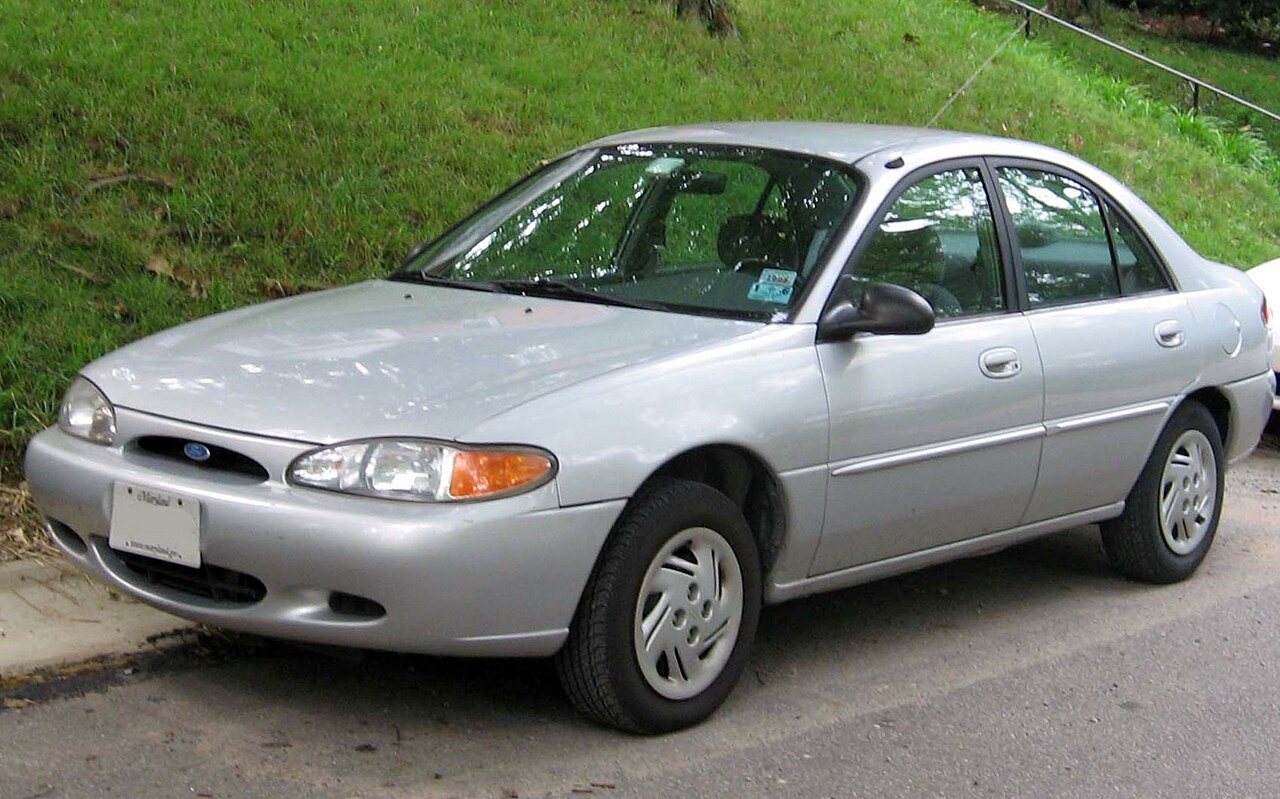
Ford Escort sedan, North American model, 1997 to 2002
Ford Escort sedan, 1997 to 2002 (North America). Photo by IFCAR, Public domain, via Wikimedia Commons.

How a Ford Escort VIN is put together

The 17 characters follow a global standard, so each position carries fixed meaning. The North American Escort was built in the United States, so its VIN begins with 1FA, marking a Ford passenger car built in the United States. Characters four through eight describe the body, the restraint system and the engine, which is where a GT or the ZX2 coupe is separated from a standard car. The ninth character is a check digit, the tenth is the model year, the eleventh is the plant, and the final six are the unique build sequence.

VIN clue What it means
WMI 1FA Ford Escort built as a Ford car in the United States
Position 9 Check digit that validates the whole VIN
Position 10 Model year code (for example V is 1997, 1 is 2001)
Positions 4 to 8 Body, restraint system and engine family
Positions 12 to 17 Unique sequential build number

You will find the VIN at the base of the windshield on the driver’s side, on the door jamb label, and in the registration paperwork. Note that the European Ford Escort is a different car covered on its own page.

Ford Escort VIN position by position

The North American Escort uses the seventeen character VIN, so reading it in order gives you the year, the body and the engine. Most were built in the United States, though some later cars came from Mexico, which the first three characters make clear.

Position Name What it tells you on an Escort
1 to 3 World Manufacturer Identifier 1FA marks a Ford passenger car built in the United States, and a car built in Mexico carries a different country code
4 to 8 Vehicle descriptor Body style, trim and engine, where a base car is separated from the sporty GT or ZX2
9 Check digit A calculated character that validates the rest of the VIN
10 Model year A single character, listed in the chart below
11 Assembly plant The Ford factory that built the car
12 to 17 Serial number The build sequence unique to that Escort

Ford Escort model year codes (position 10)

The tenth character gives the model year. Match your letter or number below.

Model year Code in position 10
Ford Escort 1990 L
Ford Escort 1991 M
Ford Escort 1992 N
Ford Escort 1993 P
Ford Escort 1994 R
Ford Escort 1995 S
Ford Escort 1996 T
Ford Escort 1997 V
Ford Escort 1998 W
Ford Escort 1999 X
Ford Escort 2000 Y
Ford Escort 2001 1
Ford Escort 2002 2

Where to find the VIN on a Ford Escort

Read the VIN through the windshield at the base of the glass on the driver side and check it against the label in the driver door jamb. These were affordable cars that often changed hands cheaply, so a quick VIN read is the simplest way to confirm the year and trim match the advert.

Reading an Escort VIN in practice

Take a car whose VIN starts with 1FA and shows W in position ten. That marks it as a United States built Ford passenger car from the 1998 model year. Position eight then tells you whether it left the line as a base car or the sporty ZX2, and the final six digits are the car’s own serial number.

Generations of the North American Ford Escort

The North American Escort was Ford’s compact economy car for two decades. The first generation arrived for 1981 as Ford’s front-wheel-drive small car, the second generation from 1991 shared engineering with Mazda, and the final cars from 1997 included the sporty ZX2 coupe, which outlasted the sedan and wagon.

Generation Years Body Key engines VIN type
Ford Escort first generation 1981 to 1990 Hatchback, sedan, wagon 1.6 and 1.9 four-cylinder, GT 1FA, 17-character
Ford Escort second generation 1991 to 1996 Hatchback, sedan, wagon 1.8 and 1.9 four-cylinder, GT 1FA, 17-character
Ford Escort third generation and ZX2 1997 to 2003 Sedan, wagon, ZX2 coupe 2.0 four-cylinder 1FA, 17-character

Ford Escort engines and specifications

Because the engine code sits in the middle of the VIN, a check confirms the engine the car was built with, which is exactly what you want when a listing is vague about the unit or trim.

Configuration Years Power Layout
Ford Escort 1.9 four-cylinder 1985 to 1996 about 88 to 110 hp Naturally aspirated inline-4
Ford Escort 1.8 four-cylinder 1991 to 1996 about 127 hp Naturally aspirated inline-4
Ford Escort 2.0 four-cylinder 1997 to 2003 about 110 hp Naturally aspirated inline-4
Ford Escort ZX2 2.0 1998 to 2003 about 130 hp Twin-cam inline-4

Ford Escort by model year

The Escort follows the standard VIN year characters, so position ten quickly confirms the year a seller claims.

Model year VIN year code Generation
Ford Escort 1991 M Second generation
Ford Escort 1995 S Second generation
Ford Escort 1998 W Third generation and ZX2
Ford Escort 2000 Y Sedan, wagon, ZX2
Ford Escort 2002 2 Late ZX2

Reliability and the things worth checking

The Escort is simple and generally dependable, but its age means condition matters most. Confirm a specific car against records by its VIN where possible.

Area What to check
Ford Escort bodywork Rust is the main enemy on older cars, so inspect arches, sills and floors carefully
Ford Escort engine Confirm cooling system health and that timing service has been kept up
Ford Escort ZX2 Check the twin-cam engine and look for hard or modified use on the sporty coupe
Ford Escort general Check the transmission on a road test and confirm a tidy service record

A VIN check together with a careful inspection for rust is the best way to choose a sound Escort.

Ford Escort recalls

The North American Ford Escort, built from 1991 to 2003, has only a small number of safety recalls on record with the American road safety regulator, the NHTSA, and most of the entries that show up for it are for aftermarket replacement parts rather than the car as built. Because a recall only applies to certain build dates and VIN ranges, the reliable way to see whether anything is open on a specific Escort is a VIN check.

Recall data is published by the NHTSA and changes over time, so treat this as background rather than a substitute for the official record for your VIN.

Check a specific VIN for open recalls: use the official NHTSA recalls lookup or the Ford recall page. Both are free and show whether the work has already been done.

Buying a used Ford Escort

Decode the VIN first and confirm the model year, engine and body match the advertisement. On these affordable cars, a rust-free body and a tidy service history matter far more than specification, and on the ZX2 it is worth confirming the engine and checking for spirited use. When you are ready, enter your Ford Escort VIN in the decoder above to confirm the year, engine and configuration before you buy.

Fast & Free

Quickly get vehicle details for free.

Reliable Data

We source data from trusted providers.

Global VIN Check

Supports VINs from all over the world.

How to read VIN code?

1
H
G
B
H
4
1
J
X
M
N
1
0
9
1
8
6

What Is a VIN Code for Cars?

A Vehicle Identification Number (VIN) is a unique 17-character code that serves as a car's fingerprint. It contains specific information about the vehicle and is used for identification and tracking purposes.

A VIN provides detailed information about:

  • Manufacturer
  • Model
  • Engine type
  • Production year
  • Assembly plant
  • Serial number

VINs are globally recognized and standardized for vehicle identification.

How Does a VIN Code Work?

A VIN is divided into three main sections, each providing specific information about the vehicle.

1. World Manufacturer Identifier (WMI) - Characters 1-3

This section identifies the manufacturer and country of origin.

Examples: "1HG = Honda, made in the USA", "JHM = Honda, made in Japan"

2. Vehicle Descriptor Section (VDS) - Characters 4-9

This section provides details about the vehicle's model, engine type, body style, and includes a check digit (9th character).

3. Vehicle Identifier Section (VIS) - Characters 10-17

This section reveals the model year (10th character), manufacturing plant (11th), and serial number (12-17).

Examples: "Y in the 10th spot = 2000", "A = 2010", "L = 2020"

Why Is the VIN Important?

VINs are essential for various purposes:

  • Checking vehicle history reports
  • Registering a car
  • Buying or selling a vehicle
  • Insurance purposes
  • Verifying stolen vehicles
  • Recalls and warranty claims

You can typically find the VIN on the dashboard, door frame, or in registration documents.

Want to Decode a VIN?

Ford VIN Decoder is a fast and easy tool to get detailed vehicle information including specifications, manufacturing details, engine type, trim level, and production year.

Decode VIN