Ford Bronco VIN Decoder: Full History, Generations and VIN Lookup Guide
The Ford Bronco wears a 17-character Vehicle Identification Number on every model built since 1981, and reading it is the fastest way to confirm what a truck really is before you trust a listing. The VIN tells you the model year, the plant it came from, the engine fitted at the factory, the body style and the safety equipment. For a vehicle as heavily modified and as collectible as the Bronco, that confirmation matters: it separates a genuine early 4×4 or a real Raptor from a lookalike, and it stops you buying the wrong configuration. Enter any Bronco VIN in the decoder above to read it in seconds. Below we explain how the number is built, walk through every generation, and point out what to check on each one.
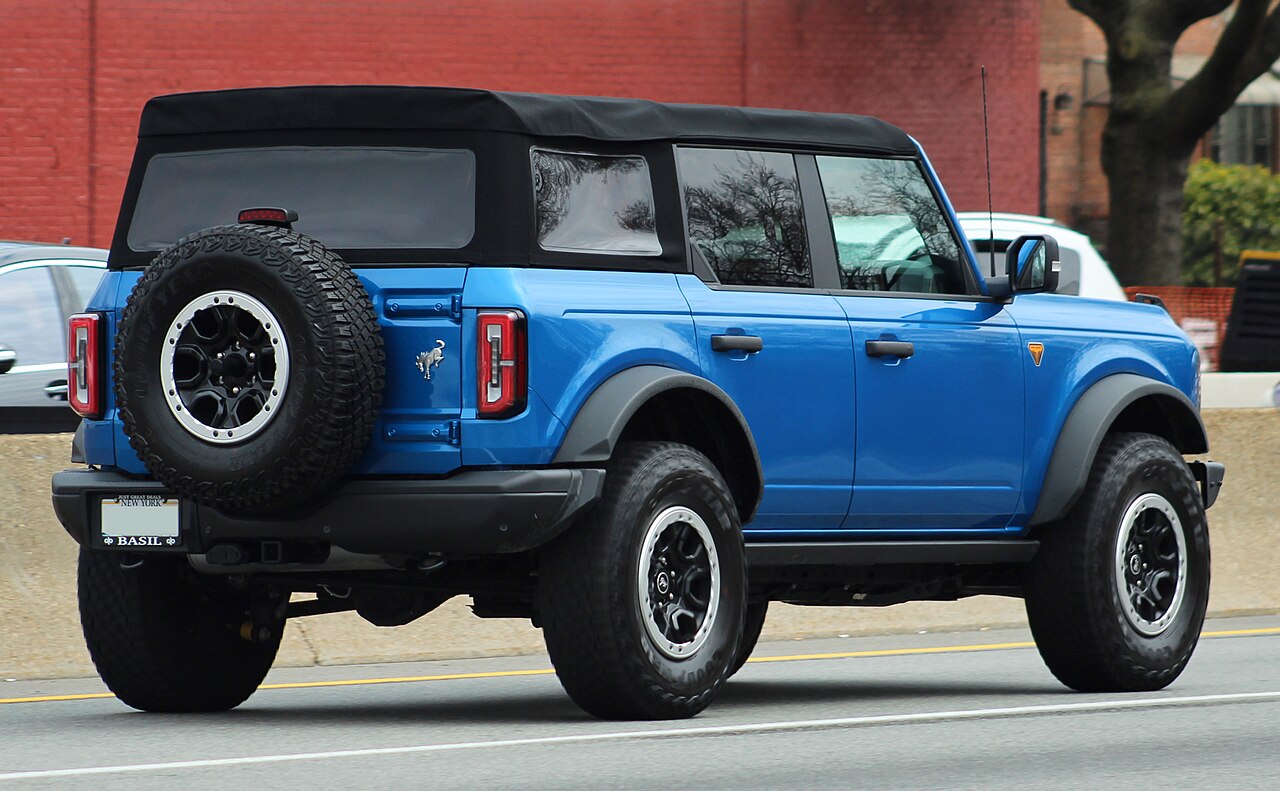
How a Ford Bronco VIN is put together
The 17 characters follow a global standard, so each position always means the same thing. The first three are the World Manufacturer Identifier, which on the modern Bronco is 1FM, marking a Ford sport utility built in the United States at the Michigan Assembly Plant in Wayne. Characters four through eight describe the body, the restraint system and the engine, which is where a 2.3 EcoBoost is separated from a 2.7 EcoBoost V6 or a Bronco Raptor. The ninth character is a check digit that validates the whole number. The tenth is the model year, the eleventh is the assembly plant, and the last six are the unique build sequence for that truck.
| VIN clue | What it means |
|---|---|
| WMI 1FM | Ford Bronco built as a Ford SUV in the United States |
| Position 9 | Check digit that validates the whole VIN |
| Position 10 | Model year code (for example M is 2021, R is 2024) |
| Positions 4 to 8 | Body style, restraint system and engine family |
| Positions 12 to 17 | Unique sequential build number |
This logic applies to the 1981 and later trucks. The classic Broncos built before 1981 use shorter factory numbers with a different layout and must be read with year-specific references. You will find the VIN at the base of the windshield on the driver’s side, on the door jamb label, and in the registration paperwork.
Ford Bronco VIN position by position
The Bronco name covers the original full size four wheel drive from 1966 to 1996 and the modern Bronco that arrived in 2021. The trucks from 1981 on use the seventeen character VIN, while the earlier ones carry a shorter Ford number on the door tag and the frame, so the first step is to work out which side of 1981 your Bronco sits on.
| Position | Name | What it tells you on a Bronco |
|---|---|---|
| 1 to 3 | World Manufacturer Identifier | 1FM marks a Ford built in the United States as an SUV or multipurpose vehicle |
| 4 to 7 | Vehicle descriptor | Body, series and drive, all of these being four wheel drive trucks |
| 8 | Engine | The engine code, read with the year, from the classic V8s to the modern EcoBoost units |
| 9 | Check digit | A calculated character that validates the rest of the VIN |
| 10 | Model year | A single character, listed in the charts below |
| 11 | Assembly plant | The Ford factory that built the vehicle |
| 12 to 17 | Serial number | The build sequence unique to that Bronco |
Full size Bronco model year codes, 1981 to 1996 (position 10)
| Model year | Code in position 10 |
|---|---|
| Ford Bronco 1981 | B |
| Ford Bronco 1984 | E |
| Ford Bronco 1987 | H |
| Ford Bronco 1990 | L |
| Ford Bronco 1993 | P |
| Ford Bronco 1996 | T |
New Bronco model year codes, 2021 on (position 10)
| Model year | Code in position 10 |
|---|---|
| Ford Bronco 2021 | M |
| Ford Bronco 2022 | N |
| Ford Bronco 2023 | P |
| Ford Bronco 2024 | R |
| Ford Bronco 2025 | S |
Where to find the VIN on a Ford Bronco
On the modern truck read the VIN through the windshield at the base of the glass on the driver side and check it against the door jamb label. On a classic look for the door tag and the number stamped on the frame. These are among the most desirable and most modified Fords, so on both the old and the new trucks it is worth confirming the number matches the paperwork.
Reading a Bronco VIN in practice
Take a modern truck whose VIN starts with 1FM and shows N in position ten, which places it as a 2022. On a classic, an H in that slot on a seventeen character VIN points to a 1987 full size Bronco. The descriptor characters confirm the drive and body, position eight identifies the engine, and the closing digits are the serial number.
A short history, generation by generation
The Bronco began in 1966 as a compact, purpose-built 4×4 rival to the Jeep, then grew into a full-size SUV based on the F-Series for most of its first life. After the fifth-generation truck ended in 1996 the name went quiet for more than two decades, until Ford revived it for 2021 as a body-on-frame off-roader sharing its underpinnings with the global Ranger. The reborn Bronco is offered with turbocharged EcoBoost engines and a hardcore Raptor at the top of the range. Note that the unibody Bronco Sport is a separate model with its own page.
| Generation | Years | Body | Key engines | VIN type |
|---|---|---|---|---|
| Ford Bronco first generation | 1966 to 1977 | Compact 4×4 | Inline-6, 289/302 V8 | Pre-1981 short VIN |
| Ford Bronco full-size (early) | 1978 to 1979 | Full-size SUV | 5.8 and 6.6 V8 | Pre-1981 short VIN |
| Ford Bronco third generation | 1980 to 1986 | Full-size SUV | 4.9 I6, 5.0/5.8 V8 | 17-character |
| Ford Bronco fourth generation | 1987 to 1991 | Full-size SUV | 4.9 I6, 5.0/5.8 V8 | 17-character |
| Ford Bronco fifth generation | 1992 to 1996 | Full-size SUV | 5.0 and 5.8 V8 | 17-character |
| Ford Bronco sixth generation | 2021 to present | Body-on-frame SUV | 2.3 and 2.7 EcoBoost, 3.0 Raptor | 1FM, Michigan Assembly |
Ford Bronco engines and specifications
Because the engine code lives in the middle of the VIN, a check confirms the engine the truck was built with, which is what you want when a seller’s description is vague. The modern range is summarized below.
| Configuration | Years | Power | Layout |
|---|---|---|---|
| Ford Bronco 2.3 EcoBoost | 2021 to present | about 300 hp | Turbocharged inline-4 |
| Ford Bronco 2.7 EcoBoost V6 | 2021 to present | about 330 hp | Turbocharged V6 |
| Ford Bronco Raptor 3.0 EcoBoost V6 | 2022 to present | about 418 hp | Twin-turbo V6 |
| Ford Bronco classic V8 | 1978 to 1996 | varies by year | 5.0 and 5.8 V8 |
Ford Bronco by model year
The modern Bronco maps to the standard VIN year letters, so a quick check of position ten confirms the year a seller claims.
| Model year | VIN year code | Engine options |
|---|---|---|
| Ford Bronco 2021 | M | 2.3 EcoBoost, 2.7 EcoBoost V6 |
| Ford Bronco 2022 | N | 2.3 EcoBoost, 2.7 V6, Raptor 3.0 |
| Ford Bronco 2023 | P | 2.3 EcoBoost, 2.7 V6, Raptor 3.0 |
| Ford Bronco 2024 | R | 2.3 EcoBoost, 2.7 V6, Raptor 3.0 |
| Ford Bronco 2025 | S | 2.3 EcoBoost, 2.7 V6, Raptor 3.0 |
Reliability and the things worth checking
Reliability depends on the generation and on how hard the truck has been used off-road. Always confirm a specific vehicle against the NHTSA recall database by its VIN.
| Area | What to check |
|---|---|
| Ford Bronco 2.7 EcoBoost V6 | Strong and torquey, but confirm cooling and service history on hard-used trucks |
| Ford Bronco hardtop (early 2021 build) | Early molded-in-color hardtops had quality concerns later addressed under program replacement; check condition |
| Ford Bronco off-road use | Inspect underbody, skid plates, suspension and tyres for trail damage |
| Ford Bronco classic full-size | Age is the issue: rust in the body, frame and floors, plus tired drivetrain parts |
Because Broncos are bought to be driven off-road and modified, a VIN history check together with a careful physical inspection counts for a lot here.
Ford Bronco recalls
Below are notable safety recalls recorded for the sixth generation Ford Bronco, from 2021 on, by the American road safety regulator, the NHTSA. This is a reference list, not a check of your individual car. A recall applies only to certain build dates and VIN ranges, so a model year here does not mean every car of that year is affected.
| Model years | NHTSA number | Area | Problem and risk |
|---|---|---|---|
| 2022 to 2023 | 23V155 | Steering, Raptor and Wildtrak | Internal steering gear damage can make the wheel hard to turn or lock it up, causing loss of steering control. Owners are told not to drive until the gear is replaced. |
| 2023 | 23V283 | Wheels | Driver side lug nuts may be improperly tightened and a wheel can come off while driving. Owners are told not to drive until the nuts are checked. |
| 2021 to 2023 | 23V546 / 23V070 | Transmission park | The transmission park system can be damaged so the parking pawl does not fully hold, and the car can roll away even in Park. Transmission inspected and replaced. |
| 2021 to 2025 | 26V236 | Transmission and transfer case | A misaligned transmission to transfer case joint can wear the splines, causing loss of drive power or rollaway. Parts inspected and replaced as needed. |
| 2021 to 2024 | 25V025 | Rear suspension | The rear shock absorbers can corrode and fail, and the external reservoir can detach and become a road hazard. Shocks replaced as needed. |
| 2023 to 2024 | 24V142 | Rear glass | The rear quarter glass panels may be poorly installed on the hard top and can detach, a road hazard. Panels reinstalled or replaced. |
| 2021 to 2023 | 25V721 | Front seats | A loose or dislodged seat height adjust pivot bolt can leave the seat unable to restrain properly in a crash. Pivot links and bolts inspected and replaced. |
| 2023 to 2024 | 24V189 | Child lock | The left rear door can be opened from inside even with the child safety lock on. Latch inspected and replaced as needed. |
| 2021 to 2023 | 25V455 | Fuel pump | The low pressure fuel pump can fail and cause the engine to stall while driving. Remedy in development. |
| 2021 to 2024 | 25V685 | Engine block heater | The engine block heater can crack, leak coolant and short out when plugged in, a fire risk. Heater replaced. Owners are told not to plug it in until fixed. |
| 2022 to 2026 | 26V403 | Fender flares | The fender flares may not be secured and can detach and become a road hazard. Flares inspected and repaired. |
Recall data is published by the NHTSA and changes over time, so treat this as background rather than a substitute for the official record for your VIN.
Check a specific VIN for open recalls: use the official NHTSA recalls lookup or the Ford recall page. Both are free and show whether the work has already been done.
Buying a used Ford Bronco
Decode the VIN first and confirm the model year, engine and plant match the advertisement, then run that number through the NHTSA recall search. Check that the engine matches the badge, that a Raptor really is a Raptor, and on classic trucks spend your time looking for rust and frame corrosion. On any modified Bronco, ask what was changed and whether it was done properly, since lift kits, regears and oversized tyres affect reliability and value.
Common questions
Buyers often ask whether the Bronco and Bronco Sport are the same, and they are not: the Bronco is a body-on-frame off-roader while the Bronco Sport is a smaller unibody crossover with its own VIN and platform. People also ask whether a pre-1981 Bronco can be decoded here, and the answer is that the standard 17-character tool only covers 1981 and newer trucks. If your VIN starts with 1FM, you have a Ford sport utility built in the United States. When you are ready, enter your Ford Bronco VIN in the decoder above to confirm the year, engine and configuration before you commit to a purchase.