Ford Escape VIN Decoder: Full History, Generations and VIN Lookup Guide
Every Ford Escape carries a 17-character Vehicle Identification Number, and reading it is the quickest way to confirm what a given compact SUV really is before you trust a listing. The VIN reveals the model year, the plant it came from, the engine fitted at the factory, the body style and the safety equipment. On a used Escape this matters most for telling apart the many engine choices over the years, from small turbocharged units to the hybrid, and for confirming the model year a seller claims. Run any Escape VIN through the decoder above to read it in seconds. The guide below explains how the number is built, walks through all four generations, and points out what to check on each.
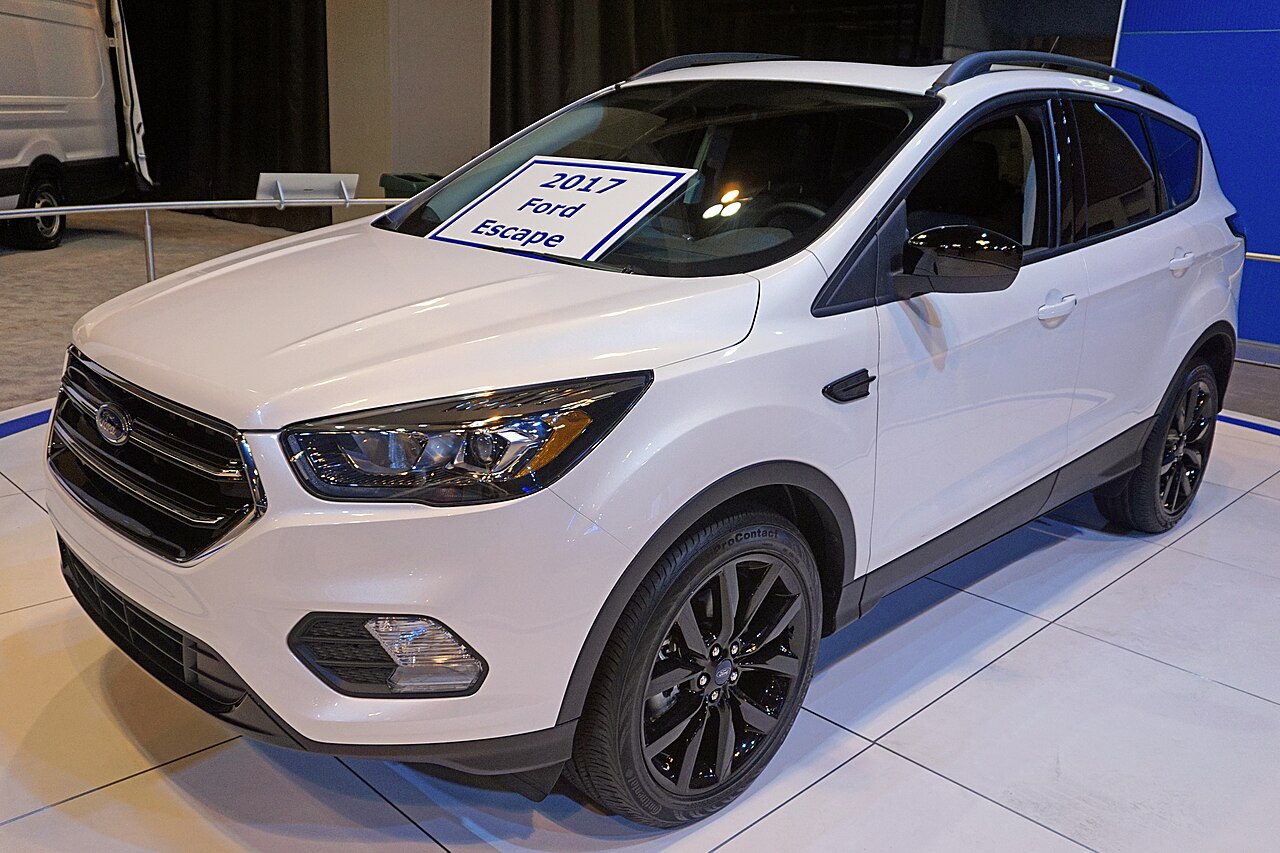
How a Ford Escape VIN is put together
The 17 characters follow a global standard, so each position carries fixed meaning. The first three are the World Manufacturer Identifier. North American Escapes are built at Louisville, Kentucky and begin with 1FM, marking a Ford sport utility built in the United States. Characters four through eight describe the body, restraint system and engine, which is where a 1.5 EcoBoost three-cylinder is separated from a 2.0 EcoBoost four or the hybrid. The ninth character is a check digit. The tenth is the model year, the eleventh is the plant, and the final six are the unique build sequence.
| VIN clue | What it means |
|---|---|
| WMI 1FM | Ford Escape built as a Ford SUV in the United States |
| Position 9 | Check digit that validates the whole VIN |
| Position 10 | Model year code (for example M is 2021, R is 2024) |
| Positions 4 to 8 | Body style, restraint system and engine family |
| Positions 12 to 17 | Unique sequential build number |
You will find the VIN at the base of the windshield on the driver’s side, on the door jamb label, and in the registration paperwork.
Ford Escape VIN position by position
The Escape uses the standard seventeen character VIN, and each position does a specific job. If you read it left to right you can pin down the year, the factory and the engine family before you trust a single line of the seller’s description.
| Position | Name | What it tells you on an Escape |
|---|---|---|
| 1 to 3 | World Manufacturer Identifier | 1FM marks a Ford built in the United States as an SUV or multipurpose vehicle |
| 4 to 7 | Vehicle descriptor | Body style, trim and drive layout, which is where front wheel drive is split from all wheel drive |
| 8 | Engine | One character for the engine, and it has to be read together with the year because the same letter was reused over the years |
| 9 | Check digit | A calculated character that has to match the rest of the VIN |
| 10 | Model year | A single character, listed in the chart below |
| 11 | Assembly plant | The Ford factory that built the car |
| 12 to 17 | Serial number | The build sequence, unique to that one Escape |
Ford Escape model year codes (position 10)
The tenth character is the fastest way to date an Escape. Match the letter or number in your VIN to the year below. A car with F in that slot is a 2015, for instance.
| Model year | Code in position 10 |
|---|---|
| Ford Escape 2001 | 1 |
| Ford Escape 2002 | 2 |
| Ford Escape 2003 | 3 |
| Ford Escape 2004 | 4 |
| Ford Escape 2005 | 5 |
| Ford Escape 2006 | 6 |
| Ford Escape 2007 | 7 |
| Ford Escape 2008 | 8 |
| Ford Escape 2009 | 9 |
| Ford Escape 2010 | A |
| Ford Escape 2011 | B |
| Ford Escape 2012 | C |
| Ford Escape 2013 | D |
| Ford Escape 2014 | E |
| Ford Escape 2015 | F |
| Ford Escape 2016 | G |
| Ford Escape 2017 | H |
| Ford Escape 2018 | J |
| Ford Escape 2019 | K |
| Ford Escape 2020 | L |
| Ford Escape 2021 | M |
| Ford Escape 2022 | N |
| Ford Escape 2023 | P |
| Ford Escape 2024 | R |
| Ford Escape 2025 | S |
Working out the Escape engine
Position eight holds the engine, but on the Escape one letter can mean different engines in different years, so always pair it with the model year from position ten. The engine families to expect are:
| Generation | Engines |
|---|---|
| 2001 to 2007 | 2.0 and 2.3 four cylinder, 3.0 Duratec V6, plus the 2.3 hybrid from 2005 |
| 2008 to 2012 | 2.5 four cylinder, 3.0 V6, and the hybrid |
| 2013 to 2019 | 2.5 four cylinder and the 1.6 and 2.0 EcoBoost turbo engines |
| 2020 to 2025 | 1.5 and 2.0 EcoBoost, plus the 2.5 hybrid and plug in hybrid |
Where to find the VIN on a Ford Escape
Look through the windshield first. The VIN plate sits at the base of the glass on the driver side and reads from outside the car. The same number is printed on a label in the driver door jamb, next to the tyre pressures and paint code. If those two do not match, stop and ask why before you go any further.
Reading an Escape VIN in practice
Say a VIN starts with 1FM and shows F in position ten. That already tells you it is a United States built Ford SUV from the 2015 model year. Position eight then narrows the engine down to the 2.5 four cylinder or one of the EcoBoost units used that year, and the last six digits are the car’s own serial number. From there a full decode fills in the trim and the drive layout.
A short history, generation by generation
The Escape launched for 2001 as Ford’s compact SUV and quickly became one of the brand’s best sellers. The first two generations used a traditional mix of four-cylinder and V6 engines, the third generation in 2013 moved onto a global platform shared with the European Kuga and introduced turbocharged EcoBoost power, and the fourth generation from 2020 leaned into small turbo engines and an efficient hybrid and plug-in hybrid.
| Generation | Years | Body | Key engines | VIN type |
|---|---|---|---|---|
| Ford Escape first generation | 2001 to 2007 | Compact SUV | 2.0 I4, 3.0 V6 | 17-character |
| Ford Escape second generation | 2008 to 2012 | Compact SUV | 2.3 and 2.5 I4, 3.0 V6 | 17-character |
| Ford Escape third generation | 2013 to 2019 | Compact SUV | 1.6 and 2.0 EcoBoost, 2.5 I4 | 17-character |
| Ford Escape fourth generation | 2020 to present | Compact SUV | 1.5 EcoBoost, 2.0 EcoBoost, 2.5 hybrid | 1FM, Louisville |
Ford Escape engines and specifications
Because the engine code sits in the middle of the VIN, a check confirms the engine the SUV was built with, which is what you want when a listing is vague about which unit is under the hood.
| Configuration | Years | Power | Layout |
|---|---|---|---|
| Ford Escape 1.5 EcoBoost | 2020 to present | about 180 hp | Turbocharged inline-3 |
| Ford Escape 2.0 EcoBoost | 2020 to present | about 245 to 250 hp | Turbocharged inline-4 |
| Ford Escape 2.5 Hybrid | 2020 to present | about 200 hp combined | Hybrid inline-4 |
| Ford Escape 2.5 I4 | 2013 to 2019 | about 168 hp | Naturally aspirated inline-4 |
Ford Escape by model year
The Escape follows the standard VIN year letters, so position ten quickly confirms the year a seller claims.
| Model year | VIN year code | Engine options |
|---|---|---|
| Ford Escape 2020 | L | 1.5 EcoBoost, 2.0 EcoBoost, 2.5 Hybrid |
| Ford Escape 2021 | M | 1.5 EcoBoost, 2.0 EcoBoost, 2.5 Hybrid and PHEV |
| Ford Escape 2022 | N | 1.5 EcoBoost, 2.0 EcoBoost, 2.5 Hybrid and PHEV |
| Ford Escape 2023 | P | 1.5 EcoBoost, 2.0 EcoBoost, 2.5 Hybrid and PHEV |
| Ford Escape 2024 | R | 1.5 EcoBoost, 2.0 EcoBoost, 2.5 Hybrid and PHEV |
| Ford Escape 2025 | S | 1.5 EcoBoost, 2.0 EcoBoost, 2.5 Hybrid and PHEV |
Reliability and the things worth checking
Reliability varies by generation and engine, and you should always confirm a specific car against the NHTSA recall database by its VIN.
| Area | What to check |
|---|---|
| Ford Escape 1.5 EcoBoost | Confirm cooling system condition, since small turbo engines are sensitive to coolant issues if neglected |
| Ford Escape 2.5 Hybrid | Check hybrid battery health and service history |
| Ford Escape early generations | Inspect for rust, suspension wear and transmission behaviour on a road test |
| Ford Escape general | Verify any open recalls by VIN and confirm clean accident history |
A VIN history check together with a careful inspection is the surest way to avoid an Escape with a hidden or poorly documented past.
Ford Escape recalls
The Escape has had a large number of safety recalls over the years, recorded by the American road safety regulator, the NHTSA. The main campaigns are listed below by the years they affect. This is a reference list, not a check of your individual car. To see whether a specific VIN has an open, unrepaired recall, use the official lookups linked underneath.
| Model years | NHTSA number | Area | Problem and risk |
|---|---|---|---|
| 2013 (1.6 engine) | 12V336 | Fuel system | Engine bay fuel line may split and leak, risk of fire. Owners were told to stop driving until repaired. |
| 2013 (1.6 engine) | 12V431 | Engine cooling | Cylinder head freeze plug may dislodge, coolant loss and risk of engine bay fire. |
| 2013 (1.6 engine) | 12V551 / 13V583 | Engine cooling | Engine may overheat and the cylinder head crack, oil leak and risk of fire. |
| 2013 (1.6 engine) | 13V584 | Fuel system | Fuel line possibly misinstalled during an earlier recall repair, chafing and fuel leak. |
| 2013 to 2014 (2.0 engine) | 14V495 / 15V813 | Electrical / engine | Poor MAP sensor wiring splice may cause the engine to hesitate or stall. |
| 2013 to 2014 | 14V597 | Air bags | Restraint control module may short in humidity, air bags and belt pretensioners may not deploy. |
| 2013 to 2015 | 16V643 / 20V331 | Doors | Door latch part may break, a door may not stay latched and could open while driving. |
| 2013 to 2019 | 18V471 / 22V413 | Transmission | Shifter cable bushing may detach, car may not actually be in Park and can roll away. |
| 2005 to 2008 (hybrid) | 14V526 | Hybrid system | Hybrid coolant pump may fail, electronics overheat and cause a stall. |
| 2008 to 2011 | 14V284 | Steering | Torque sensor fault may remove electric power steering assist at low speed. |
| 2020 | 20V415 | Air bags | Side curtain air bag diffuser may be badly crimped and not inflate properly. |
| 2020 to 2023 (1.5 engine) | 22V191 / 22V859 / 25V467 | Engine / fuel | Oil separator or a fuel injector may crack and leak in the engine bay, risk of fire. |
| 2020 to 2023 (2.5 hybrid) | 22V484 / 23V380 / 25V345 | Engine | On engine failure, oil and fuel vapour may be released near hot parts, risk of engine bay fire. |
| 2020 to 2024 (hybrid) | 22V331 / 24V954 | High voltage battery | Battery cell defect may cause internal short, loss of drive power and risk of fire. |
| 2020 to 2022 (hybrid) | 24V330 | Transmission | Hybrid control software may shift the car into neutral, loss of drive power. |
| 2020 (and Edge, Corsair) | 21V011 | Driveline | Too little lubricant in the rear drive unit may cause it to seize. |
Recall data is published by the NHTSA and changes over time as new campaigns are announced. This list is a summary of the main ones and is not a substitute for the official record. Always confirm the exact status for a specific car by its VIN.
Check a specific VIN for open recalls: use the official NHTSA recalls lookup or the Ford recall page, which show whether the recall work on that VIN has already been done.
Buying a used Ford Escape
Decode the VIN first and confirm the model year, engine and plant match the advertisement, then run that number through the NHTSA recall search. Decide which powertrain suits you, since the three-cylinder, the 2.0 turbo and the hybrid drive very differently, and confirm the one fitted matches what is advertised. Service history and a clean record matter more than appearance on a family SUV like this.
Common questions
Buyers often ask whether the Escape and the European Kuga are the same car, and from the third generation onward they share a platform and much engineering while differing in trims and some engines by market. People also ask how to confirm a hybrid versus a petrol model, and the answer is in the engine code within the VIN rather than the badge alone. The standard 17-character decoding applies across the Escape range from 2001 onward. When you are ready, enter your Ford Escape VIN in the decoder above to confirm the year, engine and configuration before you buy.