Ford Everest VIN Decoder: Generations, Engines and VIN Lookup Guide
Every Ford Everest carries a 17 character Vehicle Identification Number, and reading it is the quickest way to confirm what a particular vehicle really is before you trust a listing. The Everest is Ford’s body on frame SUV, built on the Ranger pickup platform and sold mainly across Asia Pacific, Australia and other markets since 2003, with tough diesel engines and serious off road ability. The VIN settles the model year, the engine the vehicle left the line with, the drive system and the region that built it. You can run any Everest VIN through the decoder at the top of this page and read the result in a few seconds. The rest of this guide explains how the number is built, walks through every generation, and points out what to check when you look one over.
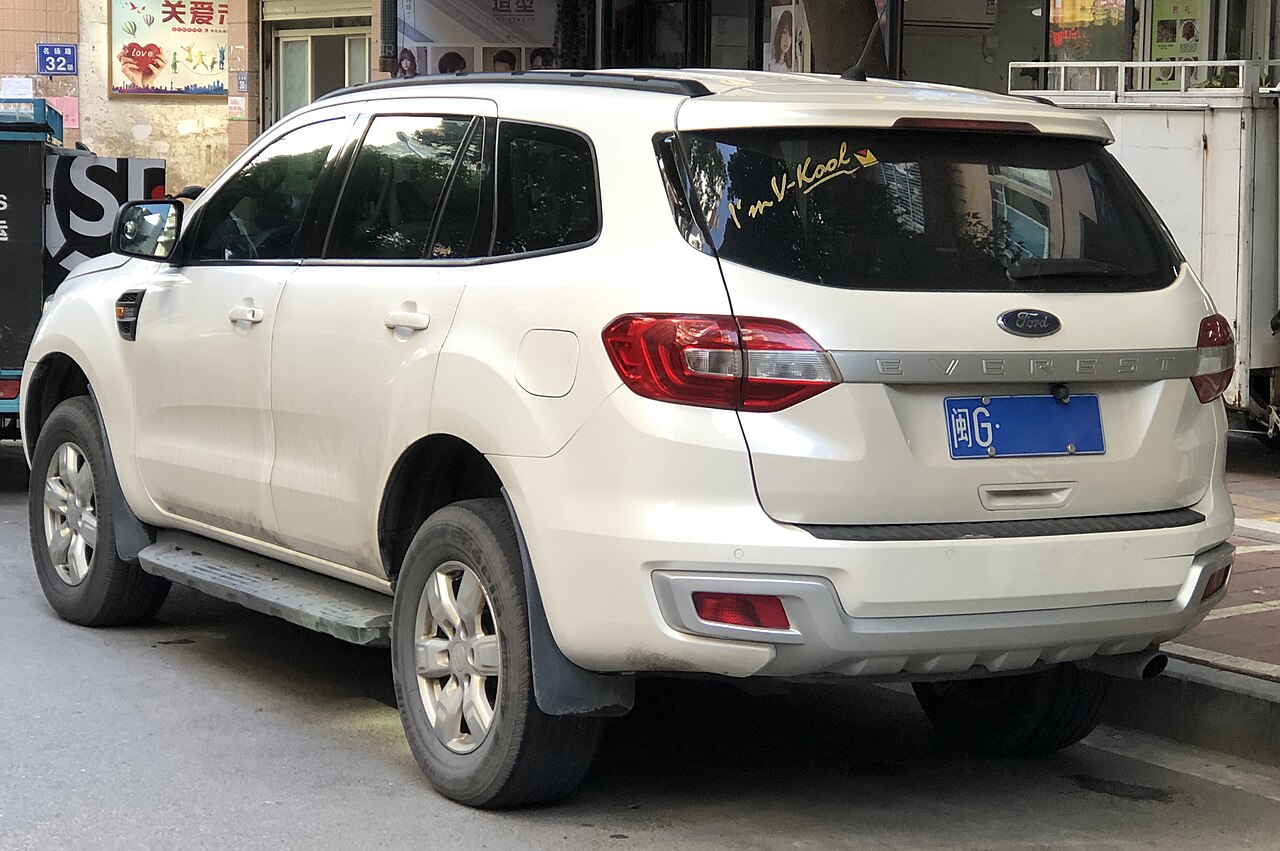
How a Ford Everest VIN is put together
The 17 characters split into three blocks, and because the layout follows a global standard, the same position always carries the same kind of information. The first three characters are the World Manufacturer Identifier, which identify where Ford built the vehicle. Because the Everest is produced for Asia Pacific markets, mainly in Thailand, the code reflects that region rather than the North American or European codes you see on other Fords. Characters four through eight describe the vehicle, including the body and, most usefully, the engine, which is where a four cylinder diesel is set apart from the five cylinder or the V6. The ninth character is a check digit that validates the whole number. The last eight characters describe the individual vehicle, with position ten the model year, position eleven the plant and the final six the sequential build number. The quick reference below covers the clues you will use most often when you read a Ford Everest VIN.
| VIN clue | What it means |
|---|---|
| WMI (Asia Pacific) | Ford Everest built in Ford’s Asia Pacific region, often Thailand |
| Position 8 | Engine code, for example a TDCi diesel, a bi-turbo diesel or a V6 |
| Position 9 | Check digit that validates the whole VIN |
| Position 10 | Model year code, for example G is 2016 and N is 2022 |
| Position 11 | Assembly plant code |
You will find the number behind the windscreen, on the plate in the door jamb and on the registration documents, and matching them is the first check worth doing.
Ford Everest VIN position by position
The Everest is a large SUV based on the Ranger, built for Asia Pacific and other markets, and it uses the seventeen character VIN. Read it in order and you can settle where it was built, the year and the engine before you trust the advert.
| Position | Name | What it tells you on an Everest |
|---|---|---|
| 1 to 3 | World Manufacturer Identifier | The country and maker, and the Everest is built in Thailand, so it carries a Thai country code |
| 4 to 8 | Vehicle descriptor | Body, trim and engine, where a smaller diesel is separated from the larger one |
| 9 | Check digit | A calculated character that validates the rest of the VIN |
| 10 | Model year | A single character, listed in the chart below |
| 11 | Assembly plant | The factory that built the car |
| 12 to 17 | Serial number | The build sequence unique to that Everest |
Ford Everest model year codes (position 10)
The tenth character gives the model year. Match your letter or number below.
| Model year | Code in position 10 |
|---|---|
| Ford Everest 2015 | F |
| Ford Everest 2016 | G |
| Ford Everest 2017 | H |
| Ford Everest 2018 | J |
| Ford Everest 2019 | K |
| Ford Everest 2020 | L |
| Ford Everest 2021 | M |
| Ford Everest 2022 | N |
| Ford Everest 2023 | P |
| Ford Everest 2024 | R |
Where to find the VIN on a Ford Everest
Read the VIN through the base of the windscreen on the driver side and check it against the plate or label in the door area. Because these are sold across many markets and some reach other countries as imports, matching the number on the car to the documents is especially worth doing.
Reading an Everest VIN in practice
Take a VIN whose start marks a Thai built car and which shows K in position ten. That places it as a 2019 model. The descriptor characters then show the engine and trim, and the closing six digits are the car’s own serial number.
A short history, generation by generation
The first Everest arrived in 2003 as a rugged SUV derived from the Ranger, aimed at buyers in Asia and Australia who wanted seven seats and genuine off road capability. The second generation of 2015 moved to the modern T6 platform shared with the global Ranger, with more refinement and a strong 3.2 litre diesel, and the third generation of 2022 added a V6 diesel and sharper technology while keeping its tough, ladder frame roots. The table below sums up the generations.
| Generation | Years | Body | Key engines |
|---|---|---|---|
| Ford Everest first generation | 2003 to 2015 | Body-on-frame SUV | 2.5 and 3.0 TDCi diesel, 2.6 petrol |
| Ford Everest second generation | 2015 to 2022 | Body-on-frame SUV | 2.2 and 3.2 TDCi, 2.0 bi-turbo |
| Ford Everest third generation | 2022 to present | Body-on-frame SUV | 2.0 bi-turbo, 3.0 V6 diesel, 2.3 EcoBoost |
Ford Everest engines and specifications
Because the engine code sits in the middle of the VIN, a proper check confirms the engine the vehicle was born with. The figures below cover the main configurations, with power as a range because output changed across model years and markets.
| Configuration | Years | Power | Layout |
|---|---|---|---|
| Ford Everest 2.5 and 3.0 TDCi | 2003 to 2015 | about 140 to 156 hp | Turbocharged diesel |
| Ford Everest 3.2 TDCi | 2015 to 2022 | about 197 to 200 hp | Turbocharged 5-cylinder diesel |
| Ford Everest 2.0 bi-turbo diesel | 2018 to present | about 207 to 210 hp | Twin-turbocharged diesel |
| Ford Everest 3.0 V6 diesel | 2022 to present | about 247 hp | Turbocharged V6 diesel |
| Ford Everest 2.3 EcoBoost | 2022 to present | about 270 hp | Turbocharged petrol |
Ford Everest by model year
Buyers searching for a specific year want to know what they are getting, so the table below maps several model years to their VIN year code, generation and engine options. The same model year letter logic runs across the production run.
| Model year | VIN year code | Generation | Engine options |
|---|---|---|---|
| Ford Everest 2010 | A | First generation | 2.5 and 3.0 TDCi |
| Ford Everest 2016 | G | Second generation | 2.2 and 3.2 TDCi |
| Ford Everest 2019 | K | Second generation | 2.0 bi-turbo, 3.2 TDCi |
| Ford Everest 2022 | N | Third generation | 2.0 bi-turbo, 3.0 V6 |
| Ford Everest 2024 | R | Third generation | 2.0 bi-turbo, 3.0 V6, 2.3 EcoBoost |
Reliability and the things worth checking
The Everest is built tough, but diesels and four wheel drive systems reward careful maintenance, so always run the VIN through the relevant recall check. The most common points to check are summarized below.
| Engine or area | What to check |
|---|---|
| Ford Everest diesel | Check the diesel particulate filter, turbo and injectors, and on the 2.0 confirm belt service |
| Ford Everest four wheel drive | Confirm the four wheel drive and low range engage cleanly |
| Ford Everest transmission | The automatic should shift smoothly, so check on a test drive |
| Ford Everest off road use | Inspect underneath for damage if the vehicle has been used off road |
Buying a used Ford Everest
When you find one worth pursuing, decode the VIN first and make sure the model year, engine and drive type line up with the advertisement, then run the same number through the relevant recall check. Confirm a full service history on the diesels, check the four wheel drive system, and inspect underneath for off road damage. When you are ready, enter your Ford Everest VIN in the decoder above to confirm the year, engine, drive type and plant, then use the advice here to make sure the vehicle is genuinely what it claims to be.