Ford F-150 VIN Decoder: Generations, Engines and VIN Lookup Guide (1997 to 2024)
Every Ford F-150 carries a 17-character Vehicle Identification Number, and decoding it is the quickest way to confirm what a given truck really is before you trust a listing. The VIN reveals the model year, the plant it came from, the engine fitted at the factory, the cab and bed configuration and the safety equipment. On America’s best-selling truck this matters most for confirming the engine, separating a base V6 from an EcoBoost or a 5.0 V8, checking whether a truck is a genuine Raptor, and verifying the year a seller claims. This page covers the modern F-150 from 1997 to 2024. Run any F-150 VIN through the decoder above to read it in seconds, and use the guide below to understand the number and what to check.
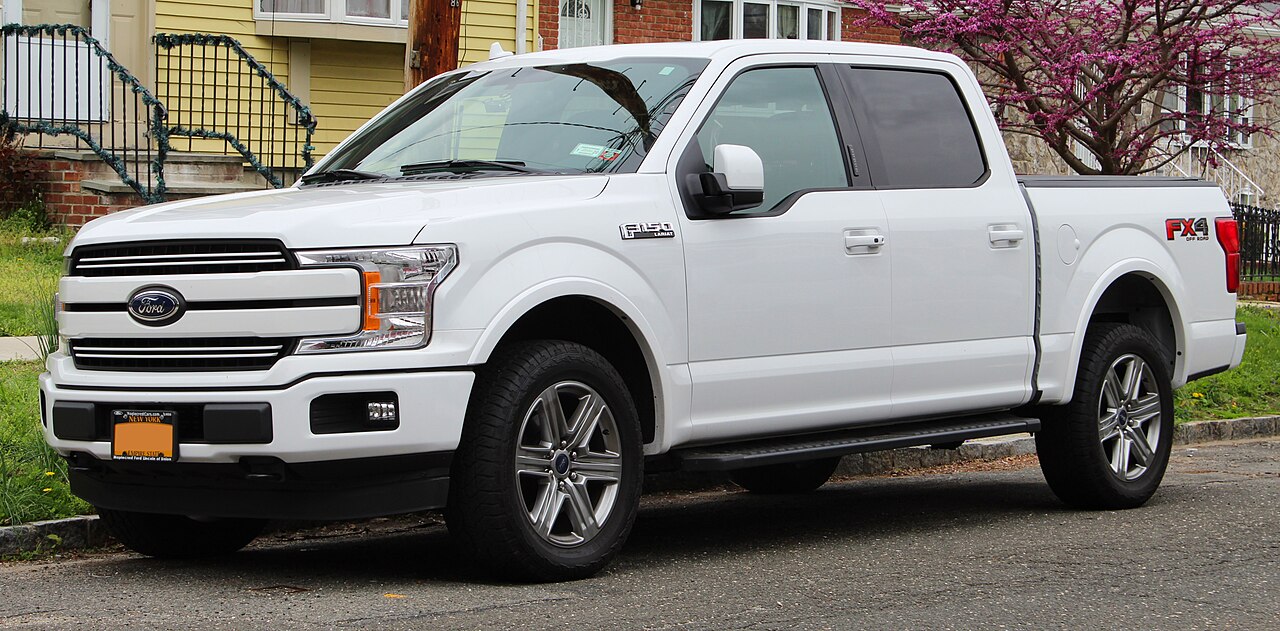
How a Ford F-150 VIN is put together
The 17 characters follow a global standard, so each position carries fixed meaning. The first three are the World Manufacturer Identifier. F-150 trucks begin with 1FT, marking a Ford truck built in the United States, mainly at Dearborn, Michigan and Kansas City, Missouri. Characters four through eight describe the cab style, the bed, the restraint system and the engine, which is where a 2.7 EcoBoost is separated from a 3.5 EcoBoost or a 5.0 V8. The ninth character is a check digit, the tenth is the model year, the eleventh is the plant, and the final six are the unique build sequence.
| VIN clue | What it means |
|---|---|
| WMI 1FT | Ford F-150 built as a Ford truck in the United States |
| Position 9 | Check digit that validates the whole VIN |
| Position 10 | Model year code (for example M is 2021, R is 2024) |
| Positions 4 to 8 | Cab, bed, restraint system and engine family |
| Positions 12 to 17 | Unique sequential build number |
You will find the VIN at the base of the windshield on the driver’s side, on the certification label in the driver’s door jamb, and in the registration paperwork.
Ford F-150 VIN position by position
Every F-150 from this era uses the seventeen character VIN, so they all read the same way. Work through it in order and you can settle the year, the cab, the drive type and the engine before you trust a single line of the advert.
| Position | Name | What it tells you on an F-150 |
|---|---|---|
| 1 to 3 | World Manufacturer Identifier | 1FT for an F-150 built by Ford in the United States |
| 4 to 7 | Vehicle descriptor | The cab, the bed, the series and the drive type, where a two wheel drive is separated from a four wheel drive |
| 8 | Engine | The engine code, read with the year, since this era ran from the V8 Triton engines to the EcoBoost turbo units and a hybrid |
| 9 | Check digit | A calculated character that validates the rest of the VIN |
| 10 | Model year | A single character, listed in the chart below |
| 11 | Assembly plant | The Ford factory that built the truck, such as Dearborn or Kansas City |
| 12 to 17 | Serial number | The build sequence unique to that truck |
Ford F-150 model year codes (position 10)
The tenth character is the quickest way to date an F-150. These are the codes for the trucks that make up most of the used market.
| Model year | Code in position 10 |
|---|---|
| Ford F-150 2009 | 9 |
| Ford F-150 2010 | A |
| Ford F-150 2011 | B |
| Ford F-150 2012 | C |
| Ford F-150 2013 | D |
| Ford F-150 2014 | E |
| Ford F-150 2015 | F |
| Ford F-150 2016 | G |
| Ford F-150 2017 | H |
| Ford F-150 2018 | J |
| Ford F-150 2019 | K |
| Ford F-150 2020 | L |
| Ford F-150 2021 | M |
| Ford F-150 2022 | N |
| Ford F-150 2023 | P |
| Ford F-150 2024 | R |
Where to find the VIN on a Ford F-150
Read the VIN through the base of the windshield on the driver side and check it against the label in the driver door jamb, which also lists the weight ratings and the axle code. On a truck that has worked hard or been modified, make sure the number is intact and matches the paperwork before you buy.
Reading an F-150 VIN in practice
Take a truck whose VIN starts with 1FT and shows J in position ten. That marks it as a United States built Ford truck from the 2018 model year. The descriptor characters then tell you the cab and drive type, position eight identifies whether it left the line with a V8, an EcoBoost or the hybrid, and the final digits are the truck’s own serial number.
Generations from 1997 to 2024
The F-150 has led the full-size truck market for decades. The 1997 redesign brought a more aerodynamic shape, the 2015 truck switched to a lightweight aluminum body, and the 2021 generation added a hybrid powertrain and modern technology while keeping the V8 and turbocharged options.
| Generation | Years | Key engines | VIN type |
|---|---|---|---|
| Ford F-150 tenth generation | 1997 to 2003 | 4.2 V6, 4.6 and 5.4 V8 | 1FT, 17-character |
| Ford F-150 eleventh generation | 2004 to 2008 | 4.2 V6, 4.6 and 5.4 V8 | 1FT, 17-character |
| Ford F-150 twelfth generation | 2009 to 2014 | 3.7 V6, 5.0 V8, 3.5 EcoBoost, 6.2 V8 | 1FT, 17-character |
| Ford F-150 thirteenth generation | 2015 to 2020 | 3.3 V6, 2.7 and 3.5 EcoBoost, 5.0 V8 | 1FT, aluminum body |
| Ford F-150 fourteenth generation | 2021 to 2024 | 3.3 V6, 2.7 and 3.5 EcoBoost, 5.0 V8, 3.5 PowerBoost hybrid | 1FT, Dearborn and Kansas City |
Ford F-150 engines and specifications
Because the engine code sits in the middle of the VIN, a check confirms the engine the truck was built with, which is exactly what you want on a model offered with so many powertrains.
| Configuration | Years | Power | Layout |
|---|---|---|---|
| Ford F-150 3.3 V6 | 2018 to 2024 | about 290 hp | Naturally aspirated V6 |
| Ford F-150 2.7 EcoBoost V6 | 2015 to 2024 | about 325 to 400 hp | Twin-turbo V6 |
| Ford F-150 3.5 EcoBoost V6 | 2011 to 2024 | about 365 to 400 hp | Twin-turbo V6 |
| Ford F-150 5.0 V8 | 2011 to 2024 | about 360 to 400 hp | Naturally aspirated V8 |
| Ford F-150 3.5 PowerBoost hybrid | 2021 to 2024 | about 430 hp | Twin-turbo V6 hybrid |
| Ford F-150 Raptor 3.5 EcoBoost | 2017 to 2024 | about 450 hp | High-output twin-turbo V6 |
Ford F-150 by model year
The F-150 follows the standard VIN year letters, so position ten quickly confirms the year a seller claims.
| Model year | VIN year code | Notable engines |
|---|---|---|
| Ford F-150 2019 | K | 3.3 V6, 2.7 and 3.5 EcoBoost, 5.0 V8, Raptor |
| Ford F-150 2020 | L | 3.3 V6, 2.7 and 3.5 EcoBoost, 5.0 V8, Raptor |
| Ford F-150 2021 | M | 3.3 V6, EcoBoost, 5.0 V8, PowerBoost hybrid |
| Ford F-150 2022 | N | EcoBoost, 5.0 V8, PowerBoost hybrid, Raptor |
| Ford F-150 2023 | P | EcoBoost, 5.0 V8, PowerBoost hybrid, Raptor |
| Ford F-150 2024 | R | EcoBoost, 5.0 V8, PowerBoost hybrid, Raptor |
Reliability and the things worth checking
Reliability varies by engine and by how hard the truck has worked. Always confirm a specific vehicle against the NHTSA recall database by its VIN.
| Area | What to check |
|---|---|
| Ford F-150 5.4 V8 (older 1997 to 2010) | Known for spark plug and cam phaser issues on certain years; confirm repairs |
| Ford F-150 3.5 and 2.7 EcoBoost | Confirm cooling, turbo and cam timing condition, plus service history on tow-heavy trucks |
| Ford F-150 10-speed automatic | Test for smooth shifts on a road test, especially on early 2017 to 2019 trucks |
| Ford F-150 general | Inspect frame and bed for heavy towing or work use and verify open recalls by VIN |
Because the F-150 is so often used for towing and work, a VIN history check combined with a careful physical inspection counts for a lot here.
Ford F-150 recalls
Below are notable safety recalls recorded for the Ford F-150 by the American road safety regulator, the NHTSA. The F-150 is built in huge numbers, so it has many recalls over the years. This is a reference list, not a check of your individual truck. A recall applies only to certain build dates and VIN ranges, so a model year here does not mean every truck of that year is affected.
| Model years | NHTSA number | Area | Problem and risk |
|---|---|---|---|
| 2021 | 21V407 | Steering | The steering gear may have internal damage and the wheel can become hard or impossible to turn. Owners are told not to drive until the gear is replaced. |
| 2021 to 2024 | 24V635 | Engine, 2.7L and 3.0L EcoBoost | Engine intake valves can crack and break while driving, causing engine failure and loss of drive power. Engine tested and replaced as needed. |
| 2016 to 2018 | 22V150 / 25V236 | Brakes, 3.5L EcoBoost | The brake master cylinder can leak fluid into the booster, reducing front braking and needing more pedal effort and distance to stop. Master cylinder replaced. |
| 2021 | 21V533 | Brakes | The electronic brake booster can leak fluid into its control unit, reducing braking performance. Booster assembly replaced. |
| 2021 | 21V090 | Windshield | The windshield may not have been bonded properly and can detach in a crash. Windshield removed and reinstalled. |
| 2015 to 2019 | 18V894 | Engine block heater | Water can corrode the block heater cable connector and, when plugged in, cause a short and fire risk. Cable disabled and later replaced. |
| 2015 to 2018 | 18V568 | Seat belt pretensioner | If a front pretensioner fires in a crash, sparks can ignite material inside the B-pillar. Heat resistant tape installed. |
| 2018 | 18V392 | Fuel pump, 3.5L | High pressure fuel pump welds can crack and leak oil or fuel, a fire risk. Pump and related parts replaced. |
| 2017 to 2018 | 18V213 | 10-speed transmission | A missing roll pin can cause loss of the Park function, so the truck can roll away after being parked. Roll pin installed if missing. |
| 2021 | 21V381 / 21V986 | Driveshaft | The driveshaft can be assembled wrong or be damaged by loose insulators and fracture, causing loss of drive power. Driveshaft inspected and repaired. |
| 2018 to 2020 | 19V633 | Front seats | The seatback recliner may be missing a third pawl, leaving a weak seatback that may not hold in a crash. Seat structure inspected and replaced. |
| 2021 to 2023 | 23V509 | Parking brake | A wiring harness rubbing the rear axle can trigger the electric parking brake unexpectedly while driving. Harness protected and replaced as needed. |
| 2021 to 2023 | 25V455 | Fuel pump | The low pressure fuel pump can fail and cause the engine to stall while driving. Remedy in development. |
| 2018 | 21V983 | Tailgate | The tailgate latches can unlatch on their own while driving, letting cargo fall out. Left and right latches replaced. |
Recall data is published by the NHTSA and changes over time, so treat this as background rather than a substitute for the official record for your VIN.
Check a specific VIN for open recalls: use the official NHTSA recalls lookup or the Ford recall page. Both are free and show whether the work has already been done.
Buying a used Ford F-150
Decode the VIN first and confirm the model year, engine, cab and bed match the advertisement, then run that number through the NHTSA recall search. Decide which engine fits your needs, since the V6, the EcoBoost units, the 5.0 V8 and the PowerBoost hybrid behave very differently, and confirm a Raptor is genuine through the VIN rather than the badges. On work trucks, prioritise a complete service history and a sound frame. When you are ready, enter your Ford F-150 VIN in the decoder above to confirm the year, engine and configuration before you buy.