Ford Fiesta (1976 to 2002) VIN Decoder: Generations, Engines and VIN Lookup Guide
Every Ford Fiesta from the late 1970s onward carries a Vehicle Identification Number, and reading it is the quickest way to confirm what a particular car really is before you trust a listing. This guide covers the classic Fiesta from its 1976 launch through to the cars built up to 2002, the small front wheel drive hatchback that became one of Europe’s best selling cars. The VIN confirms the model year, the engine the car left the line with and the plant that built it, which matters most on the sporty XR2 and RS versions where originality drives value. You can run any Fiesta VIN through the decoder at the top of this page and read the result in a few seconds. The rest of this guide explains how the number is built, walks through the early generations, and points out what to check when you look one over.
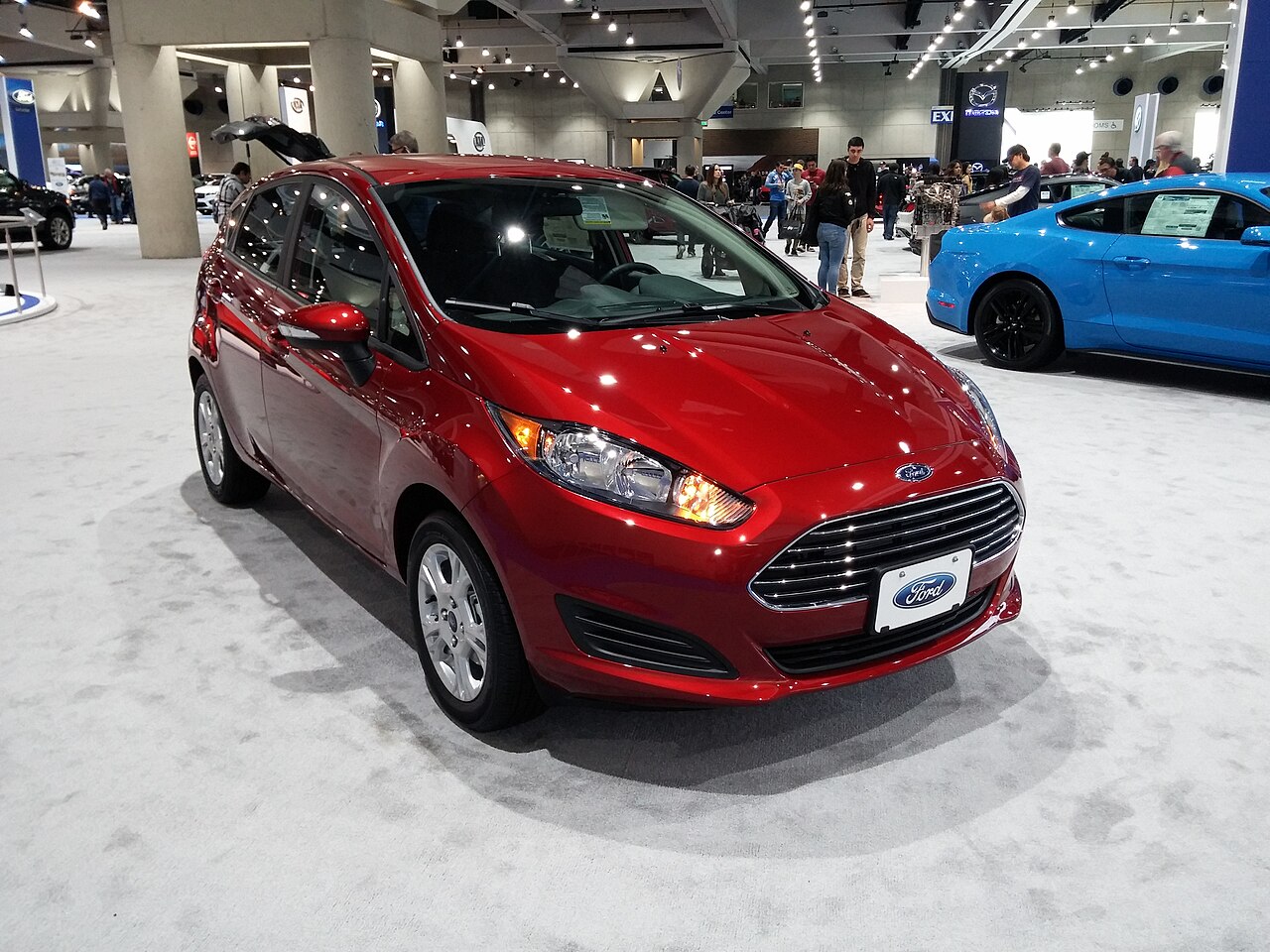
How a Ford Fiesta VIN is put together
From the early 1980s the Fiesta uses the 17 character VIN, which splits into three blocks where the same position always carries the same kind of information. The very first Mk1 cars used shorter factory chassis numbers, so a late 1970s Fiesta has to be read with period references rather than a modern decoder. The first three characters are the World Manufacturer Identifier, and because the Fiesta was built in several countries this varies by plant. Cars from Germany begin with WF0, while cars from the Valencia plant in Spain begin with VS6. Characters four through eight describe the car, including the body and the engine, which is where a plain economy model is set apart from an XR2 or an RS Turbo. The ninth character is a check digit that validates the whole number. The last eight characters describe the individual car, with position ten the model year, position eleven the plant and the final six the sequential build number. The quick reference below covers the clues you will use most often when you read a Ford Fiesta VIN.
| VIN clue | What it means |
|---|---|
| WMI WF0 | Ford Fiesta built by Ford in Germany |
| WMI VS6 | Ford Fiesta built by Ford in Valencia, Spain |
| Position 8 | Engine code, for example an OHV, CVH or Zetec unit |
| Position 9 | Check digit that validates the whole VIN |
| Position 10 | Model year code, for example F is 1985 and V is 1997 |
| Position 11 | Assembly plant code |
On these cars the number is found behind the windscreen, on the plate in the door area and on the registration documents, and matching them is the first check worth doing.
Ford Fiesta VIN position by position
Fiestas from the 1981 model year on use the seventeen character VIN, which reads cleanly one position at a time. The earliest cars, from 1976 to 1980, predate that system and carry a shorter Ford number instead, so the first step is to check which side of 1981 your car sits on.
| Position | Name | What it tells you on a Fiesta |
|---|---|---|
| 1 to 3 | World Manufacturer Identifier | WF0 marks a Ford built in Europe, the origin of the European Fiesta |
| 4 to 8 | Vehicle descriptor | Body style, trim and engine, where a base car is separated from an XR2 or a diesel |
| 9 | Check digit | A calculated character that validates the rest of the VIN |
| 10 | Model year | A single character, listed in the chart below |
| 11 | Assembly plant | The European Ford factory that built the car |
| 12 to 17 | Serial number | The build sequence unique to that Fiesta |
Ford Fiesta model year codes (position 10)
On the cars that carry the seventeen character VIN, the tenth character reads as follows.
| Model year | Code in position 10 |
|---|---|
| Ford Fiesta 1990 | L |
| Ford Fiesta 1991 | M |
| Ford Fiesta 1992 | N |
| Ford Fiesta 1993 | P |
| Ford Fiesta 1994 | R |
| Ford Fiesta 1995 | S |
| Ford Fiesta 1996 | T |
| Ford Fiesta 1997 | V |
| Ford Fiesta 1998 | W |
| Ford Fiesta 1999 | X |
| Ford Fiesta 2000 | Y |
| Ford Fiesta 2001 | 1 |
| Ford Fiesta 2002 | 2 |
Where to find the VIN on a Ford Fiesta
On these cars the VIN is stamped on the body and shown on a plate in the engine bay, and on the later ones it also reads through the base of the windscreen. Because a tidy classic Fiesta, and especially a genuine XR2, is worth far more than a plain car, confirm the number against the plate and the paperwork before you trust a hot hatch badge.
Reading a Fiesta VIN in practice
Take a car whose VIN opens with WF0 and shows W in position ten. That places it as a European built Ford from the 1998 model year. The descriptor section then shows the body and the engine, and the closing six digits are the car’s own serial number.
A short history, generation by generation
The Fiesta arrived in 1976 as Ford’s first modern front wheel drive supermini and was an immediate success. The Mk1 ran to 1983 with simple Kent OHV engines and introduced the hot XR2. The Mk2 of 1983 brought cleaner styling and a five speed gearbox along with CVH engines, and the Mk3 of 1989 was a bigger step with a five door body, the RS Turbo and the later RS1800. From 1995 the Mk4, lightly revised into the Mk5 in 1999, modernised the car with Zetec engines and ran to 2002, when an all new Fiesta took over. The table below sums up these generations.
| Generation | Years | Body styles | Key engines |
|---|---|---|---|
| Ford Fiesta Mk1 | 1976 to 1983 | Three-door hatchback | 0.9 to 1.3 petrol, 1.6 XR2 |
| Ford Fiesta Mk2 | 1983 to 1989 | Three-door hatchback | 1.0 to 1.6 petrol, 1.6 diesel, XR2 |
| Ford Fiesta Mk3 | 1989 to 1997 | Three and five-door | 1.0 to 1.8, RS Turbo, RS1800 |
| Ford Fiesta Mk4 and Mk5 | 1995 to 2002 | Three and five-door | 1.25 to 1.6 Zetec, 1.8 diesel |
Ford Fiesta engines and specifications
Because the engine code sits in the middle of the VIN, a proper check confirms the engine the car was born with, which matters most on the performance versions. The figures below cover the main configurations, with power as a range because output changed across the years.
| Configuration | Years | Power | Layout |
|---|---|---|---|
| Ford Fiesta 957 and 1.1 OHV | 1976 to 1990 | about 40 to 55 hp | Kent inline-4 petrol |
| Ford Fiesta 1.4 and 1.6 CVH | 1983 to 1996 | about 70 to 95 hp | Inline-4 petrol |
| Ford Fiesta XR2 1.6 | 1981 to 1989 | about 95 to 105 hp | Inline-4 petrol |
| Ford Fiesta RS Turbo 1.6 | 1990 to 1992 | about 130 hp | Turbocharged inline-4 petrol |
| Ford Fiesta 1.25 and 1.4 Zetec | 1995 to 2002 | about 75 to 90 hp | Inline-4 petrol |
| Ford Fiesta 1.8 diesel | 1989 to 2002 | about 60 to 75 hp | Inline-4 diesel |
Ford Fiesta by model year
Buyers searching for a specific year want to know what they are getting, so the table below maps several model years to their VIN year code, generation and engine options. The early Mk1 cars predate the 17 character VIN and use shorter chassis numbers.
| Model year | VIN year code | Generation | Engine options |
|---|---|---|---|
| Ford Fiesta 1985 | F | Mk2 | 1.0 to 1.6 petrol, XR2 |
| Ford Fiesta 1990 | L | Mk3 | 1.0 to 1.8, RS Turbo |
| Ford Fiesta 1993 | P | Mk3 | 1.1 to 1.8, RS1800 |
| Ford Fiesta 1997 | V | Mk4 | 1.25 to 1.4 Zetec, 1.8 diesel |
| Ford Fiesta 2000 | Y | Mk5 | 1.25 to 1.6 Zetec, 1.8 diesel |
| Ford Fiesta 2002 | 2 | Mk5 | 1.25 to 1.6 Zetec, 1.8 diesel |
Reliability and the things worth checking
These Fiestas are simple and generally tough, but every survivor is old now, so condition matters far more than reputation. The most common points to check are summarized below.
| Engine or area | What to check |
|---|---|
| Ford Fiesta OHV and CVH petrol | Simple and rugged, but worn carburettors or early injection and general age show |
| Ford Fiesta Zetec petrol | Reliable, confirm timing belt history and overall wear |
| Ford Fiesta XR2 and RS models | Often modified and raced, so check originality and accident history carefully |
| Ford Fiesta body | Rust in the arches, sills and floors is the main enemy on survivors |
Buying a used Ford Fiesta
When you find one worth pursuing, decode the VIN first and make sure the model year and engine line up with the advertisement, and on an XR2 or RS confirm that the car is what it claims to be rather than a lookalike built from a lesser model, because the difference in value is large. Spend your time underneath checking for corrosion, which is the thing most likely to write off an otherwise good car. When you are ready, enter your Ford Fiesta VIN in the decoder above to confirm the year, engine and plant, then use the advice here to make sure the car is genuinely what it claims to be.