Ford Focus VIN Decoder: Full History, Generations and VIN Lookup Guide
Every Ford Focus carries a 17-character Vehicle Identification Number, and decoding it is the quickest way to confirm what a given hatchback or sedan really is before you trust a listing. The VIN reveals the model year, the plant it came from, the engine fitted at the factory, the body style and the safety equipment. On a used Focus this matters most for confirming the engine, separating an ordinary car from a genuine ST or RS, and verifying the model year and market a seller claims. Run any Focus VIN through the decoder above to read it in seconds. The guide below explains how the number is built, walks through the generations, and points out what to check on each.
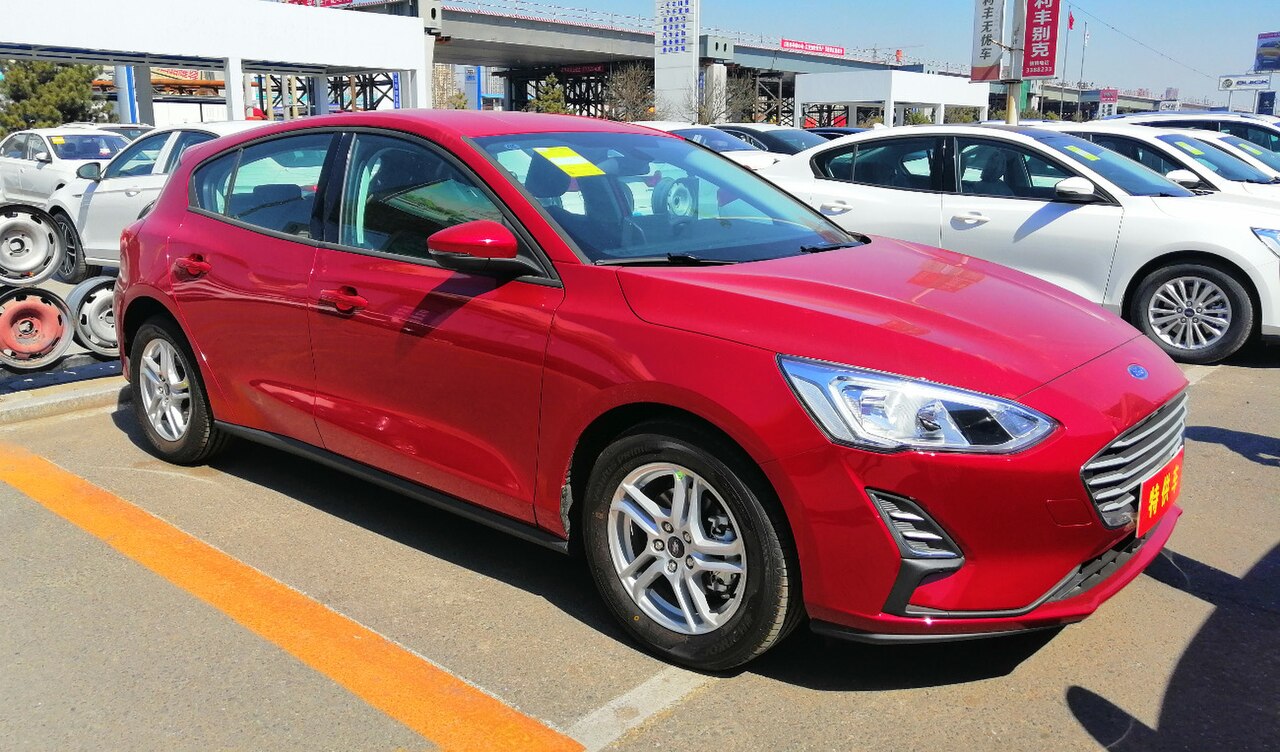
How a Ford Focus VIN is put together
The 17 characters follow a global standard, so each position carries fixed meaning. The first three are the World Manufacturer Identifier, and because the Focus was built on several continents it can begin in different ways. North American cars built at Michigan Assembly start with 1FA, marking a Ford passenger car made in the United States, while European cars built in Germany typically start with WF0, the identifier for Ford-Werke. Characters four through eight describe the body, restraint system and engine, which is where an ST or RS is separated from a standard car. The ninth character is a check digit, the tenth is the model year, the eleventh is the plant, and the final six are the unique build sequence.
| VIN clue | What it means |
|---|---|
| WMI 1FA | Ford Focus built as a Ford passenger car in the United States |
| WMI WF0 | Ford Focus built by Ford-Werke in Germany (European cars) |
| Position 9 | Check digit that validates the whole VIN |
| Position 10 | Model year code (for example F is 2015, J is 2018) |
| Positions 4 to 8 | Body style, restraint system and engine family |
You will find the VIN at the base of the windshield on the driver’s side, on the door jamb label, and in the registration paperwork.
Ford Focus VIN position by position
The European Focus uses the standard seventeen character VIN. Read it in order and it tells you the origin, the year and the engine family. A quick pass through the number is the surest way to confirm what a car really is before you trust the advert.
| Position | Name | What it tells you on a Focus |
|---|---|---|
| 1 to 3 | World Manufacturer Identifier | WF0 marks a Ford built in Europe, the origin of the European Focus |
| 4 to 8 | Vehicle descriptor | Body style, trim and engine, where a three or five door is separated from an estate and a petrol from a diesel |
| 9 | Check digit | A calculated character that validates the rest of the VIN |
| 10 | Model year | A single character, listed in the chart below |
| 11 | Assembly plant | The European Ford factory that built the car |
| 12 to 17 | Serial number | The build sequence unique to that Focus |
Ford Focus model year codes (position 10)
To date a Focus, read the tenth character and match it below.
| Model year | Code in position 10 |
|---|---|
| Ford Focus 2005 | 5 |
| Ford Focus 2006 | 6 |
| Ford Focus 2007 | 7 |
| Ford Focus 2008 | 8 |
| Ford Focus 2009 | 9 |
| Ford Focus 2010 | A |
| Ford Focus 2011 | B |
| Ford Focus 2012 | C |
| Ford Focus 2013 | D |
| Ford Focus 2014 | E |
| Ford Focus 2015 | F |
| Ford Focus 2016 | G |
| Ford Focus 2017 | H |
| Ford Focus 2018 | J |
Where to find the VIN on a Ford Focus
On the Focus the VIN reads through the base of the windscreen on the driver side and repeats on a plate or label in the door area, often under the driver or passenger seat on some models as well. Check that the visible number matches the plate and the paperwork, since a mismatch on a common car like this is a clear reason to look more closely.
Reading a Focus VIN in practice
Take a VIN that opens with WF0 and shows D in position ten. That already places it as a European built Ford from the 2013 model year. The descriptor characters then tell you the body and whether it is a petrol or a diesel, and the closing six digits are the car’s own serial number.
A short history, generation by generation
The Focus arrived in Europe for 1998 and in North America for 2000, replacing the Escort with sharper handling and modern styling. It grew into a global model, and the third generation from 2011 was sold worldwide with a wide range of efficient EcoBoost engines plus the hot ST and the all-wheel-drive RS. North American sales ended after 2018, while the fourth generation continued in Europe and other markets.
| Generation | Years | Body | Key engines | VIN type |
|---|---|---|---|---|
| Ford Focus first generation | 1998 to 2007 | Hatchback, sedan, wagon | 1.6, 1.8, 2.0 petrol and diesel | 17-character |
| Ford Focus second generation | 2004 to 2011 | Hatchback, sedan, wagon | 1.6 to 2.5 petrol, ST and RS | 17-character |
| Ford Focus third generation | 2011 to 2018 | Hatchback, sedan, wagon | 1.0 to 2.0 EcoBoost, ST, RS | 17-character |
| Ford Focus fourth generation | 2018 to 2025 | Hatchback, wagon | 1.0 and 1.5 EcoBoost, 1.5 diesel | WF0, Europe |
Ford Focus engines and specifications
Because the engine code sits in the middle of the VIN, a check confirms the engine the car was built with, which is exactly what you want when a seller’s description or badge is unclear.
| Configuration | Years | Power | Layout |
|---|---|---|---|
| Ford Focus 1.0 EcoBoost | 2012 to 2025 | about 100 to 155 hp | Turbocharged inline-3 |
| Ford Focus 1.5 EcoBoost | 2014 to 2025 | about 150 to 182 hp | Turbocharged inline-4 |
| Ford Focus 2.0 petrol | 2011 to 2018 | about 160 hp | Naturally aspirated inline-4 |
| Ford Focus ST 2.0 EcoBoost | 2013 to 2018 | about 252 hp | Turbocharged inline-4 |
| Ford Focus RS 2.3 EcoBoost | 2016 to 2018 | about 350 hp | Turbocharged inline-4, all-wheel drive |
Ford Focus by model year
The Focus follows the standard VIN year letters, so position ten quickly confirms the year a seller claims for the common third-generation cars.
| Model year | VIN year code | Notable engines |
|---|---|---|
| Ford Focus 2013 | D | 1.0 and 1.6 EcoBoost, 2.0, ST |
| Ford Focus 2014 | E | 1.0 EcoBoost, 2.0, ST |
| Ford Focus 2015 | F | 1.0 and 1.5 EcoBoost, ST |
| Ford Focus 2016 | G | 1.0 and 1.5 EcoBoost, ST, RS |
| Ford Focus 2017 | H | 1.0 and 1.5 EcoBoost, ST, RS |
| Ford Focus 2018 | J | 1.0 and 1.5 EcoBoost, ST, RS |
Reliability and the things worth checking
Reliability depends on the generation and engine, and you should always confirm a specific car against the NHTSA recall database or local equivalent by its VIN.
| Area | What to check |
|---|---|
| Ford Focus 1.0 EcoBoost | Confirm cooling system condition, as some early units had coolant concerns if neglected |
| Ford Focus dual-clutch automatic (PowerShift) | Some third-generation cars had shudder and control module issues; check shift quality carefully |
| Ford Focus RS | Confirm head gasket condition on early cars and check for hard track use |
| Ford Focus general | Inspect for clutch wear on manuals and verify a clean accident record |
A VIN history check together with a careful inspection, especially of the transmission, is the best way to avoid a Focus with a costly hidden fault.
Buying a used Ford Focus
Decode the VIN first and confirm the model year, engine and plant match the advertisement, then run that number through the relevant recall database. Pay close attention to the transmission on automatic third-generation cars, confirm that an ST or RS is genuine through the engine and series codes rather than the badges, and prioritise a complete service history. The hot versions in particular reward a careful check for track use.
Common questions
Buyers often ask how to tell a real Focus ST or RS from a styled standard car, and the answer is in the engine and series codes of the VIN backed up by documentation. People also ask why some Focus VINs start with WF0 instead of 1FA, and the reason is simply that the car was built in Europe rather than the United States. The standard 17-character decoding applies across the Focus range. When you are ready, enter your Ford Focus VIN in the decoder above to confirm the year, engine and configuration before you buy.