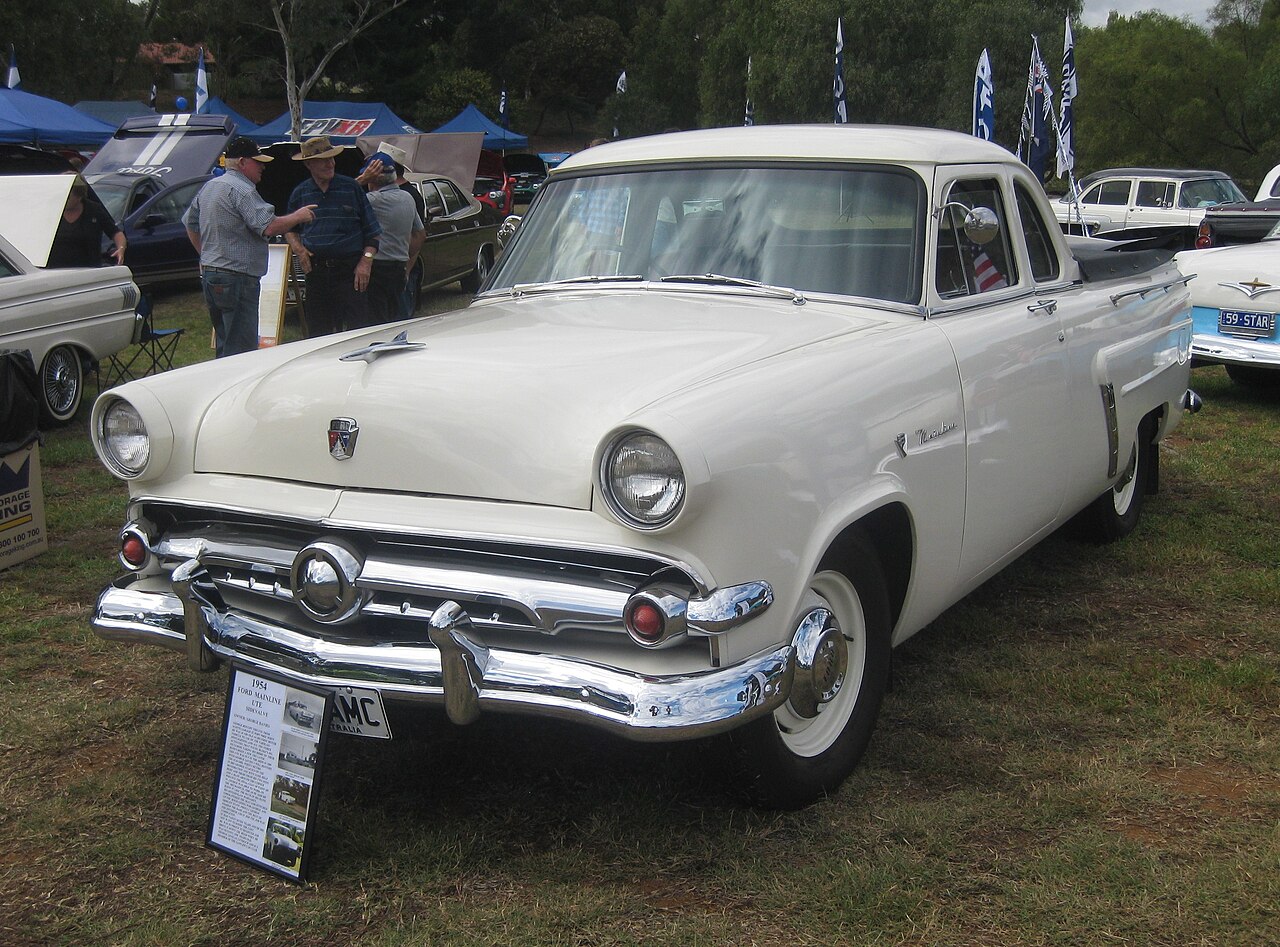
The Ford Mainline was the plain, hard working member of the full size Ford family in the 1950s. In the United States it was the base trim of the full size Ford from 1952 to 1956, the car you bought when you wanted the body and the engine without the chrome. In Australia the Mainline name lived on through the decade on a coupe utility, the classic Aussie ute built off the same full size Ford. Whichever one you are looking at, it is a car from well before the modern VIN era, so it is read a little differently from a current Ford.
How a Ford Mainline VIN is put together
The Mainline predates the seventeen character VIN that came in for the 1981 model year, so it does not carry that layout at all. Instead it wears an older Ford identification number, stamped on the car and set out in full on the data plate. That number still encodes the year, the assembly plant and the engine, but in a shorter form. On a car this old the data plate is the most reliable place to confirm what you have, and it should agree with the stamped number on the body.
What the old Ford number tells you
On these 1950s Fords the identification number and the data plate together spell out the model year, the plant that built the car, the body style and the engine that was fitted. Because there was no single national standard yet, the exact code letters vary by year and by market, which is why the plate matters so much. Restorers lean on year specific Ford reference charts to translate each field rather than reading it straight through like a modern VIN.
Engines in the Ford Mainline
The Mainline was sold with the workhorse Ford engines of the day. Early cars used the venerable flathead V8 and the inline six, and from the mid 1950s the modern overhead valve Y block V8 took over. In Australia the ute followed the same path, which is part of why these are so easy to keep running today.
| Engine | Notes |
|---|---|
| Flathead V8 | The classic early 1950s side valve V8 |
| Inline six | The economy choice |
| Y block V8 | The overhead valve V8 from the mid 1950s, such as the 272 and 292 |
Where to find the number on a Ford Mainline
Look for the data plate on the door or the door pillar, and for the stamped number on the body and the engine. On a car of this age the paperwork, the plate and the stamped numbers all need to tell the same story. A missing or altered plate makes a car much harder to value, so check carefully before you commit.
Reliability and the things worth checking
Mechanically these are simple, rugged cars that a home mechanic can maintain, and parts for the common engines are still around. Rust is the real problem after seventy years, so look hard at the floors, the lower doors and, on the ute, the tray and its mounts. A solid, complete car is worth far more than a cheap one that needs metalwork.
Buying a used Ford Mainline
These are collector and enthusiast cars now, so condition and originality drive the price. Check that the year, the engine and the body on the data plate line up with the seller’s description, and put a solid shell ahead of a shiny but rusty one. The Australian ute in particular has a strong following, which is worth keeping in mind on both price and parts.