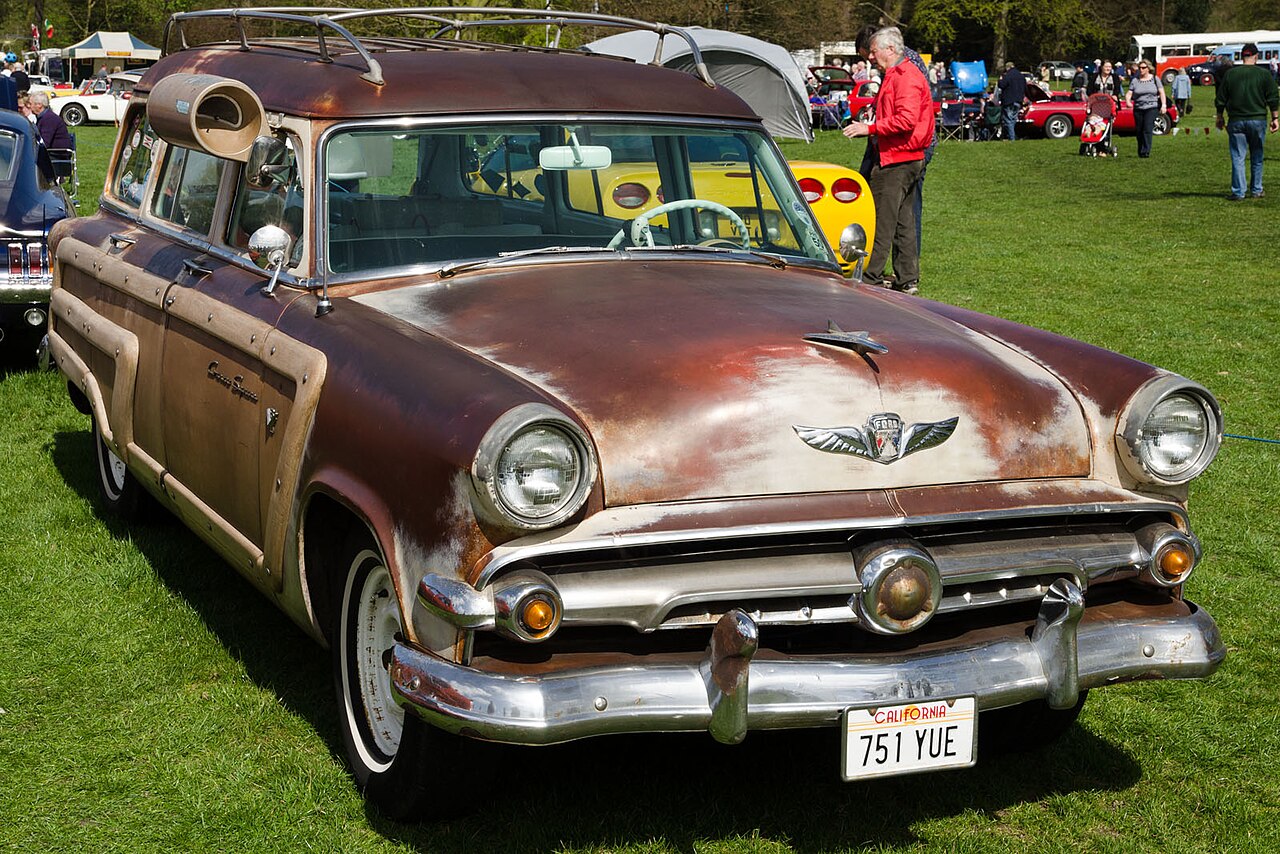
The Ford Country Squire was the top of the full size Ford wagon range for four decades, from 1950 all the way to 1991, and for most of that time it wore the wood look side trim that made it instantly recognisable. Because it ran for so long, the way you read its VIN depends on the year. This page covers both the older cars and the later ones, so you can decode whichever Country Squire you are looking at.
How a Ford Country Squire VIN is put together
The dividing line is 1981. Wagons from the 1981 model year onward use the modern seventeen character VIN that every car now carries. Earlier Country Squires predate that standard and use a shorter Ford identification number, stamped on the car and repeated on the door data plate. The older number still tells you the year, the plant and the engine, but it does not line up position for position with the modern layout, so the first step is to check which era your car belongs to.
Ford Country Squire VIN position by position (1981 and later)
On the later wagons the seventeen characters break down like this. Reading them in order pins down the year and the factory quickly.
| Position | Name | What it tells you on a Country Squire |
|---|---|---|
| 1 to 3 | World Manufacturer Identifier | 1FA for a Ford passenger car built in the United States |
| 4 to 8 | Vehicle descriptor | Body style, restraint system and engine, the part that identifies the wagon body and the V8 |
| 9 | Check digit | A calculated character that validates the rest of the VIN |
| 10 | Model year | A single character, listed in the chart below |
| 11 | Assembly plant | The Ford factory that built the car |
| 12 to 17 | Serial number | The build sequence unique to that wagon |
Ford Country Squire model year codes (position 10)
For the final run on the full size platform, the tenth character reads as follows.
| Model year | Code in position 10 |
|---|---|
| Ford Country Squire 1981 | B |
| Ford Country Squire 1982 | C |
| Ford Country Squire 1983 | D |
| Ford Country Squire 1984 | E |
| Ford Country Squire 1985 | F |
| Ford Country Squire 1986 | G |
| Ford Country Squire 1987 | H |
| Ford Country Squire 1988 | J |
| Ford Country Squire 1989 | K |
| Ford Country Squire 1990 | L |
| Ford Country Squire 1991 | M |
Engines through the years
Over forty years the Country Squire carried a long line of Ford V8s, so position eight has to be read against the model year. The rough picture is that the 1950s and 1960s cars used the Y block and then the FE big blocks such as the 352, 390 and 428, the 1970s cars moved to the 351, 400 and the big 460, and the downsized 1979 and later wagons settled on the 302, badged 5.0, as the mainstay. A genuine big block car is worth confirming against the door plate rather than the badges alone.
| Era | Typical engines |
|---|---|
| 1950s and 1960s | Y block V8, then FE big blocks including the 352, 390 and 428 |
| 1970s | 351 and 400, plus the 460 big block |
| 1979 to 1991 | 302 V8, badged 5.0, as the main engine |
Where to find the VIN on a Ford Country Squire
On the 1981 and later cars the VIN reads through the windshield at the base of the glass on the driver side, and it repeats on the label in the driver door jamb. On the older wagons look for the plate on the door or door pillar, with the same details set out on the door data tag. If the numbers do not agree, treat that as a warning sign.
Reading a Country Squire VIN in practice
Take a late wagon whose VIN starts with 1FA and shows H in position ten. That marks it as a United States built Ford passenger car from the 1987 model year. Position eight then confirms the engine that left the factory, and the final six digits are the serial number for that individual car.
Reliability and the things worth checking
These were simple, tough, body on frame wagons, and the mechanical side gives little trouble when it has been looked after. Rust is the main concern on any survivor, especially around the tailgate, the wheel arches and the floors. On the wood look cars the applied side trim can lift or fade, and replacing it well is not cheap, so factor that in on a car you want to keep original.
Buying a used Ford Country Squire
Decide whether you want an early big block cruiser or one of the tidier later 5.0 wagons, because they drive and cost very differently. Whatever the year, run the VIN and read the door plate so the year, the engine and the body all agree with what the seller is telling you. A solid, honest wagon with its wood trim intact is far easier to live with than a cheap one hiding rust.