Ford Custom (1949 to 1959) VIN Decoder: History, Engines and VIN Lookup Guide
Every Ford Custom carries an identification number, and reading it is the quickest way to confirm what a particular car really is before you trust a seller’s description. The Custom and Custom 500 were Ford’s mainstream full-size cars through the 1950s, beginning with the landmark 1949 shoebox Ford that modernised the whole range. Because these cars were built long before the 17 character VIN, they use a shorter data plate and serial number, and reading it confirms the year, the assembly plant and the engine family. You can run a Custom number through the decoder at the top of this page, and the guide below explains the classic format, walks through the eras, and points out what matters most when you check one.
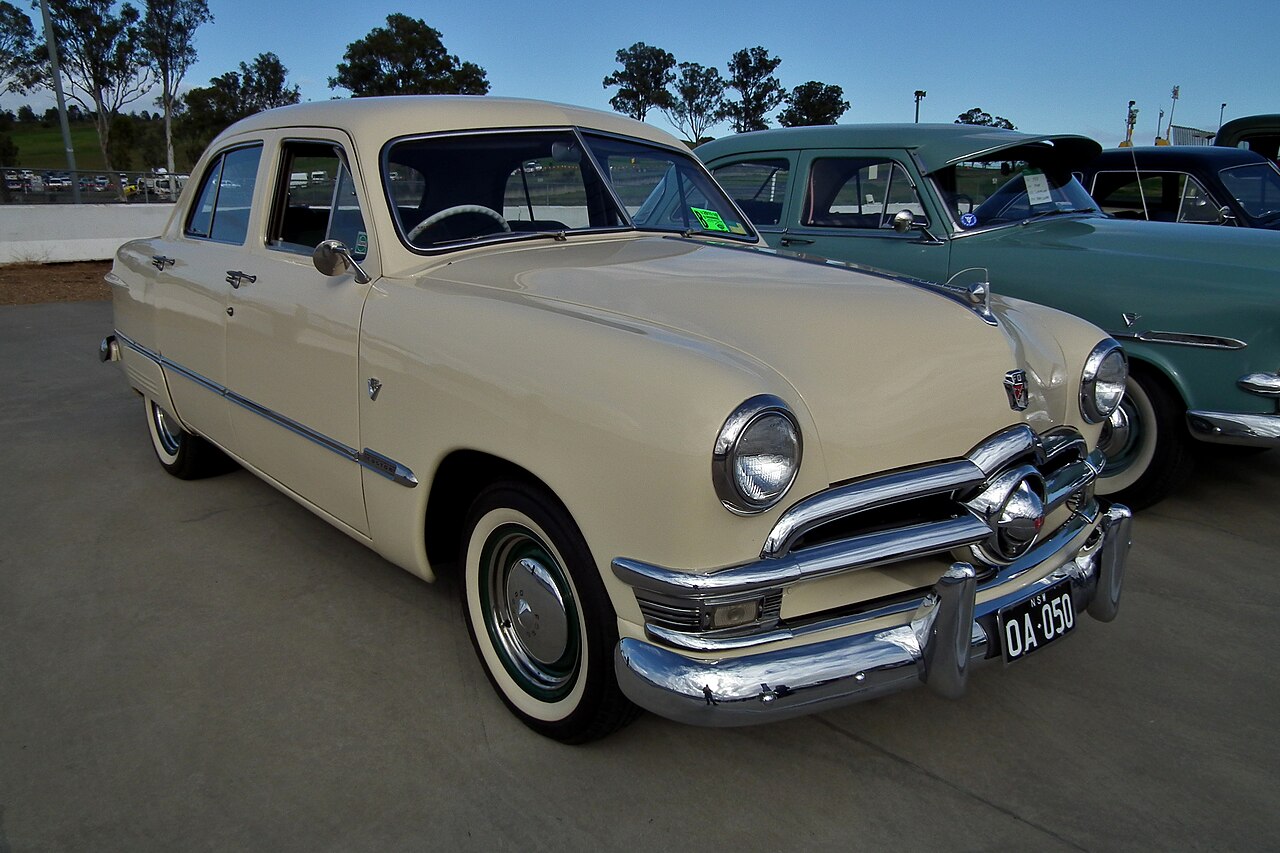
How a Ford Custom VIN is put together
The Custom predates the 17 character VIN that Ford adopted in 1981, so it carries a shorter identification number found on the data plate and stamped on the car. In this era the number encodes the model year, the assembly plant and the engine, followed by the sequential build number, though the exact layout changed through the decade. The engine identifier is the part collectors care about most, because it separates a six from a flathead or Y-block V8. The quick reference below covers the clues you will use most often when you read a Ford Custom number.
| VIN clue | What it means |
|---|---|
| Model year | Encoded in the data plate number, for example a 1955 or 1957 car |
| Assembly plant | A letter identifying the factory |
| Engine code | For example a six, a flathead V8 or a Y-block V8 |
| Body and series | Custom or Custom 500 and the body style |
| Sequential number | The build number unique to the car |
On a car this old, matching the number on the data plate with the title and any other stampings is the first check worth doing.
How a Ford Custom is identified
The Custom is older than the seventeen character VIN, so it does not have one. It is identified by an older Ford number, a shorter code stamped on the car and set out in full on the door data plate. On these cars the first character is the model year, and the characters that follow record the assembly plant, the body style and the engine. Because there was no single national standard yet, the exact code letters change from year to year, which is why the door plate is so important on any car of this age.
What the old Ford number tells you
Read together, the stamped number and the data plate spell out the year, the plant, the body and the engine that left the factory. On a full size Ford of this era the engine is the detail that changes the value most, and the flathead and early overhead valve V8 cars each have their following. Restorers translate each field against a year specific Ford chart rather than reading it straight through like a modern VIN.
Where to find the number on a Ford Custom
Look for the data plate on the door or the door pillar, and for the stamped number on the body. On a car this old the paperwork, the plate and the stamped numbers all need to tell the same story. A missing or altered plate makes a car much harder to value, so check carefully before you commit.
A short history, generation by generation
The 1949 Ford was a turning point, a clean slab sided shoebox design that swept away the prewar look and sold in huge numbers, with the Custom as the better trimmed line. The 1952 to 1956 cars grew more modern and gained the new overhead valve Y-block V8, and the 1957 to 1959 cars were longer, lower and flashier, with the Custom and Custom 500 serving as the value models below the Fairlane. The table below sums up the eras.
| Generation | Years | Body styles | Key engines |
|---|---|---|---|
| Ford Custom shoebox | 1949 to 1951 | Sedan, coupe | 226 six, 239 flathead V8 |
| Ford Custom mid-1950s | 1952 to 1956 | Sedan, coupe, wagon | 215 six, 239 to 292 V8 |
| Ford Custom late-1950s | 1957 to 1959 | Sedan | 223 six, 272 to 332 V8 |
Ford Custom engines and specifications
Because the engine code is part of the number, a proper check confirms the engine the car was born with. The figures below cover the main engines, with power as a range because output changed across the years.
| Configuration | Years | Power | Layout |
|---|---|---|---|
| Ford Custom six | 1949 to 1959 | about 95 to 145 hp | Inline-6 |
| Ford Custom flathead V8 | 1949 to 1953 | about 100 to 110 hp | Flathead V8 |
| Ford Custom Y-block V8 | 1954 to 1959 | about 130 to 200 hp | Y-block V8 |
| Ford Custom 332 V8 | 1958 to 1959 | about 240 to 265 hp | FE big-block V8 |
Ford Custom by model year
Buyers searching for a specific year want to know what they are getting, so the table below maps several years to the era and engine. These cars predate the 17 character VIN and are identified through the data plate number.
| Model year | Identification | Era | Engine options |
|---|---|---|---|
| Ford Custom 1950 | data plate | Shoebox | 226 six, 239 flathead V8 |
| Ford Custom 1955 | data plate | Mid-1950s | 223 six, 272 V8 |
| Ford Custom 1957 | data plate | Late-1950s | 272 to 312 V8 |
| Ford Custom 1959 | data plate | Late-1950s | 292 to 332 V8 |
Reliability and the things worth checking
These are simple, robust cars by modern standards, but every Custom is now a classic, so condition and originality matter far more than mechanical complexity. The most common points to check are summarized below.
| Engine or area | What to check |
|---|---|
| Ford Custom V8 | Confirm the engine matches the number and check for wear and overheating |
| Ford Custom six | Durable and simple, check for general age related wear |
| Ford Custom body and frame | Rust in floors, frame and lower panels is the main enemy on survivors |
| Ford Custom originality and trim | 1950s trim is hard to find, so check the car is complete and correct |
Buying a used Ford Custom
When you find one worth pursuing, read the data plate number first and make sure the year, plant and engine line up with the seller’s description and the title. Spend most of your time checking for corrosion and confirming the car is complete, since 1950s trim and brightwork can be very hard to replace. When you are ready, enter your Ford Custom number in the decoder above, then use the advice here to make sure the car is genuinely what it claims to be.