Ford F-150 VIN Decoder: Classic F-Series History and VIN Lookup (1948 to 1996)
The classic Ford F-Series carries a Vehicle Identification Number that tells you what a given truck really is, which is invaluable when you are buying, restoring or verifying a vintage pickup. From 1981 onward these trucks use the standard 17-character VIN that confirms model year, plant, engine and configuration, while earlier trucks use shorter factory numbers read with year-specific references. This page covers the classic F-Series and F-150 from 1948 to 1996. Run a VIN through the decoder above to read it, and use the guide below to understand the number and what to check on an older truck.
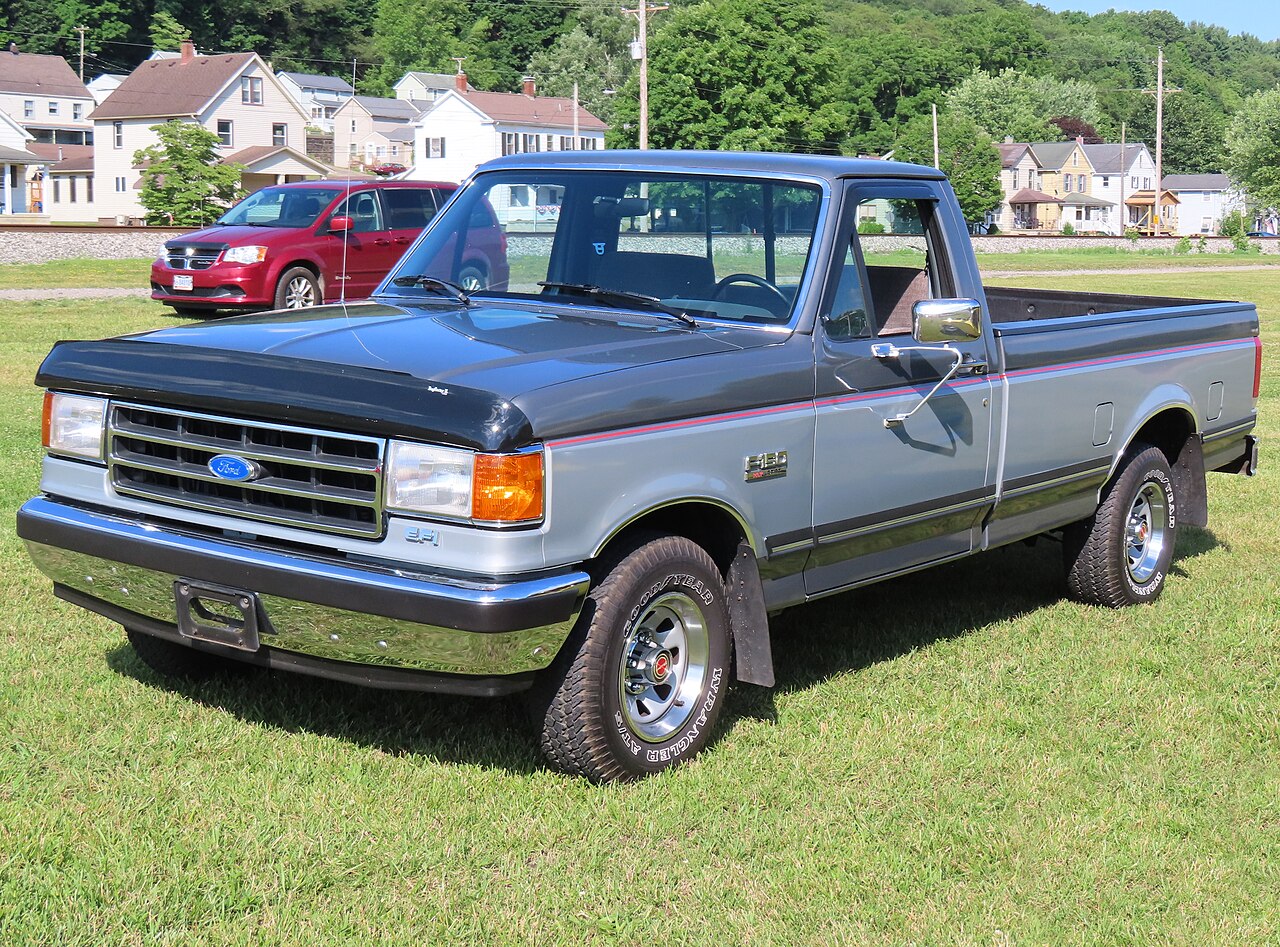
How a classic Ford F-150 VIN is put together
For trucks built from 1981 the 17 characters follow a global standard. The first three are the World Manufacturer Identifier, and F-Series trucks begin with 1FT, marking a Ford truck built in the United States. Characters four through eight describe the cab, the bed, the restraint system and the engine. The ninth character is a check digit, the tenth is the model year, the eleventh is the plant, and the final six are the unique build sequence. Trucks built before 1981 predate this system and use shorter codes specific to each year.
| VIN clue | What it means |
|---|---|
| WMI 1FT | Ford F-150 built as a Ford truck in the United States (1981 and later) |
| Position 9 | Check digit that validates the whole VIN |
| Position 10 | Model year code (for example N is 1992, T is 1996) |
| Positions 4 to 8 | Cab, bed, restraint system and engine family |
| Pre-1981 trucks | Use shorter factory numbers, read with year-specific references |
You will find the VIN at the base of the windshield on the driver’s side, on the door jamb label, on frame stampings, and in the registration paperwork.
Ford F-150 VIN position by position
The dividing line for these trucks is 1981. From that model year on the F-150 uses the seventeen character VIN, which reads cleanly position by position. The earlier trucks predate it and carry a shorter Ford number on the door tag and the frame, so the first step is to work out which side of 1981 your truck sits on.
| Position | Name | What it tells you on an F-150 |
|---|---|---|
| 1 to 3 | World Manufacturer Identifier | 1FT for a Ford truck built in the United States |
| 4 to 7 | Vehicle descriptor | The series and body, where F100, F150 and F250 are separated along with the cab and drive type |
| 8 | Engine | The engine code, read with the year, since the range spanned the inline six, several V8s and a diesel |
| 9 | Check digit | A calculated character that validates the rest of the VIN |
| 10 | Model year | A single character, listed in the chart below |
| 11 | Assembly plant | The Ford factory that built the truck |
| 12 to 17 | Serial number | The build sequence unique to that truck |
Ford F-150 model year codes (position 10)
For the trucks that carry the seventeen character VIN, the tenth character reads as follows.
| Model year | Code in position 10 |
|---|---|
| Ford F-150 1981 | B |
| Ford F-150 1982 | C |
| Ford F-150 1983 | D |
| Ford F-150 1984 | E |
| Ford F-150 1985 | F |
| Ford F-150 1986 | G |
| Ford F-150 1987 | H |
| Ford F-150 1988 | J |
| Ford F-150 1989 | K |
| Ford F-150 1990 | L |
| Ford F-150 1991 | M |
| Ford F-150 1992 | N |
| Ford F-150 1993 | P |
| Ford F-150 1994 | R |
| Ford F-150 1995 | S |
| Ford F-150 1996 | T |
Where to find the VIN on a Ford F-150
On the 1981 and later trucks the VIN reads through the base of the windshield on the driver side and repeats on the door jamb label, which also lists the weight ratings. On an earlier F-Series look for the door tag and the number stamped on the frame. Work trucks lead hard lives, so make sure the number is intact and matches the paperwork before you buy.
Reading an F-150 VIN in practice
Take a truck whose VIN starts with 1FT and shows K in position ten. That places it as a 1989 model built by Ford in the United States. The series characters then tell you whether it is an F150 or a heavier F250, position eight identifies the engine, and the final digits are the truck’s own serial number.
Generations of the classic F-Series
The F-Series began in 1948 and grew into the backbone of the American truck market. The F-150 name itself arrived in 1975 as the half-ton model. The trucks you can decode with a modern 17-character tool are the 1981 and later examples, which include the end of the seventh generation and the eighth and ninth generations.
| Generation | Years | Key engines | VIN type |
|---|---|---|---|
| Ford F-Series early generations | 1948 to 1979 | Inline-6 and small and big-block V8 | Pre-1981 short VIN |
| Ford F-150 seventh generation | 1980 to 1986 | 4.9 I6, 5.0, 5.8 and 7.5 V8 | 17-character from 1981 |
| Ford F-150 eighth generation | 1987 to 1991 | 4.9 I6, 5.0 and 5.8 V8 | 1FT, 17-character |
| Ford F-150 ninth generation | 1992 to 1996 | 4.9 I6, 5.0 and 5.8 V8 | 1FT, 17-character |
Ford F-150 engines and specifications
Because the engine code sits in the middle of the VIN on 1981 and later trucks, a check confirms the engine the truck was built with, which matters for parts and restoration on a vintage pickup.
| Configuration | Years | Notes |
|---|---|---|
| Ford F-150 4.9 inline-six (300) | 1980 to 1996 | Legendary durable workhorse six |
| Ford F-150 5.0 V8 (302) | 1980 to 1996 | Common small-block V8 |
| Ford F-150 5.8 V8 (351) | 1980 to 1996 | Larger small-block for towing |
| Ford F-150 7.5 V8 (460) | 1983 to 1996 | Big-block for heavy duty |
Ford F-150 by model year
For 1981 and later trucks the standard VIN year characters apply, so position ten confirms the year a seller claims.
| Model year | VIN year code | Generation |
|---|---|---|
| Ford F-150 1987 | H | Eighth generation |
| Ford F-150 1990 | L | Eighth generation |
| Ford F-150 1992 | N | Ninth generation |
| Ford F-150 1994 | R | Ninth generation |
| Ford F-150 1996 | T | Final classic model year |
Reliability and the things worth checking
On a classic truck, condition matters far more than original specification. Where possible, confirm a 1981 or later truck against records by its VIN.
| Area | What to check |
|---|---|
| Ford F-150 body and frame | Rust is the main enemy: inspect cab corners, bed, rockers and the frame thoroughly |
| Ford F-150 4.9 inline-six | Extremely durable, but confirm general maintenance and oil history |
| Ford F-150 drivetrain | Check transmission and, on 4×4 trucks, the transfer case and front axle |
| Ford F-150 authenticity | Confirm engine and configuration against the VIN rather than the badges on modified trucks |
A VIN check together with a careful inspection for rust and originality is essential on a truck of this age.
Buying a classic Ford F-150
Decode the VIN first on 1981 and later trucks to confirm the model year, engine and configuration. On older pickups, focus on rust in the cab, bed and frame, confirm the drivetrain works correctly, and verify that any engine swap matches what is advertised. Originality and a solid body drive value on these trucks far more than cosmetics. When you are ready, enter your Ford F-150 VIN in the decoder above to confirm the year, engine and configuration before you buy.