Ford Aerostar VIN Decoder: History, Engines and VIN Lookup Guide
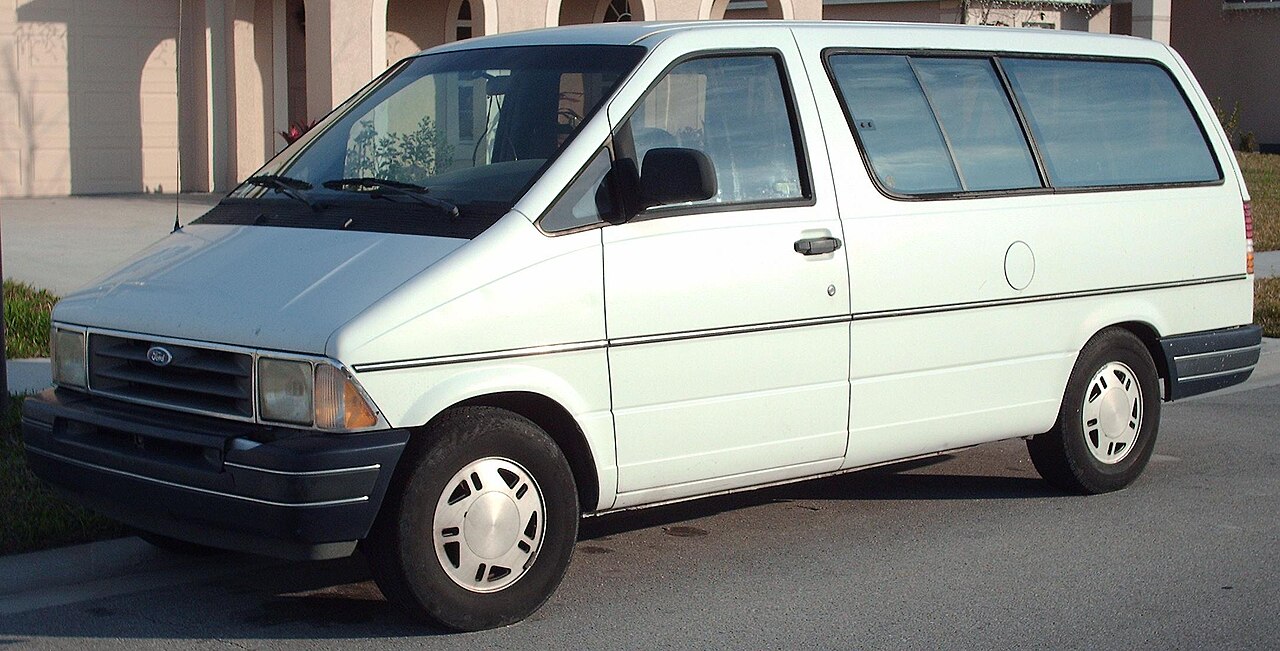
Every Ford Aerostar carries a 17 character Vehicle Identification Number, and reading it is the fastest way to confirm what a particular van really is before you trust a seller’s description. The Aerostar was built from 1985 to 1997, and across that run Ford offered it in passenger and cargo forms, in two body lengths, with rear wheel drive and later with electronic all wheel drive. The VIN settles which of those you are actually looking at, along with the model year, the engine the van left the factory with, and the plant that assembled it. You can run any Aerostar VIN through the decoder at the top of this page and read the result in a few seconds. The rest of this guide explains how the number is built, walks through the van’s history, and points out the details that matter most when you check one.
How a Ford Aerostar VIN is put together
The 17 characters are not random. They split into three blocks, and because the layout follows a global standard, the same position always carries the same kind of information. The first three characters are the World Manufacturer Identifier. Passenger Aerostar wagons usually begin with 1FM, which marks a Ford built multipurpose passenger vehicle, while cargo versions often begin with 1FT, the code Ford uses for its trucks and commercial vans. Characters four through eight describe the vehicle itself, including the body type, the restraint system and, most usefully, the engine. The ninth character is a check digit calculated from all the others to catch typos and altered numbers. The last eight characters describe the individual van. Position ten is the model year, position eleven is the assembly plant, and the final six digits are the sequential build number unique to that vehicle. The quick reference below covers the clues you will use most often when you read a Ford Aerostar VIN.
| VIN clue | What it means |
|---|---|
| WMI 1FM | Ford Aerostar passenger wagon built by Ford |
| WMI 1FT | Ford Aerostar cargo van built by Ford |
| Position 8 | Engine code, for example the 3.0 Vulcan or 4.0 Cologne V6 |
| Position 9 | Check digit that validates the whole VIN |
| Position 10 | Model year code, for example M is 1991 and R is 1994 |
| Position 11 | Assembly plant code |
You will find the number stamped at the base of the windshield on the driver’s side, printed on the certification label in the driver’s door jamb, and recorded on the title and insurance paperwork. If the plate at the windshield and the door label do not match, treat that as a reason to look much harder at the van.
Ford Aerostar VIN position by position
The Aerostar was Ford’s rear drive van from the 1980s and 1990s, sold as both a passenger van and a cargo van, and it uses the seventeen character VIN. Read it in order and you can settle the year and the engine before you trust the advert.
| Position | Name | What it tells you on an Aerostar |
|---|---|---|
| 1 to 3 | World Manufacturer Identifier | 1FM for a passenger van and 1FT for a cargo van, both Ford built in the United States |
| 4 to 8 | Vehicle descriptor | Body, drive layout and engine, where rear drive is separated from the all wheel drive versions |
| 9 | Check digit | A calculated character that validates the rest of the VIN |
| 10 | Model year | A single character, listed in the chart below |
| 11 | Assembly plant | The Ford factory that built the van |
| 12 to 17 | Serial number | The build sequence unique to that Aerostar |
Ford Aerostar model year codes (position 10)
The Aerostar was sold from 1986 to 1997, and the tenth character reads as follows.
| Model year | Code in position 10 |
|---|---|
| Ford Aerostar 1986 | G |
| Ford Aerostar 1987 | H |
| Ford Aerostar 1988 | J |
| Ford Aerostar 1989 | K |
| Ford Aerostar 1990 | L |
| Ford Aerostar 1991 | M |
| Ford Aerostar 1992 | N |
| Ford Aerostar 1993 | P |
| Ford Aerostar 1994 | R |
| Ford Aerostar 1995 | S |
| Ford Aerostar 1996 | T |
| Ford Aerostar 1997 | V |
Where to find the VIN on a Ford Aerostar
Read the VIN through the windshield at the base of the glass on the driver side, and check it against the door jamb label. Many of these vans worked for a living, so make sure the number is intact and matches the paperwork before you buy.
Reading an Aerostar VIN in practice
Take a van whose VIN starts with 1FM and shows K in position ten. That marks it as a United States built Ford from the 1989 model year. Position eight then identifies the engine, the descriptor characters show whether it is rear or all wheel drive, and the final six digits are the van’s own serial number.
A short history of the Ford Aerostar
The Aerostar arrived for the 1986 model year, launched in 1985, as Ford’s answer to the new wave of minivans. Unlike the front wheel drive Chrysler vans it competed with, the Aerostar used a rear wheel drive layout drawn from Ford’s truck thinking, which gave it a strong towing rating and a tougher feel than most people class minivans. It was assembled at the St. Louis plant in Hazelwood, Missouri. Early vans offered modest four cylinder and small V6 power, but the line soon settled around Ford’s Vulcan and Cologne V6 engines, which is what most surviving Aerostars use. From 1990 Ford added an electronic all wheel drive system that split torque automatically, a rarity among minivans of the era and one reason the Aerostar still has a following among people who want a capable, simple van. An extended length body gave buyers more room behind the rear seats. Production continued until 1997, when the front wheel drive Windstar took over as Ford’s mainstream minivan.
| Generation | Years | Body and drive | Key engines |
|---|---|---|---|
| Ford Aerostar standard length | 1985 to 1997 | Passenger and cargo, rear wheel drive | 2.3 I4, 2.8 V6, 3.0 V6 |
| Ford Aerostar extended length | 1989 to 1997 | Passenger and cargo, rear wheel drive | 3.0 V6, 4.0 V6 |
| Ford Aerostar AWD | 1990 to 1997 | Electronic all wheel drive | 4.0 V6 |
Ford Aerostar engines and specifications
Because the engine code sits in the middle of the VIN, a proper check confirms the engine the van was born with, which matters on a vehicle old enough to have seen at least one engine swap. The figures below cover the main configurations, with power given as a range because output shifted across model years.
| Configuration | Years | Power | Layout |
|---|---|---|---|
| Ford Aerostar 2.3 I4 | 1986 to 1987 | about 100 hp | Naturally aspirated inline-4 |
| Ford Aerostar 2.8 V6 | 1986 | about 115 hp | Naturally aspirated V6 |
| Ford Aerostar 3.0 V6 | 1986 to 1997 | about 135 to 145 hp | Vulcan V6 |
| Ford Aerostar 4.0 V6 | 1990 to 1997 | about 155 to 160 hp | Cologne V6 |
The 3.0 Vulcan is the economical choice and the 4.0 Cologne is the one to look for if you plan to tow or carry a full load, since it has the torque the smaller engines lack. The four cylinder was dropped early and is rare today.
Ford Aerostar by model year
Buyers searching for a specific year want to know what they are getting, so the table below maps several model years to their VIN year code and the engines offered. The same model year letter logic runs across the whole production run.
| Model year | VIN year code | Drive | Engine options |
|---|---|---|---|
| Ford Aerostar 1989 | K | RWD | 2.3 I4, 3.0 V6 |
| Ford Aerostar 1990 | L | RWD and AWD | 3.0 V6, 4.0 V6 |
| Ford Aerostar 1991 | M | RWD and AWD | 3.0 V6, 4.0 V6 |
| Ford Aerostar 1993 | P | RWD and AWD | 3.0 V6, 4.0 V6 |
| Ford Aerostar 1995 | S | RWD and AWD | 3.0 V6, 4.0 V6 |
| Ford Aerostar 1997 | V | RWD and AWD | 3.0 V6, 4.0 V6 |
Reliability and the things worth checking
The Aerostar has a reputation as a durable van, but every survivor is now decades old, so condition matters far more than the badge. The most common points to check, by area, are summarized below, and you should always run the VIN through the NHTSA recall database to see whether anything is still outstanding.
| Engine or area | What to check |
|---|---|
| Ford Aerostar 3.0 V6 | Generally dependable, but look for cooling system neglect and oil leaks given the age |
| Ford Aerostar 4.0 V6 | Strong and torquey, though hard towing lives show in the transmission, so confirm shift quality |
| Ford Aerostar AWD system | Check that the all wheel drive engages cleanly and listen for driveline noise |
| Ford Aerostar body | Rust in the rear wheel arches, rockers and around the rear hatch is the usual enemy |
Ford Aerostar recalls
Below are notable safety recalls recorded for the Ford Aerostar by the American road safety regulator, the NHTSA. This is a reference list, not a check of your individual van, and a recall applies only to certain build dates and VIN ranges.
| Model years | NHTSA number | Area | Problem and risk |
|---|---|---|---|
| All wheel drive | 97V204 | Driveline | On all wheel drive vans the transfer case output shaft or transmission can fail, leading to driveshaft separation, loss of drive and, if fluid reaches the exhaust, a fire. New bushing and aluminum driveshaft fitted. |
| up to 1997 | 99V028 | Fuel pump wiring | Heat in the fuel pump wiring harness can cause a short, a loss of power that can immobilize the van, and a fire risk. A fused jumper harness is installed. |
| up to 1997 | 99V029 | Accessory wiring | The accessory power circuit can short and overheat, a fire risk. A jumper harness with a relay reroutes the accessory power. |
| 1995 | 94V239 | Spare tire and brake line | The underbody spare tire can contact and fracture a rear brake line, reducing braking. A lower profile spare is fitted for proper clearance. |
Recall data is published by the NHTSA and changes over time, so treat this as background rather than a substitute for the official record for your VIN.
Check a specific VIN for open recalls: use the official NHTSA recalls lookup or the Ford recall page. Both are free and show whether the work has already been done.
Buying a used Ford Aerostar
When you find one worth pursuing, decode the VIN first and make sure the model year, engine and drive type line up with the advertisement, then run the same number through the NHTSA recall search. Confirm whether it is a rear wheel drive or all wheel drive van, since the AWD models are more complex and more sought after, and check that the engine matches what the seller claims. On a vehicle this old, spend your time on condition: look underneath for corrosion, check the transmission and cooling system, and treat a complete service history as worth paying extra for. When you are ready, enter your Ford Aerostar VIN in the decoder above to confirm the year, engine, drive type and plant, then use the advice here to make sure the van is genuinely what it claims to be.