Mercury Cougar VIN Decoder: History, Engines and VIN Lookup Guide
Every Mercury Cougar carries an identification number, and reading it is the quickest way to confirm what a particular car really is before you trust a seller’s description. The Cougar was Mercury’s long running coupe, built from 1967 to 2002, and over those decades it changed from a plush pony car into a mid-size personal coupe and finally a sporty front wheel drive hatch. Because the early cars predate the modern 17 character VIN, this guide covers both the classic Ford and Mercury numbering and the 17 character VIN used from 1981. You can run a Cougar number through the decoder at the top of this page, and the guide below explains how the number is built, walks through the eras, and points out what to check when you look one over.
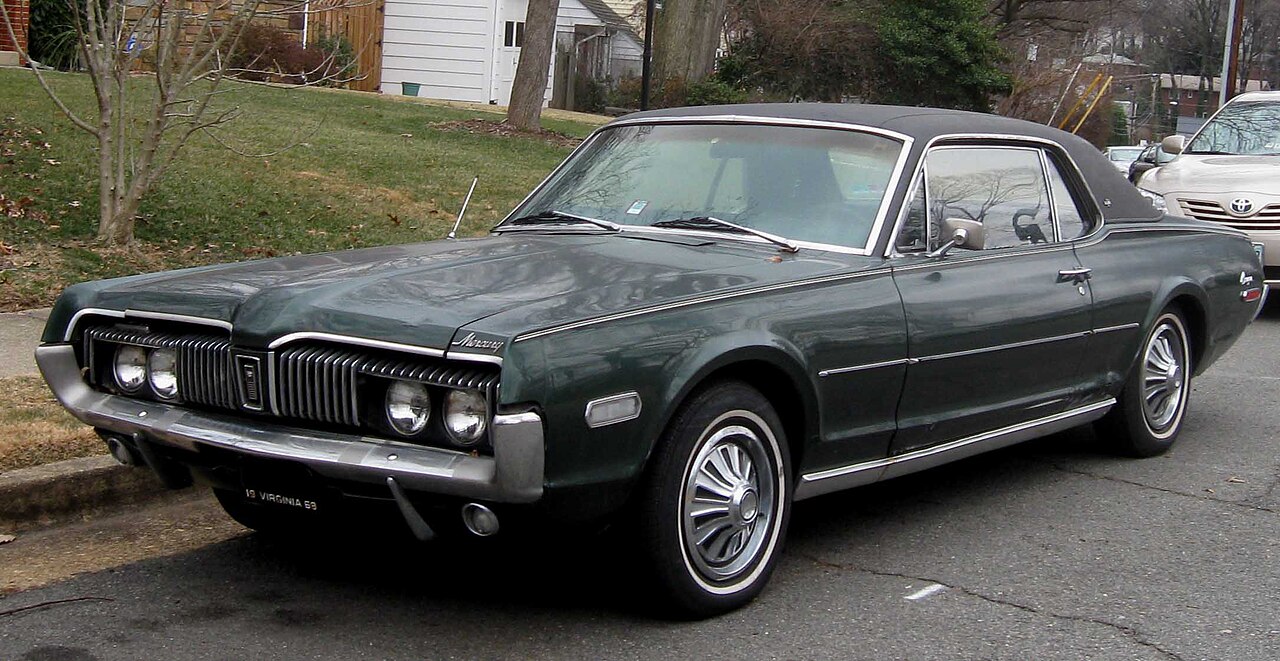
How a Mercury Cougar VIN is put together
Cougars built before 1981 use a shorter identification number where the first character is the model year, the second is the assembly plant, and further characters give the body and engine codes. From 1981 the Cougar uses the 17 character VIN, which begins with a Mercury manufacturer code such as 1ME for cars built in the United States and places the engine in the middle block and the model year at position ten. The engine code is the part that matters most, because the Cougar ranged from small sixes to big-block and supercharged V8s. The quick reference below covers the clues you will use most often when you read a Mercury Cougar number.
| VIN clue | What it means |
|---|---|
| First character (pre-1981) | Model year, for example 8 is 1968 and 3 is 1973 |
| WMI 1ME (1981 on) | Mercury Cougar built by Ford in the United States |
| Engine code | For example a 302, a 428, a supercharged 3.8 or a 4.6 V8 |
| Position 10 (1981 on) | Model year code, for example M is 1991 and Y is 2000 |
| Assembly plant | The factory that built the car |
On a car this old, matching the number on the data plate with the title and any other stampings is the first check worth doing, and on an early collectible car it is essential.
How a Mercury Cougar is identified
The Cougar was Mercury’s version of a Ford, and over its long life it sits across the change to the modern VIN. Cars from the 1981 model year on carry the seventeen character VIN, which on a Mercury begins with a Mercury identifier such as 1ME, and the 1999 to 2002 car built at Flat Rock uses the 1ZW code. The tenth character of the VIN gives the model year. The earlier cars, up to 1980, predate that system and are identified by an older Ford number, stamped on the car and set out on the door data plate.
What the number tells you
On the later cars the seventeen character VIN reads position by position, with the tenth character giving the year and the descriptor section separating the engines, which on the muscle era cars is what matters most. On the earlier cars the stamped number and the data plate together record the year, the plant, the body and the engine, and a genuine big block or an XR7 is worth confirming against the plate rather than the badges.
Where to find the number on a Mercury Cougar
On the later cars the VIN reads through the windshield at the base of the glass on the driver side and repeats on the door jamb label. On the earlier cars look for the data plate on the door or door pillar and the stamped number on the body. On any car of this age the plate, the stamped number and the paperwork all need to agree before you buy.
A short history, generation by generation
The Cougar launched in 1967 as an upmarket cousin of the Mustang, longer and more luxurious, and the early cars including the GT and Eliminator are now sought after classics. Through the 1970s it grew into a mid-size personal luxury coupe, then moved onto the Fox platform in 1980 with the XR-7. The sleek MN12 generation of 1989 brought the supercharged XR7 and later a modular V8, and the final 1999 to 2002 car was a sharp front wheel drive coupe based on the Mondeo and Contour. The table below sums up the eras.
| Generation | Years | Body styles | Key engines |
|---|---|---|---|
| Mercury Cougar first generation | 1967 to 1970 | Coupe, convertible | 289 to 428 V8 |
| Mercury Cougar mid-size | 1971 to 1979 | Coupe | 351 to 460 V8 |
| Mercury Cougar XR-7 Fox | 1980 to 1988 | Coupe | 3.3 six, 5.0 V8 |
| Mercury Cougar MN12 | 1989 to 1997 | Coupe | 3.8 V6, supercharged 3.8, 4.6 V8 |
| Mercury Cougar front drive | 1999 to 2002 | Coupe | 2.0 and 2.5 V6 |
Mercury Cougar engines and specifications
Because the engine code is part of the number, a proper check confirms the engine the car was born with, which can swing a classic Cougar’s value dramatically. The figures below cover the main engines, with power as a range because output changed across the years and the way it was measured changed too.
| Configuration | Years | Power | Layout |
|---|---|---|---|
| Mercury Cougar V8 classic | 1967 to 1979 | about 200 to 360 hp | Small and big-block V8 |
| Mercury Cougar 5.0 V8 | 1980 to 1997 | about 140 to 205 hp | Small-block and modular V8 |
| Mercury Cougar 3.8 V6 | 1989 to 1997 | about 140 to 230 hp | V6, supercharged in the XR7 |
| Mercury Cougar 2.5 Duratec V6 | 1999 to 2002 | about 170 hp | V6 petrol |
Mercury Cougar by model year
Buyers searching for a specific year want to know what they are getting, so the table below maps several model years to their year code, era and engine options. Cars before 1981 use the year digit, while later cars use the 17 character VIN year code.
| Model year | Year code | Era | Engine options |
|---|---|---|---|
| Mercury Cougar 1968 | 8 | First generation | 289 to 428 V8 |
| Mercury Cougar 1973 | 3 | Mid-size | 351 to 460 V8 |
| Mercury Cougar 1985 | F | XR-7 Fox | 3.8 V6, 5.0 V8 |
| Mercury Cougar 1991 | M | MN12 | 3.8 V6, 5.0 V8 |
| Mercury Cougar 2000 | Y | Front drive | 2.0 and 2.5 V6 |
Reliability and the things worth checking
Reliability depends heavily on the era and engine, and you should always run the number through the NHTSA recall database. The most common points to check are summarized below.
| Engine or area | What to check |
|---|---|
| Mercury Cougar classic V8 | Confirm the engine matches the number, as big-block cars are far more valuable |
| Mercury Cougar supercharged XR7 | The supercharger and intercooler need care, so confirm service history |
| Mercury Cougar 2.5 V6 | On the front drive car confirm the timing belt history and cooling |
| Mercury Cougar body | Rust and tired suspension are the main issues on older cars |
Buying a used Mercury Cougar
When you find one worth pursuing, read the number first and make sure the model year, engine and body line up with the seller’s description and the title. On an early car or a supercharged XR7, confirm the car is genuine through the data plate and documentation, and on every Cougar spend your time checking for corrosion. When you are ready, enter your Mercury Cougar number in the decoder above to confirm the year, engine and plant, then use the advice here to make sure the car is genuinely what it claims to be.